Indian Wedding Functions: What to Wear From Haldi to Reception
Wear washable yellow cotton to the haldi, light prints to the mehndi, sparkle to the sangeet, traditional silk to the ceremony and your most glamorous outfit to the reception.
In short
- Wear yellow or marigold cotton to a haldi, because the turmeric paste marks almost anything it touches.
- At a mehndi, choose short or three-quarter sleeves and slip-on shoes, since your hands are out of action while the henna dries.
- A sangeet calls for sparkle you can dance in: a sequinned saree, an embellished lehenga or a sherwani with some shine.
- The wedding ceremony is the most traditional function, so choose rich silk, keep your shoulders covered and wear shoes that come off quickly.
- The reception is the most glamorous function and the one where a gown, a dark suit or even black usually works.
- Two or three outfits cover all five functions if you plan them as a set and change the dupatta and jewellery between events.
Every Indian wedding function has its own dress code. Wear washable yellow cotton to the haldi, light bright prints to the mehndi, sparkle you can dance in to the sangeet, rich traditional silk to the ceremony and your most glamorous outfit to the reception. Men follow the same climb, from a plain kurta to a sherwani.
Think of the week as a slow build. It opens with turmeric in someone's garden and ends under chandeliers. Most families spread the functions over two or three days, and plenty of weddings abroad squeeze them into one long weekend. Below is each one in its usual order, with what actually happens there, because that tells you what your outfit has to survive. For colour rules, non-Indian guests and sizing, read our wedding guest guide alongside this one, and men will find more detail in the men's guide.
What are the main Indian wedding functions, and how formal is each?
The five you are most likely to meet are the haldi, mehndi (also spelled mehendi), sangeet, wedding ceremony and reception. Not every family holds all five, and the early ones are often just for close friends and relatives, so go by your invitation.
| Function | What happens | How formal | Colours that work |
|---|---|---|---|
| Haldi | Family rubs turmeric paste on the couple, usually the day before or the morning of the wedding | Casual, like a backyard brunch | Yellow, marigold, mustard, soft orange |
| Mehndi | Artists draw henna on the bride's hands and feet, then on any guest who wants it, with music and snacks | Relaxed, like a garden party | Green, pink, coral, mixed florals |
| Sangeet | Both families perform songs and dances, then the floor opens to everyone | Dressy, a proper party | Jewel tones, fuchsia, lilac, metallics |
| Wedding ceremony | The rites themselves, around a sacred fire, in a gurdwara or before an imam, with a long stretch of sitting | Formal, traditional and modest | Teal, emerald, purple, mustard, rani pink |
| Reception | The couple's entrance, speeches, dinner and dancing | The grandest, close to black tie | Almost anything rich: navy, wine, gold, even black |
| Function | Women | Men | Shoes |
|---|---|---|---|
| Haldi | Cotton kurta set or simple printed suit | Plain cotton kurta and pyjamas | Flat sandals you do not mind staining |
| Mehndi | Light sharara set, printed lehenga, short-sleeved anarkali | Printed kurta, or a kurta with a light Nehru jacket | Slip-on mojaris or juttis |
| Sangeet | Sequinned saree, embellished lehenga, flared gown | Indo-western sherwani or silk kurta with an embroidered jacket | Low heels or flats you can dance in |
| Ceremony | Silk saree, silk sharara set with dupatta, long anarkali | Silk kurta and churidar with a Nehru jacket | Slip-ons, no buckles or laces |
| Reception | Gown, heavier lehenga, statement saree | Sherwani or a well-cut dark suit | Dressy heels, polished juttis or leather shoes |
What do you wear to a haldi?
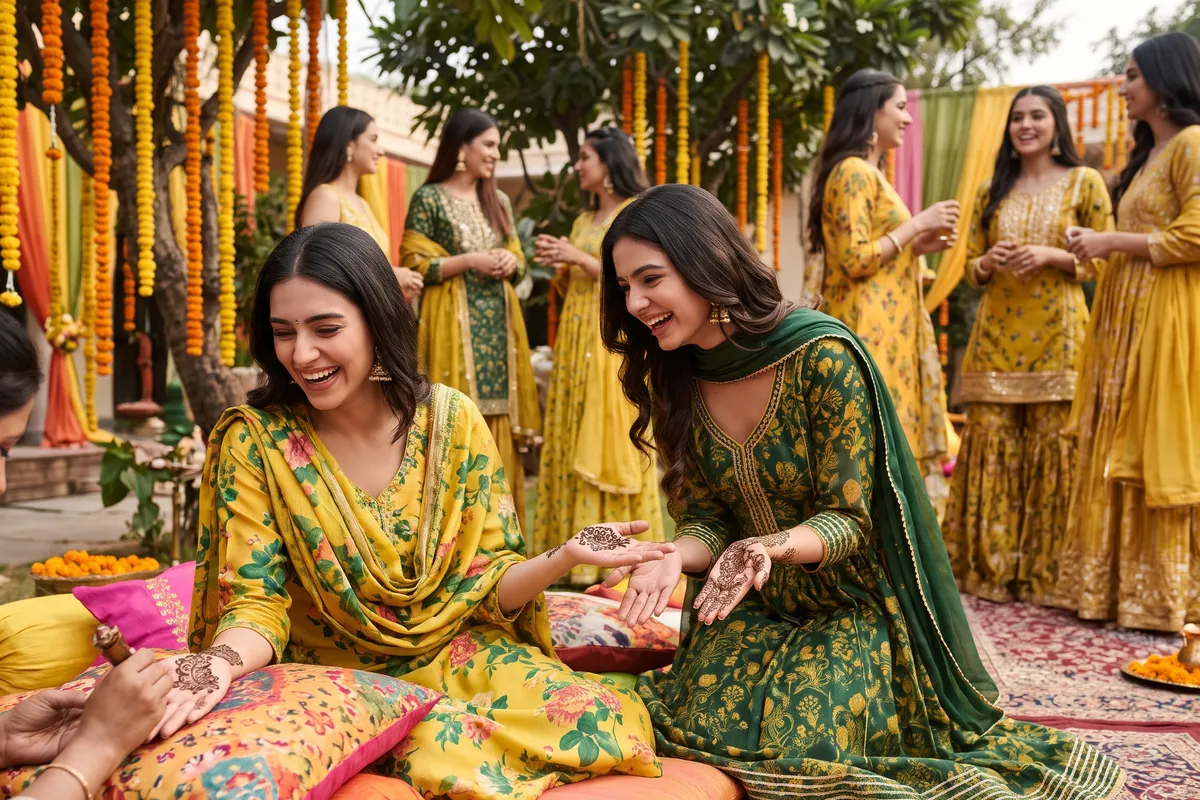
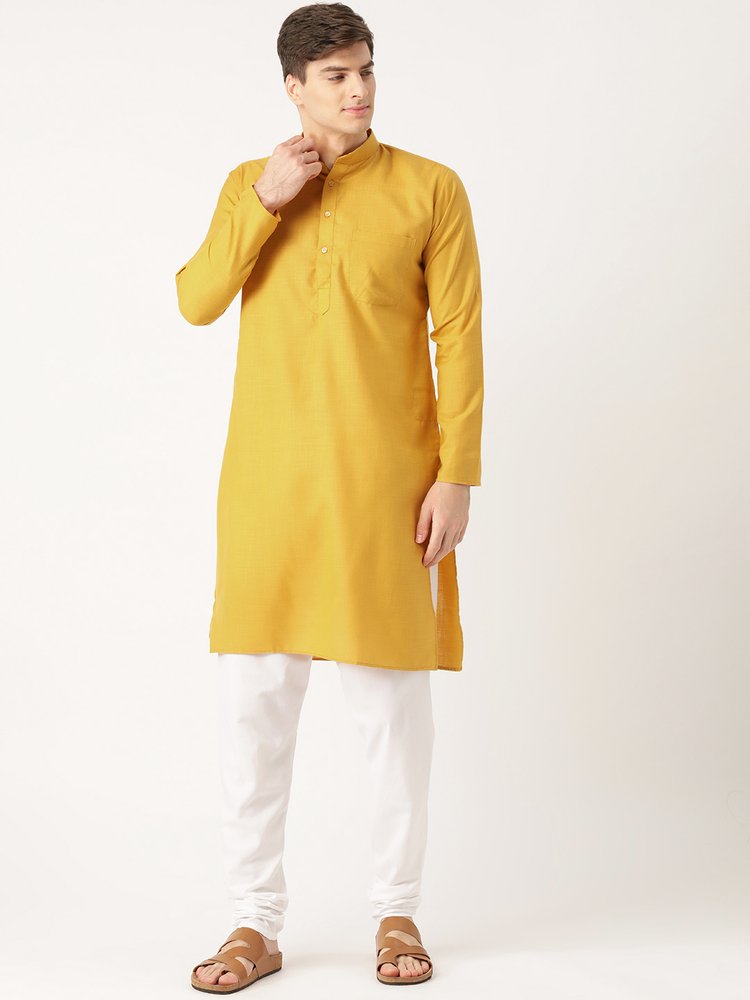
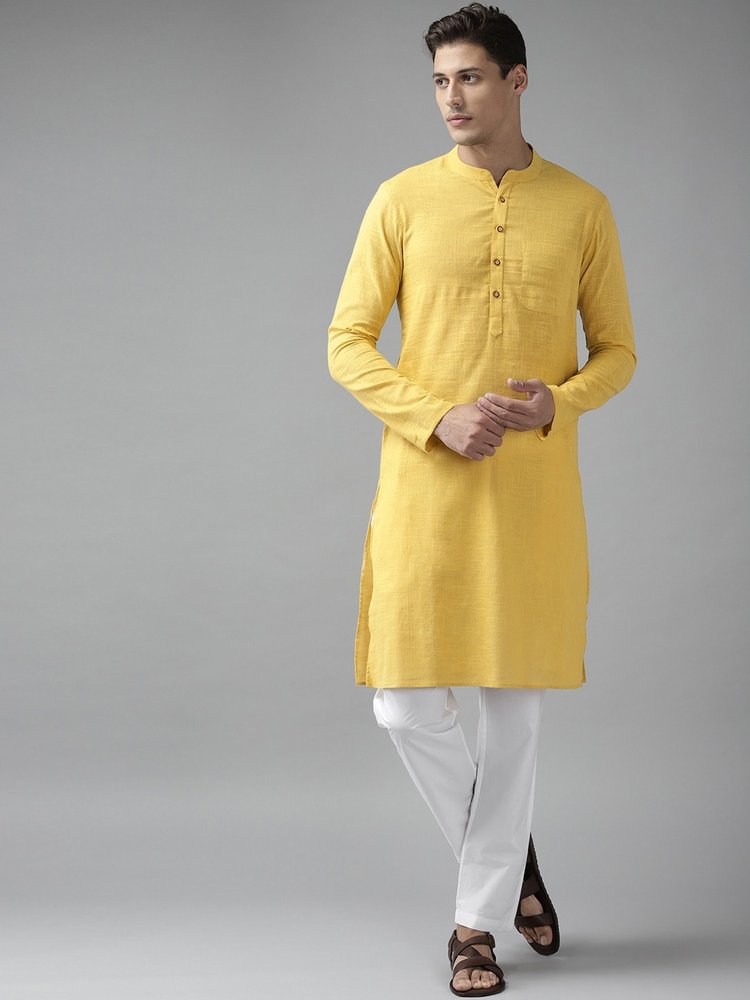
Wear cotton in a yellow family, and treat it as an outfit that might not come back clean. Haldi means turmeric, and the paste gets passed around, smeared on cheeks and sometimes thrown. It leaves a stubborn mark on fabric, so this is no day for silk, zari (metallic thread) or anything that must be dry-cleaned.
Yellow is the tradition rather than a rule, unless the invitation says otherwise. A cotton kurta set in mustard or marigold looks right in the photos and survives the wash. Men do well in a plain cotton kurta with light pyjamas. Keep real jewellery at home and wear something you can rinse, such as flowers or simple studs. If you are just watching from a chair, you can dress up a little more, but cotton still wins.
Haldi outfits that can take a stain
Cotton in the yellow family, with flat shoes you will not worry about.



What do you wear to a mehndi?
Wear something light and colourful with sleeves that stay out of the way. This is the function guests underestimate. If you get henna done, your hands are unusable while it dries, so you cannot hitch up a skirt, fix a dupatta or buckle a shoe.
- Sleeves: short, three-quarter or easy to push up, so the artist can reach your wrists.
- Dupatta: pin it before you sit down, or it will trail through wet henna.
- Skirt or trousers: a sharara or lehenga you can sit cross-legged in on a floor cushion.
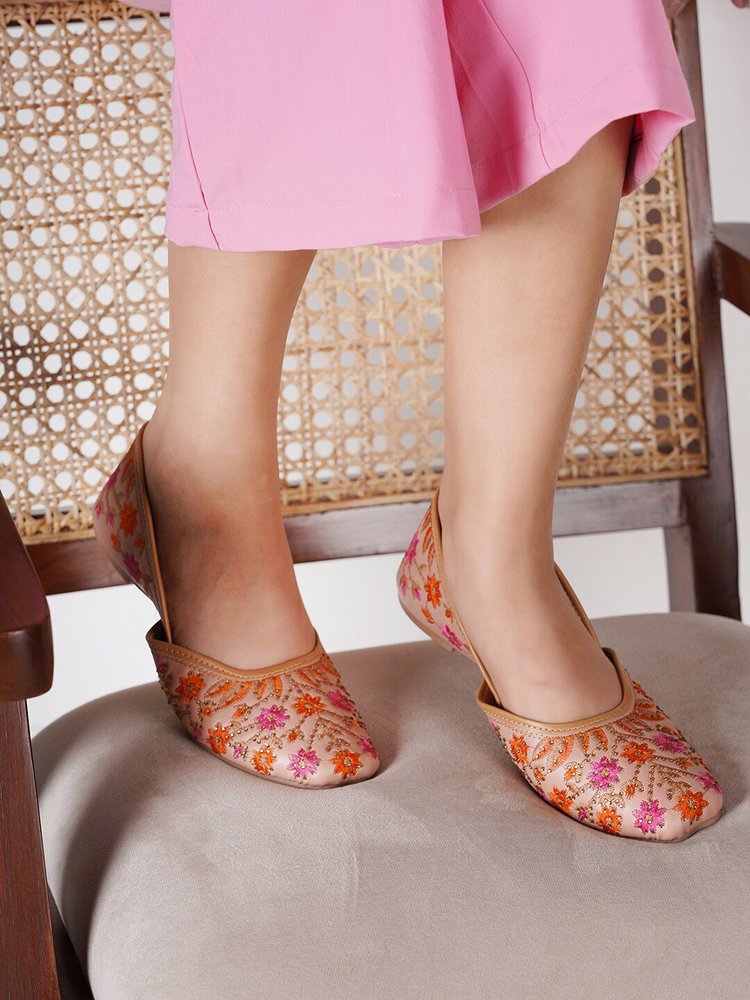
- Shoes: mojaris (closed slip-ons with a curved toe) that go on without your hands.
- Colour: green is the classic, and any busy print hides a stray smudge better than a pale plain fabric.
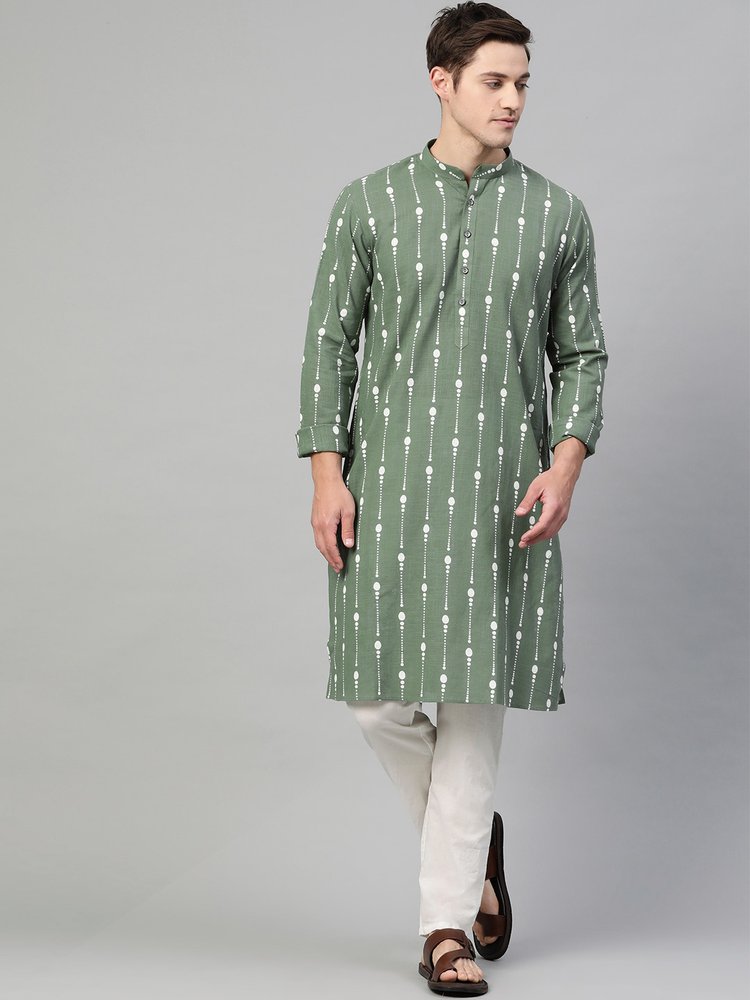
Men have it easier, because few of them queue for henna. A printed kurta is plenty, and a light jacket in a bright shade makes it look planned.
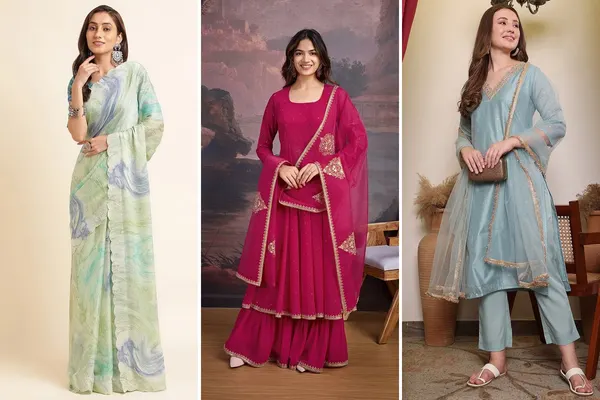
Mehndi looks in greens and bright prints
Easy sleeves, skirts and shararas made for sitting, and slip-ons.



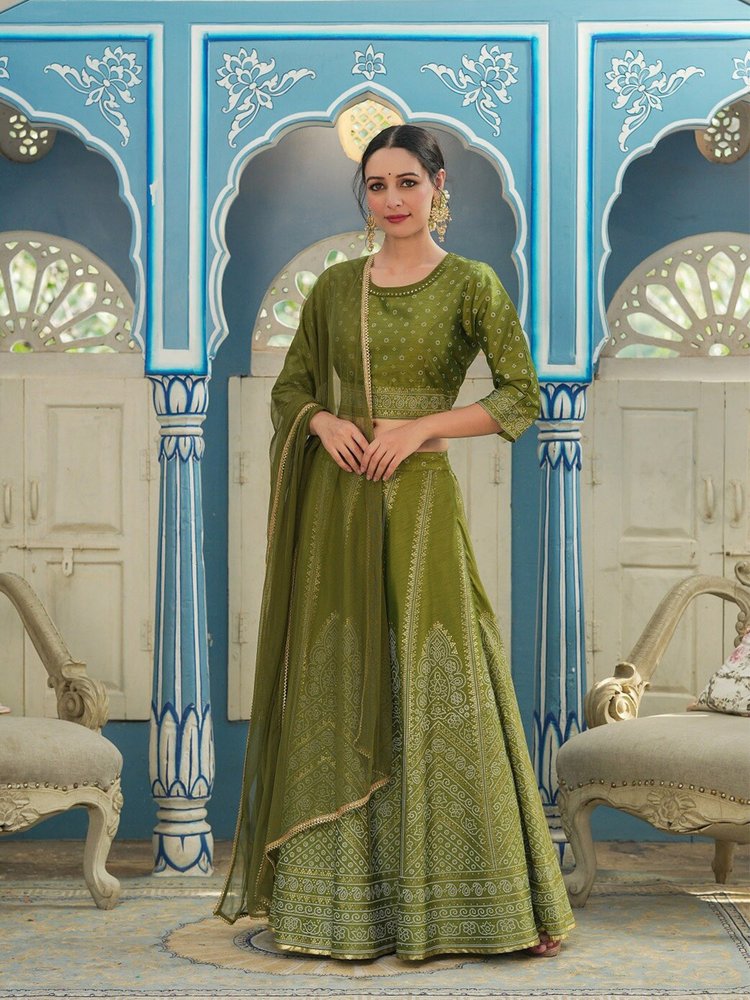
A printed lehenga that works twice
This green and gold printed silk lehenga comes with a ready-to-wear blouse and a net dupatta. The print feels easy enough for a daytime mehndi, while the gold tones can take heavier earrings for an evening function.
- Three-quarter sleeves leave room for henna
- The blouse is already stitched, so no tailor is needed
- Hand wash, according to its care label
What do you wear to a sangeet?
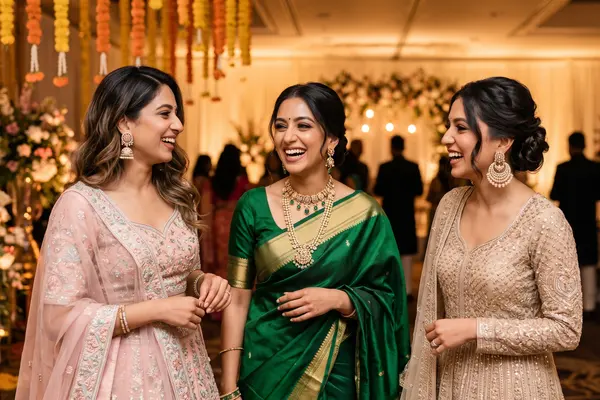
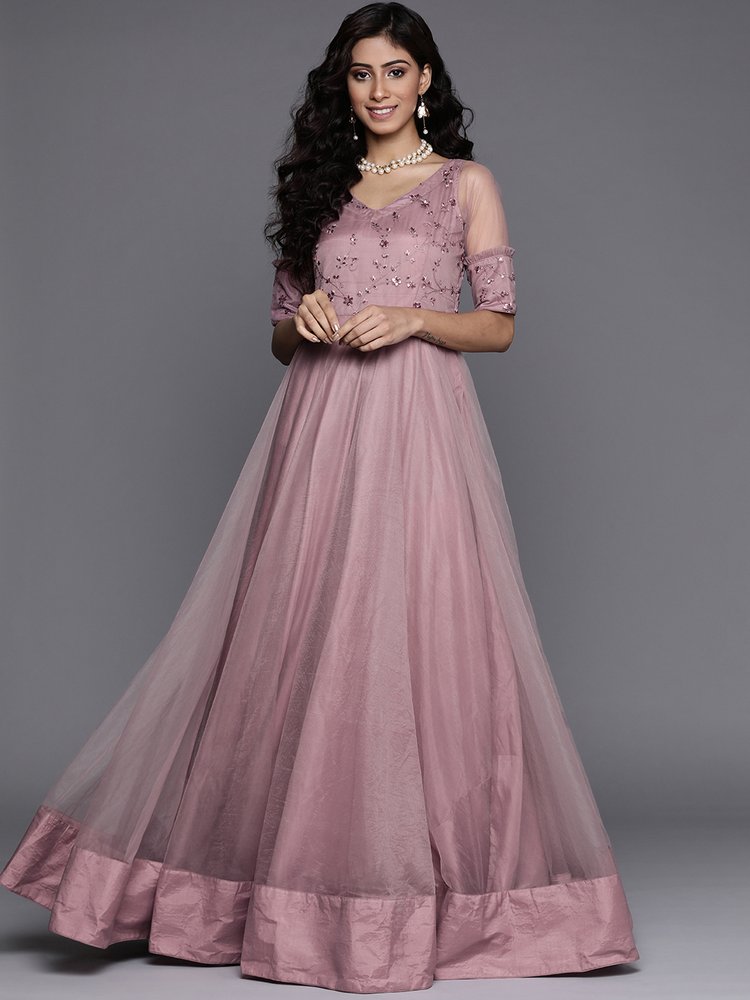
Wear your party look, as long as you can dance in it. A sangeet is an evening of family performances followed by a very full dance floor, and someone will pull you onto it. Sequins, mirror work and metallics all come into their own under stage lights.
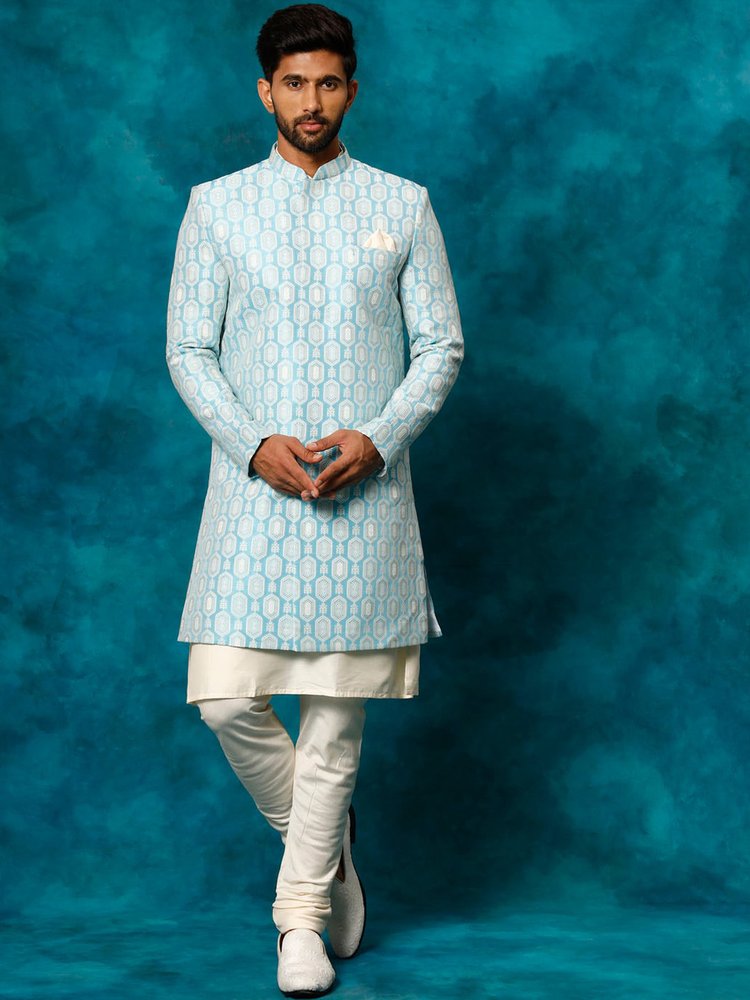
Before you commit, test the outfit at home: raise both arms, squat, spin once and take the stairs. A lehenga should clear the floor by about half an inch (1 cm) in the shoes you will actually wear, or you will tread on it by the second song. A saree stays put if you pin the pleats and the shoulder drape. Men can have fun here too: an Indo-western sherwani or a silk kurta with an embroidered Nehru jacket, the sleeveless stand-collar kind, gives you shine without feeling like the groom. Halls get warm, so choose something you can bear after an hour of dancing.
Sangeet outfits with some shine
Sequins, soft flares and heels low enough for the dance floor.
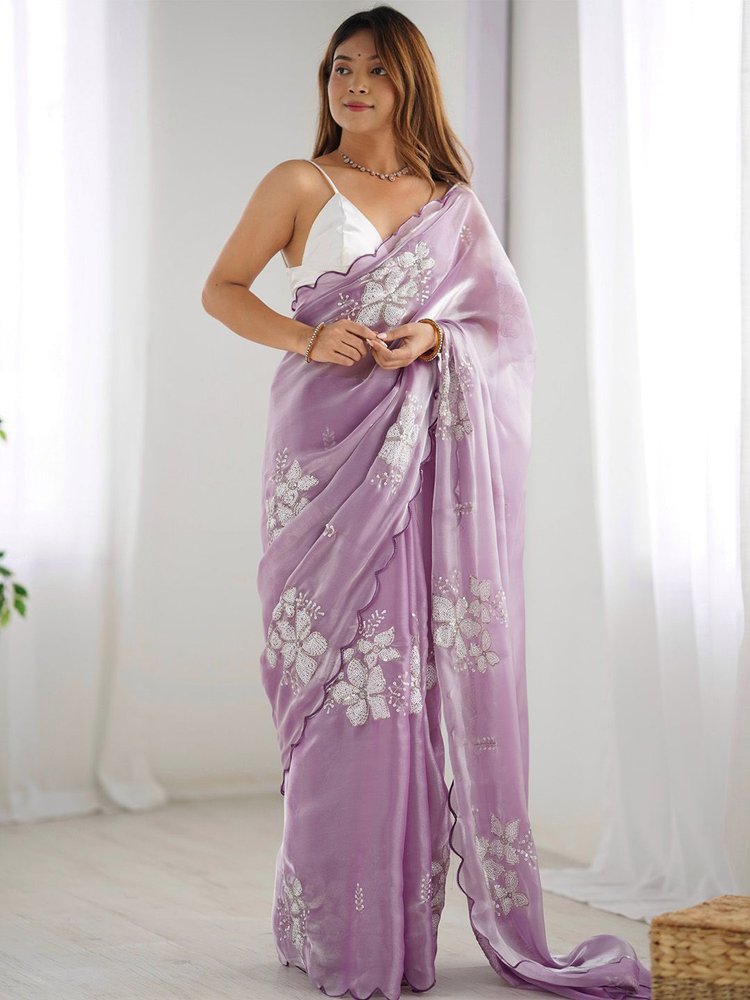


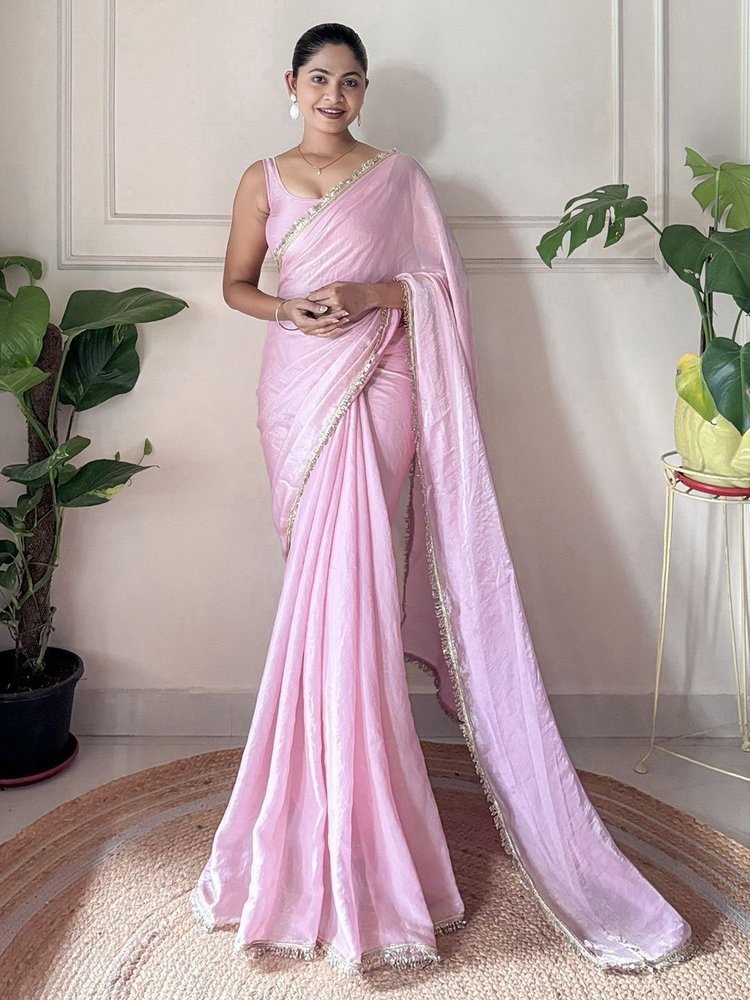
A sequinned saree for the dance floor
A soft pink tissue saree with a sequinned border, and light enough to dance in once pinned. Like many sarees, it comes with fabric for the blouse rather than a finished one.
- 5.5 metres (about 18 feet) of saree plus a 0.8 metre (about 31 inch) blouse piece
- The blouse piece is unstitched, so allow time for a tailor
- Dry clean only
What do you wear to the wedding ceremony?
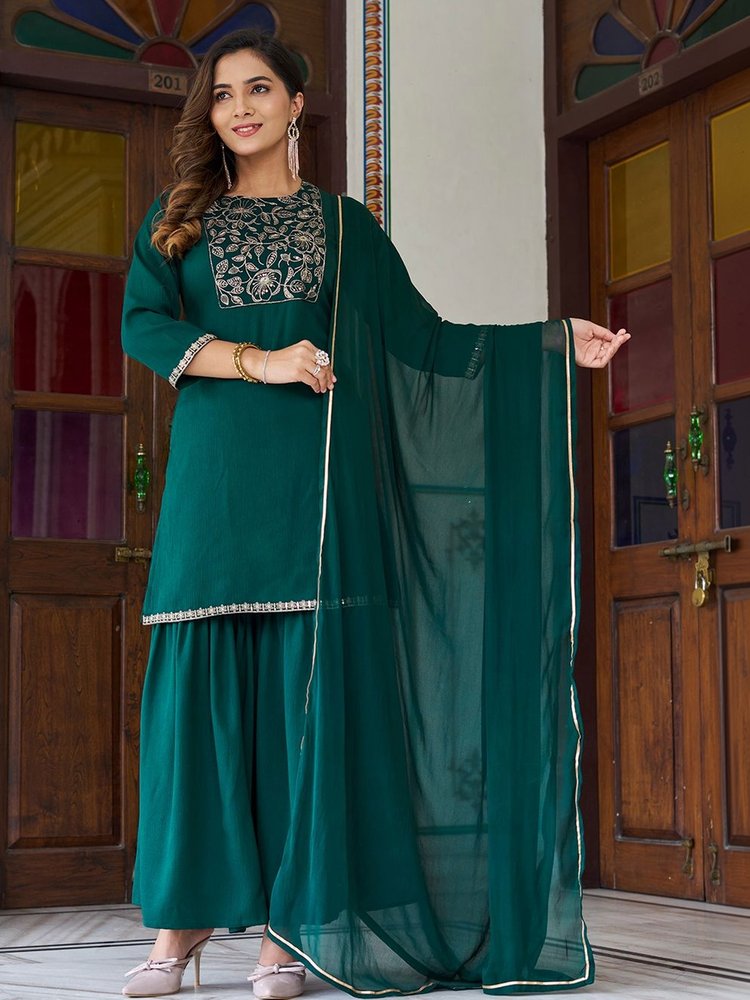
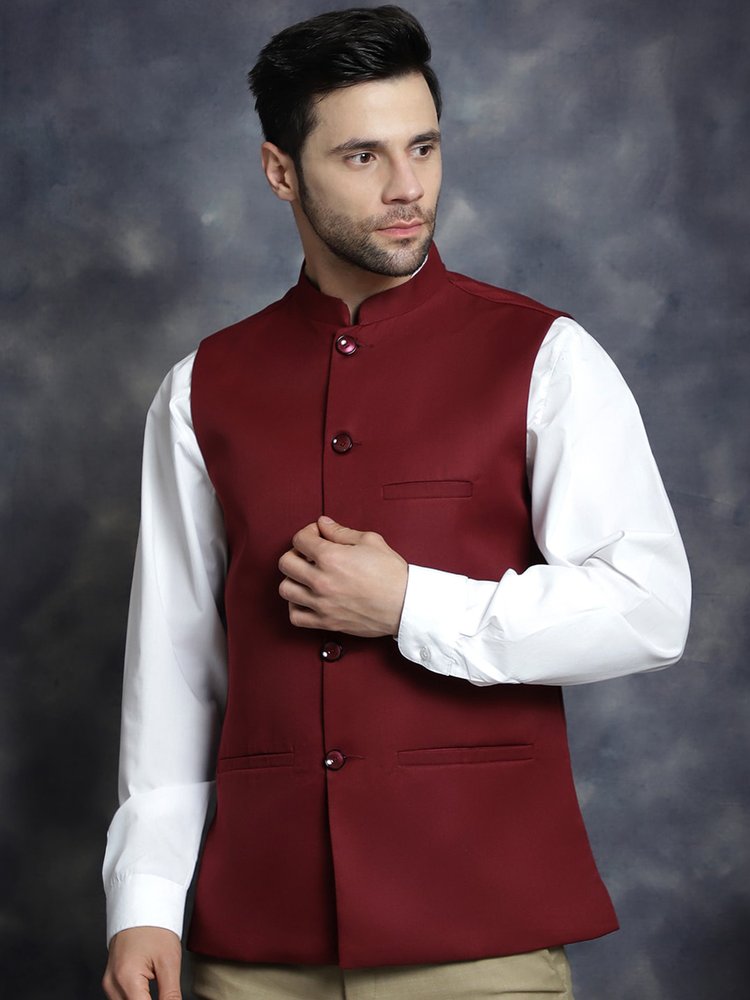
Wear traditional clothes in a rich colour, covered at the shoulders and comfortable for a long sit. The ceremony can run two to three hours, and in a Sikh gurdwara you will sit on the floor, so a tight gown is the wrong tool for the job. A silk saree, a silk sharara set or a long anarkali all fold neatly around you.
Check the clock on the invitation. A morning ceremony suits lighter shades such as peach, soft yellow and pastel pink, while an evening one can go deep with emerald, teal and purple. Stay clear of bridal red, plain white and all black, as these colours carry meaning for many families at the rites themselves.
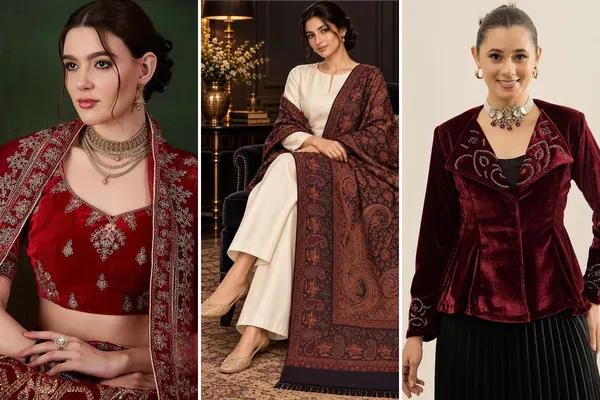
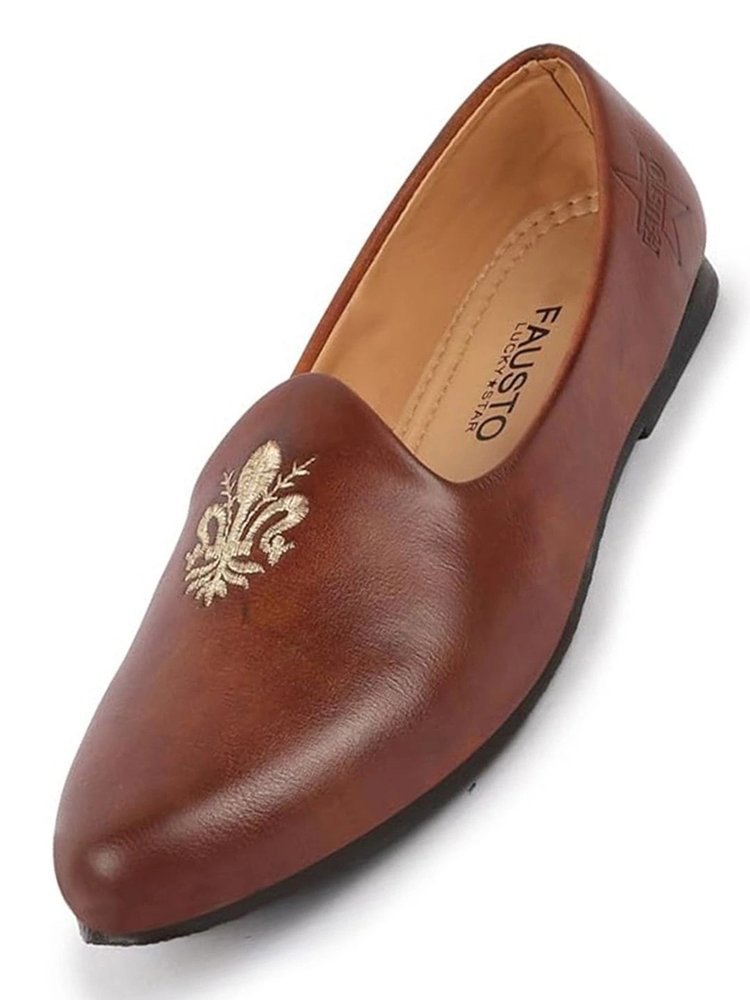
Ceremony outfits in silk and deep colour
Traditional shapes for women and men, with slip-ons that come off fast.



What do you wear to the reception?
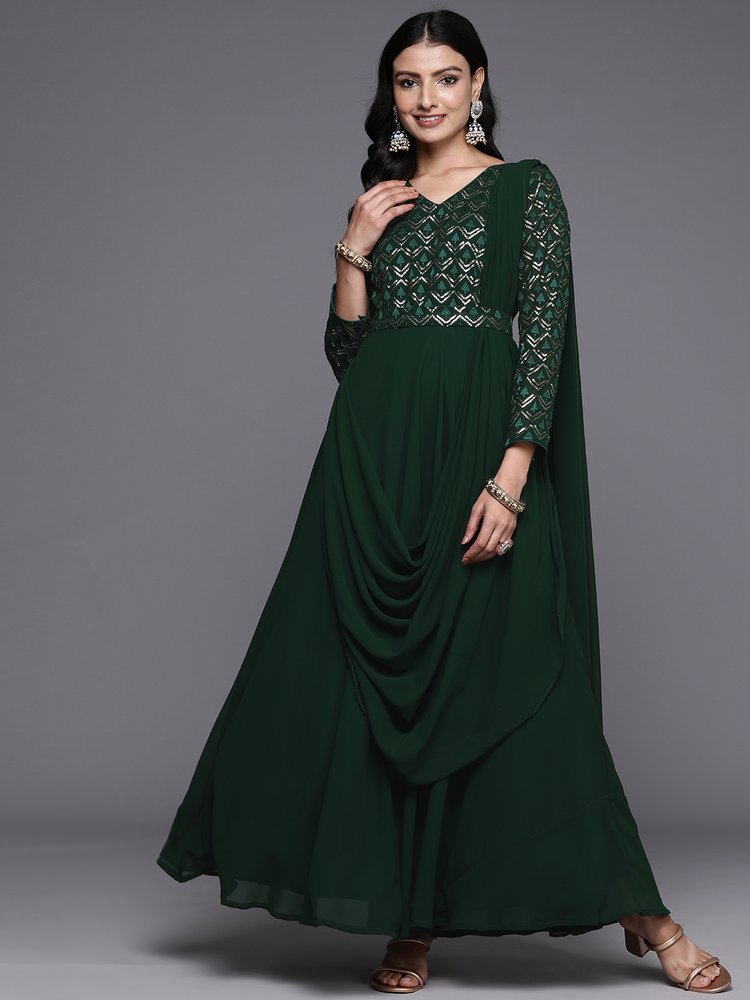
Wear the most glamorous thing you packed. The rites are over, nobody is sitting on the floor, and the mood is close to a Western black-tie dinner. This is the one function where a floor-length gown feels completely at home. Colours loosen up too, and most families are relaxed about black here.
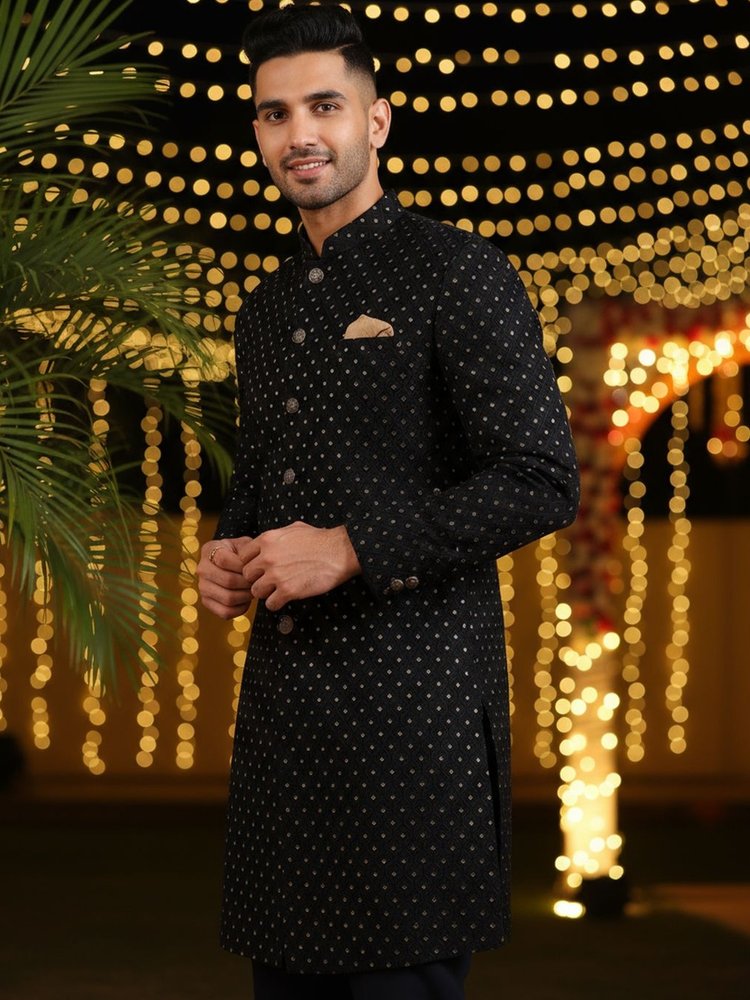
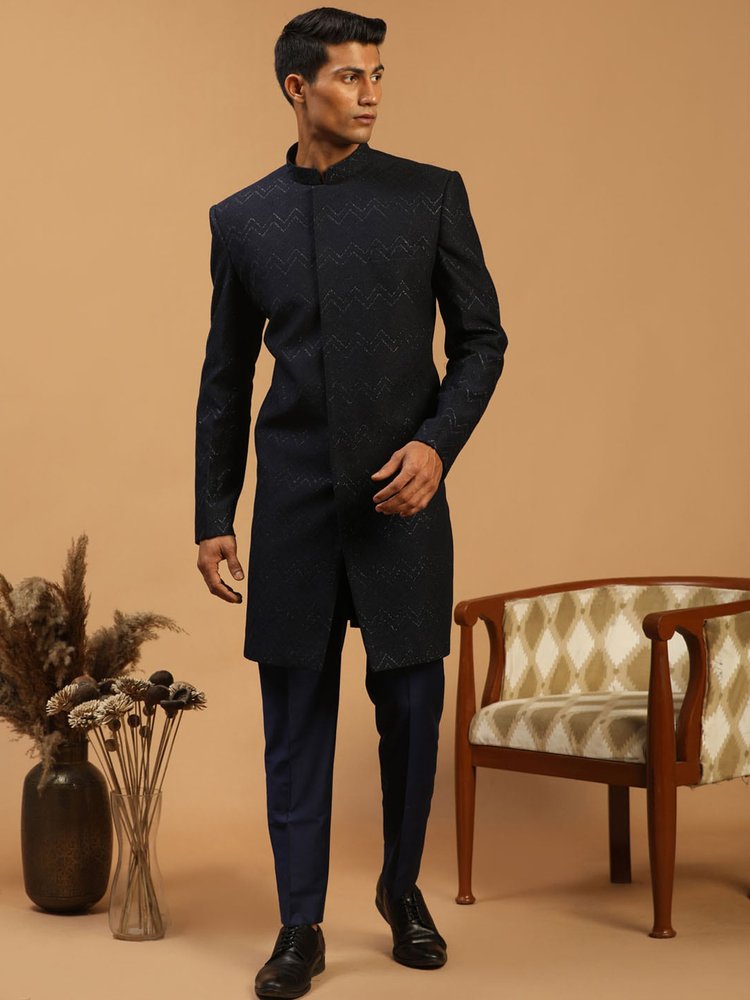
Women can pick a gown, a heavier lehenga or an evening saree, and pieces from our Luxe Collection in silk, velvet or zari suit this night well. Men choose between a sherwani and a sharp dark suit, and neither looks out of place. This is also the night for proper heels, as you are mostly standing, eating and posing for photos.
Reception gowns and sherwanis
Floor-length shapes, dark evening menswear and a metallic heel.



What is the difference between a ceremony outfit and a reception outfit?
A ceremony outfit is traditional, modest and made for sitting. A reception outfit is about glamour, and Western clothes are welcome. If you own only one formal outfit, wear something simple to the ceremony and dress it up later.
| Ceremony | Reception | |
|---|---|---|
| Mood | Religious, respectful | Party, photos, dancing |
| Shapes | Saree, sharara set, anarkali, kurta and jacket | Gown, lehenga, statement saree, sherwani, suit |
| Western clothes | A long-sleeved maxi at most, and ask first | Welcome |
| Colours to skip | Bridal red, plain white, all black | Few rules, though leave the spotlight to the couple |
| Shoulders and legs | Covered | A bare shoulder or side slit is usually fine |
| Shoes | Off at the door | Your best heels or polished shoes |
Same day and no time to change? Start with a silk saree or anarkali and small earrings. For the evening, add bold jewellery, swap flats for heels and let down your hair. Men can do the same by adding a jacket to the ceremony kurta.
What if your invitation lists a function not mentioned here?
Most of the other names are a regional version of one of the five, or a smaller event beside them. India has many wedding traditions, so match the name to the closest one below and ask a relative of the couple if you are still unsure.
| On the invitation | What it is | What to wear |
|---|---|---|
| Pithi, gaye holud | The Gujarati and Bengali versions of the haldi | Haldi rules: washable and bright |
| Garba or raas | Gujarati circle dancing, sometimes with sticks, often held instead of a sangeet | A chaniya choli (a very full, swirling skirt and blouse) and flat shoes |
| Baraat | The groom's joyful procession to the venue, often outdoors with music | Your ceremony outfit, plus shoes you can dance in on pavement |
| Cocktail night | A party without rites, common at weddings abroad | Cocktail dress, fusion set, or a suit without a tie |
| Puja | A family prayer before the wedding | Modest kurta set or saree, shoes off |
| Pheras, Anand Karaj, nikah, muhurtham | Names for the ceremony in Hindu, Sikh, Muslim and South Indian weddings | Ceremony rules, with your head covered for Anand Karaj, and silk for a South Indian morning |
How many outfits do you really need?
Two or three outfits cover all five functions if you plan them as a set. Nobody will count, and guests repeat outfits all the time. Start with the ceremony, because it has the strictest rules, then work outward.
- Three outfits: one cotton kurta set for haldi and mehndi, one silk piece for the ceremony, and one sparkly piece for sangeet and reception.
- Two outfits: a printed lehenga for the daytime functions, plus a silk saree for the ceremony and reception, with heavier jewellery at night.
- Men, two outfits: a cotton kurta for the day functions, and a silk kurta with a Nehru jacket for everything after dark.
- Change the extras: a different dupatta, shawl or pair of earrings makes one outfit read as two.
Need ideas in one place? The wedding guest edit gathers silk, sequins, lehengas and shararas together.
Your function-by-function packing checklist
- Read each line of the invitation for its time, place and any colour theme.
- Choose the ceremony outfit first, then build the others around it.
- Stitch any blouse piece, and try on each outfit with its shoes well before you leave.
- Do the dance test: arms up, squat, spin, stairs.
- Pack safety pins, a spare dupatta pin and a small sewing kit.
- Carry a head covering for a gurdwara, and a shawl if the venue is cold.
- Lay heavy pieces flat in your case, and steam them when you arrive.
- Keep one old top in your bag for after the haldi.
Keep reading
Questions people ask
What do you wear to a mehndi as a guest?
Choose a light kurta set, a sharara or a printed lehenga in a bright colour, with sleeves you can push above the wrist. Add shoes that slip on without your hands, as henna takes time to dry. Men can wear a printed kurta.
Do you have to wear yellow to a haldi?
Usually no, unless the invitation sets a colour theme. Yellow is the tradition and looks lovely in the photos, but orange, pink and other warm shades are welcome. The more important choice is washable cotton, as the paste can mark your clothes.
What is the difference between a sangeet and a mehndi outfit?
A mehndi is a relaxed daytime gathering, so it calls for light fabrics and simple prints. A sangeet is an evening party with dancing, so it suits sequins, embroidery and metallics. Either way, make sure you can sit and move easily.
Can you wear the same outfit to the ceremony and reception?
Yes, and many guests do, especially when both happen on one day. Pick a silk saree or anarkali that respects the ceremony's rules, then add bolder jewellery and heels for the evening. Men can add a jacket to a silk kurta.
Can you wear a gown to an Indian wedding?
A gown is ideal for the reception and works at many sangeets. For the ceremony, it is safest with long sleeves and enough room to sit, and a kurta set or saree is the easier choice. A gown is less practical at a haldi or mehndi.
What do men wear to each Indian wedding function?
Men can wear a cotton kurta to the haldi, a printed kurta to the mehndi and an Indo-western sherwani or embroidered Nehru jacket to the sangeet. A silk kurta with a jacket suits the ceremony, and a sherwani or dark suit suits the reception. Keep the same order of rising formality, whichever pieces you own.
About the numbers
- Google autocomplete, United States, read 2026-11-02: The questions this guide answers are the ones people type, including what to wear to the ceremony, the reception, and ceremony vs reception.
- WeddingWire, What to Wear to an Indian Wedding, read 2026-11-03: Indian weddings commonly span two or three days; the ceremony can last two to three hours; guests sit on the floor at Sikh weddings.