What Is a Kurta Set? The Three Pieces, Lengths and How to Wear One
A kurta set is a matching outfit: a long tunic called a kurta, a bottom such as palazzos or straight pants, and often a dupatta, a long scarf.
In short
- A kurta set is a coordinated outfit made of a kurta (a long tunic), a matching bottom and, in a three-piece set, a dupatta (a long scarf).
- A kurta usually ends around the knee or lower, while a kurti is the shorter version that stops nearer the hip.
- On about 4,000 kurta sets we measured, a calf length kurta typically runs 46 in (117 cm) from shoulder to hem, so check that figure instead of trusting the label.
- Palazzos and straight pants suit most days, a churidar looks neat and traditional, and a sharara is the dressiest of the four.
- Choose cotton or linen for heat, silk blends for evenings and velvet for cold weather, and the same outfit can go to work if you drop the dupatta and keep the shoes simple.
A kurta set is a coordinated outfit: a kurta, which is a long tunic, worn with a matching bottom such as palazzos, straight pants, a churidar or a sharara. A three-piece set adds a dupatta, a long scarf. It is one of the easiest ways into Indian dress, since the matching is already done.
You will see it worn to Diwali parties in Toronto, Saturday lunches in Sydney and offices in Dubai, and it never needs a saree's pleats or a lehenga's weight. Below: what each piece does, how long a kurta should be in real inches and centimetres, which bottom to choose, which fabric suits your weather, and how to take one from a desk to a dinner. Browse the full range of kurta sets as you read.
What are the three pieces of a kurta set?
The three pieces are the kurta, the bottom and the dupatta, and each has one clear job. Two-piece sets simply leave the dupatta out, which often makes them the better choice for everyday wear.
- The kurta is the tunic and the star of the outfit. Its side seams stay open near the hem so you can walk and sit with ease. The word comes from Persian and Urdu, and the garment has been worn across South Asia for centuries by both women and men.
- The bottom sets the mood. Wide legs read relaxed, narrow ones read tidy, and flared ones read festive. It is usually cut from the same fabric or a plainer one that matches.
- The dupatta is the finishing layer. On the sets we checked it was about 2.1 to 2.3 m long, roughly 7 to 7.5 feet, which is plenty to drape over one shoulder, across both or around the neck. A plain set can also take a separate dupatta or stole in a contrast colour.
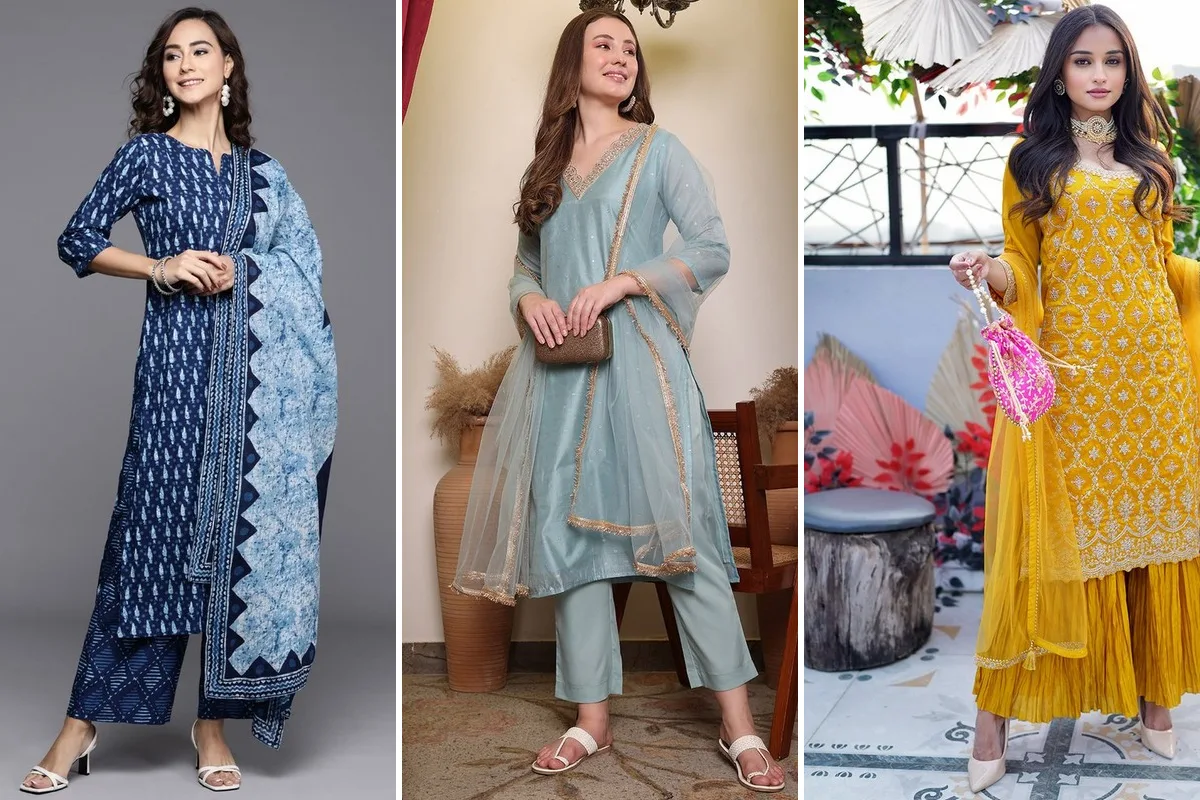
Three pieces, ready to wear
Each comes with kurta, bottom and dupatta, from printed cotton to a sheer net drape.
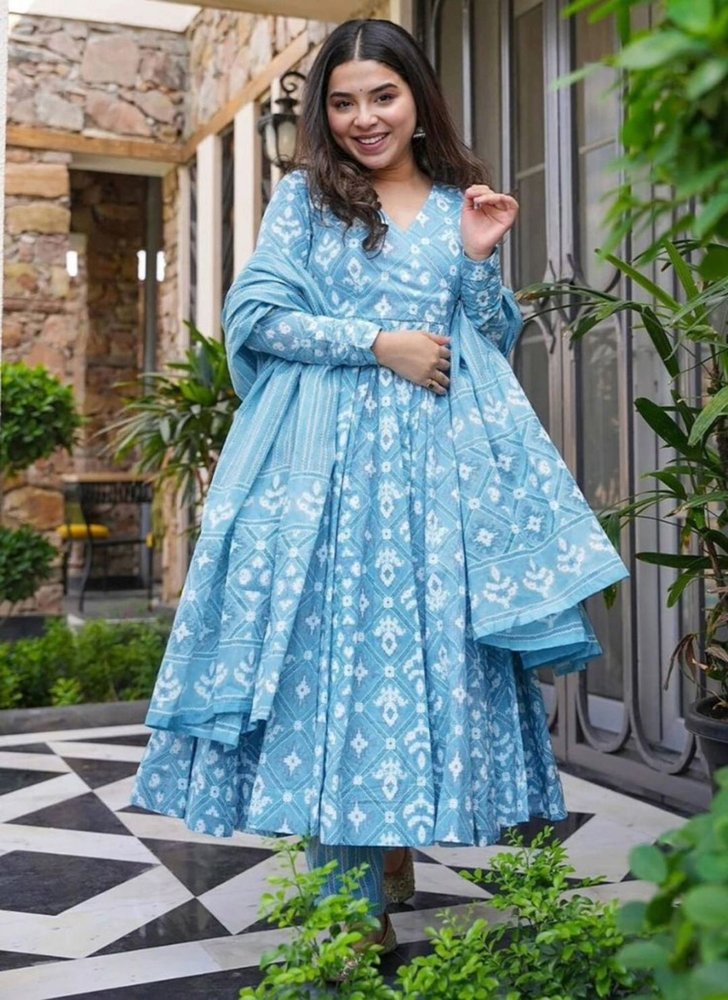

Kurta vs kurti: what is the difference?
A kurti is a shorter kurta, usually ending around the hip, while a kurta normally reaches the knee or below. In daily speech people swap the two words, and you will find both under kurtas and kurtis. So a kurti set is the same idea with a shorter top, which works well over a flared sharara or wide pants.
A salwar kameez is a close cousin too. The salwar is a loose pant gathered at the ankle and the kameez is its tunic, so a kurta worn with a salwar is, for most people, the same outfit under another name. Men wear kurta sets as well, usually a knee-length kurta with pyjamas or trousers, and our guide for men at Indian weddings covers when to add a jacket.
How long should a kurta be?
For most women a calf length kurta, about 46 in (117 cm) from shoulder to hem, is the easy default, and it pairs with every bottom below. We pulled the size charts of about 4,000 kurta sets on this store to see what the labels mean in practice. The figures are front length, read at size M.
| Label on the listing | Typical front length | Most fall between | Wear it with |
|---|---|---|---|
| Above knee | 34 in (86 cm) | 28 to 45 in (71 to 114 cm) | Sharara, wide palazzos |
| Knee length | 43 in (109 cm) | 32 to 46 in (81 to 117 cm) | Straight pants, palazzos |
| Calf length | 46 in (117 cm) | 44 to 48 in (112 to 122 cm) | Straight pants, churidar, palazzos |
| Floor length | 48 in (122 cm) | 46 to 55 in (117 to 140 cm) | Churidar, slim pants |
Two things stand out. First, the labels are loose: a "knee length" kurta can be longer than some "calf length" ones, so read the number. Second, in about 9 of 10 sets the front length barely changes from one size to the next, so sizing up will not add length. If you are petite or tall, choose by that measurement.
What size kurta set should you buy?
Choose by the garment's bust and hip measurements rather than your usual letter, because those figures tell you what you will actually be wearing. Measure a kurta or top you love while it lies flat, double the width, and match it to the chart. The typical figures below are the garment's own, not body sizes, so they already include room to move.
| Size on the chart | Garment bust | Garment hips |
|---|---|---|
| S | 36 in (91 cm) | 39 in (99 cm) |
| M | 38 in (97 cm) | 41 in (104 cm) |
| L | 40 in (102 cm) | 43 in (109 cm) |
| XL | 42 in (107 cm) | 45.5 in (116 cm) |
| XXL | 44 in (112 cm) | 48 in (122 cm) |
Which bottom suits you: palazzo, straight pants, churidar or sharara?
Pick palazzos for comfort, straight pants for work, a churidar for a neat traditional line and a sharara for a party. If you already own the top, there are separate ethnic bottoms to pair with it.
| Bottom | What it is | Best for | Watch out for |
|---|---|---|---|
| Palazzo | Wide, straight-falling pants | Heat, long days, travel | Can swamp a petite frame if the kurta is long and loose too |
| Straight pants | Slim to regular leg, ends above the ankle | Office, brunch, everyday | Plain ones can look severe with a plain kurta, so let one piece carry the print |
| Churidar | Narrow pants cut extra long, so they gather in folds at the ankle | Anarkalis, formal events | Needs a snug fit at the calf; tighter than most people expect |
| Sharara | Wide pants flared from the knee, often in tiers | Sangeets, Diwali, Eid, parties | Heavy hems drag on stairs and wet ground, so add a heel |
Palazzo kurta sets
A kurta set with palazzos is the one to try first. The wide leg forgives a lot, sits well in heat, and balances a longer top. Keep the shoes slim or heeled so the hem clears the floor.
Indigo printed cotton for daytime, tone-on-tone embroidery on a silk blend for evenings.

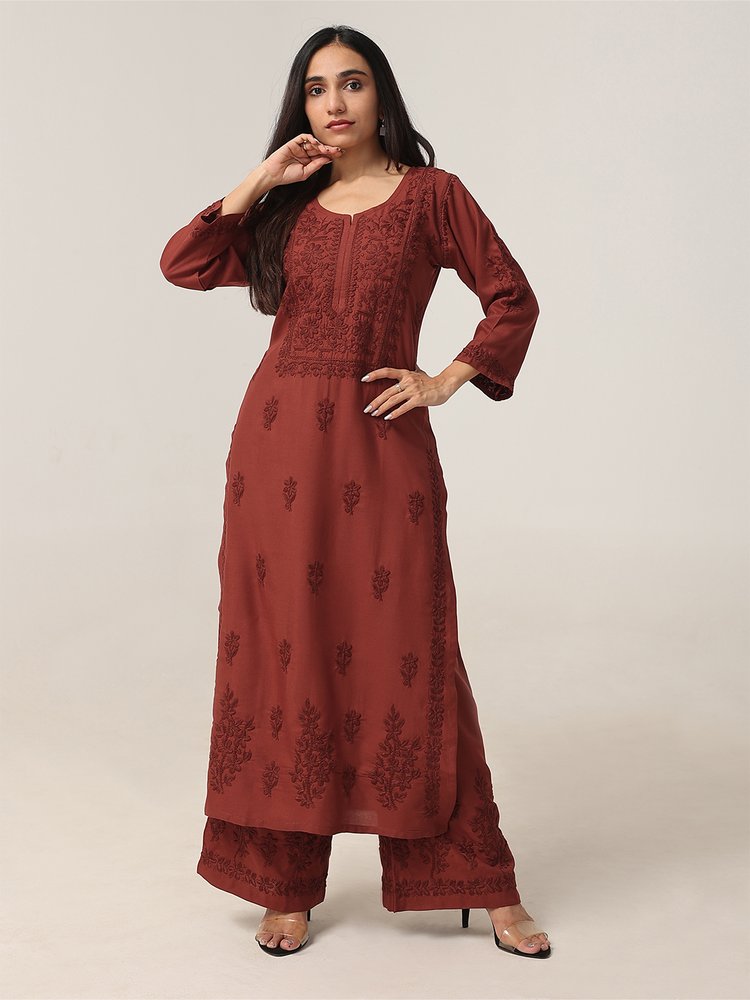
Straight pants
This is the closest a kurta set comes to a trouser suit, and it translates easily to life outside India. A flared kurta over slim pants keeps things festive, while a straight kurta looks crisp enough for a meeting.
Flared and A-line silk blends with embroidery at the hem or neck.

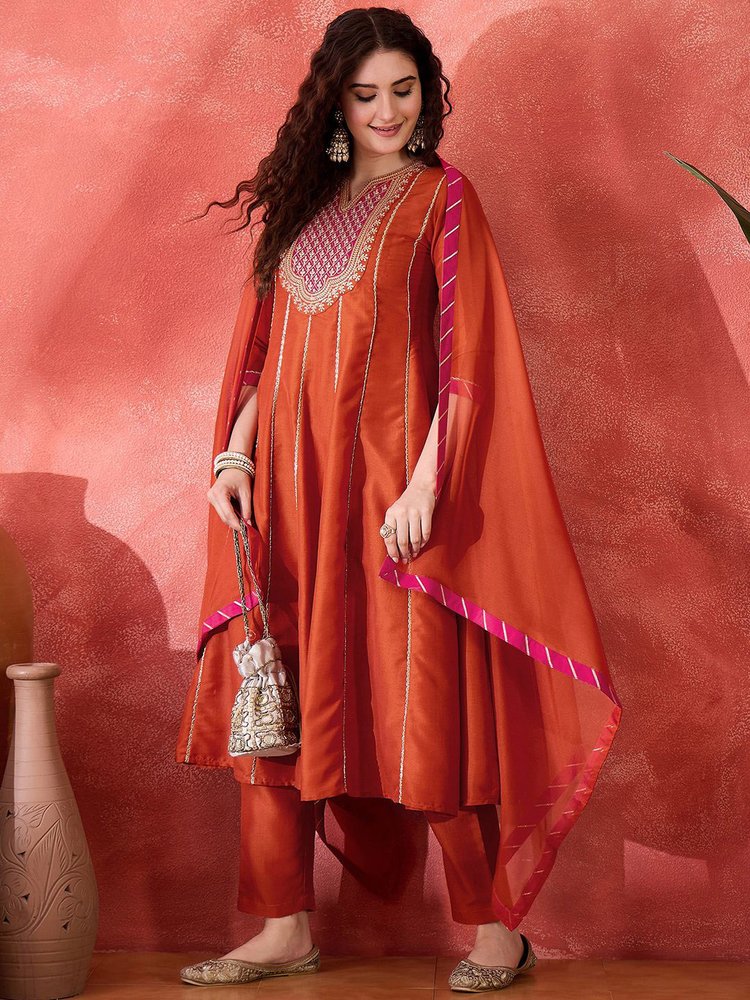
Churidar
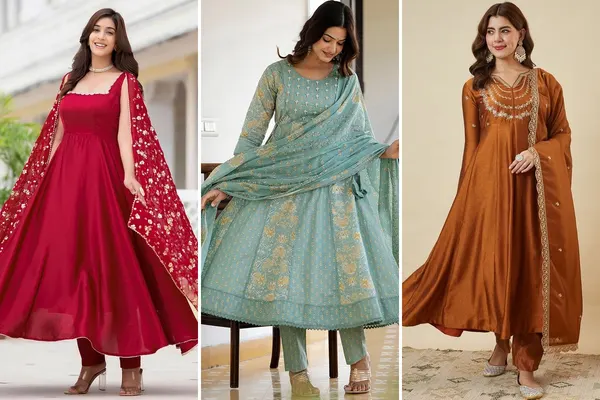
The extra length gathers at the ankle in soft rings, which is why a churidar looks so finished under an anarkali, a kurta that flares from the chest. Try it on sitting down as well as standing.
One printed cotton for daytime, one floor length in a dressier maroon.
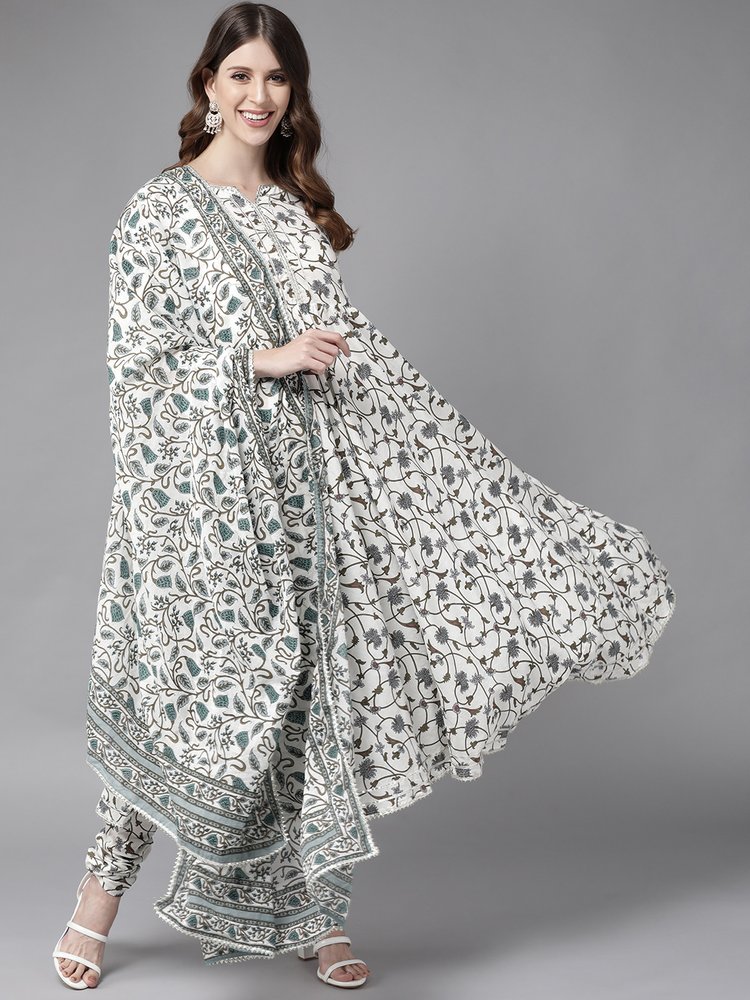

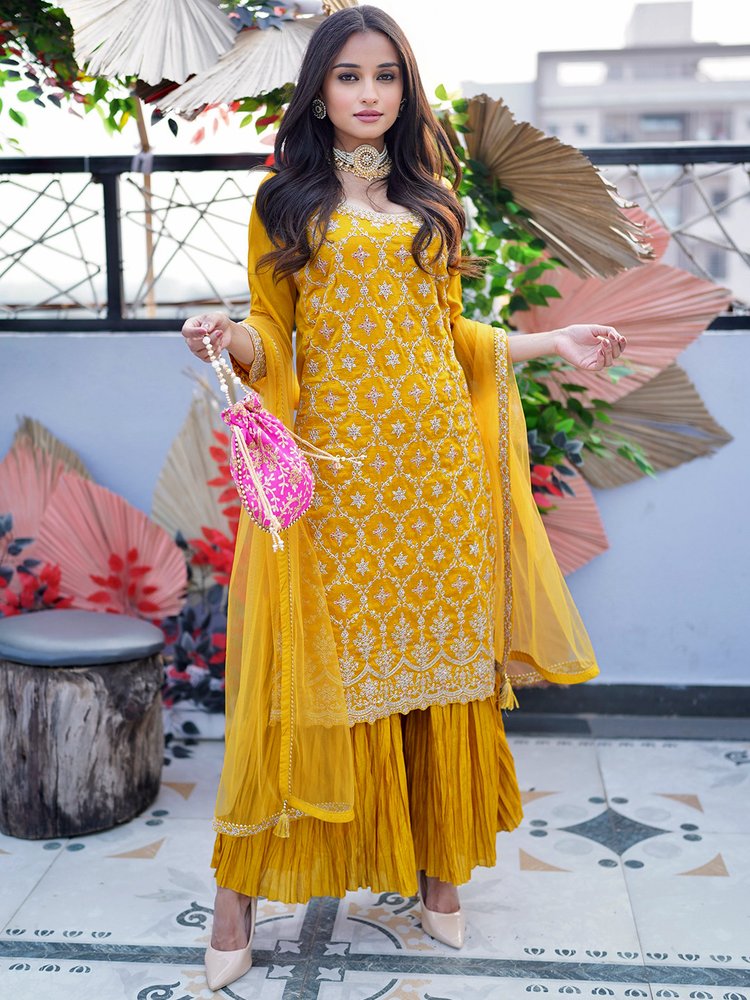
Sharara
A sharara does the talking, so most pair it with a shorter kurta that lets the flare show. It is the most festive of the four and a natural fit for a sangeet or mehendi. Our wedding functions guide shows where it belongs through the week.
A zari-embroidered set, a sleeveless cotton angrakha (a wrap-style top) and a short silk kurta.


Which fabric should you choose for your season?
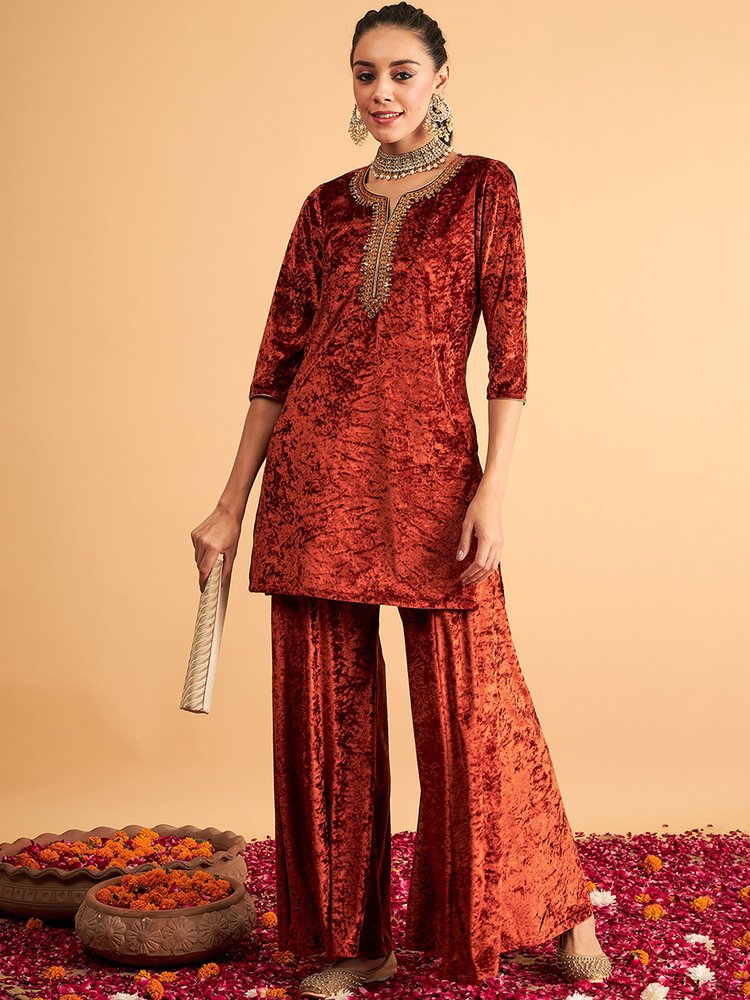
Dress for your actual weather, not the calendar in India: thin cotton and linen for heat, silk blends for mild evenings, velvet for real cold. A humid Singapore afternoon and a February night in Calgary need very different sets. More cold-weather ideas are in the winter edit.
| Weather | Fabrics | How to wear it | Care to expect |
|---|---|---|---|
| Hot or humid | Cotton, linen, cotton blends | Sleeveless or three-quarter sleeves, palazzos | Usually hand wash; check the label |
| Mild | Chanderi (a light, faintly sheer weave), silk blends, rayon | Light dupatta, straight pants | Often dry clean or gentle hand wash |
| Cold | Velvet, heavier silk blends | Long coat over the top, closed shoes, a layer underneath | Usually dry clean |
For heat, and for real cold
Linen for warm days, velvet for winter.


How do you dress a kurta set up or down?
Change the accessories first and the fabric second. The same kurta can look relaxed with flat sandals and bare ears, and much more formal with statement earrings and a clutch. The party edit and the Luxe Collection show where that road ends.
- To dress down: skip the dupatta, push up the sleeves, add white sneakers or flat sandals, and wear one small pair of hoops.
- In the middle: add juttis, which are closed flat shoes with a curved toe, and small jhumkas, the bell-shaped earrings.
- To dress up: choose silk, zari (metallic thread) or chanderi, drape the dupatta properly, and add heels and one strong piece of jewellery.
- For a wedding: pick richer colours and more embroidery, then read our guide on what to wear as a guest or browse the wedding guest edit.
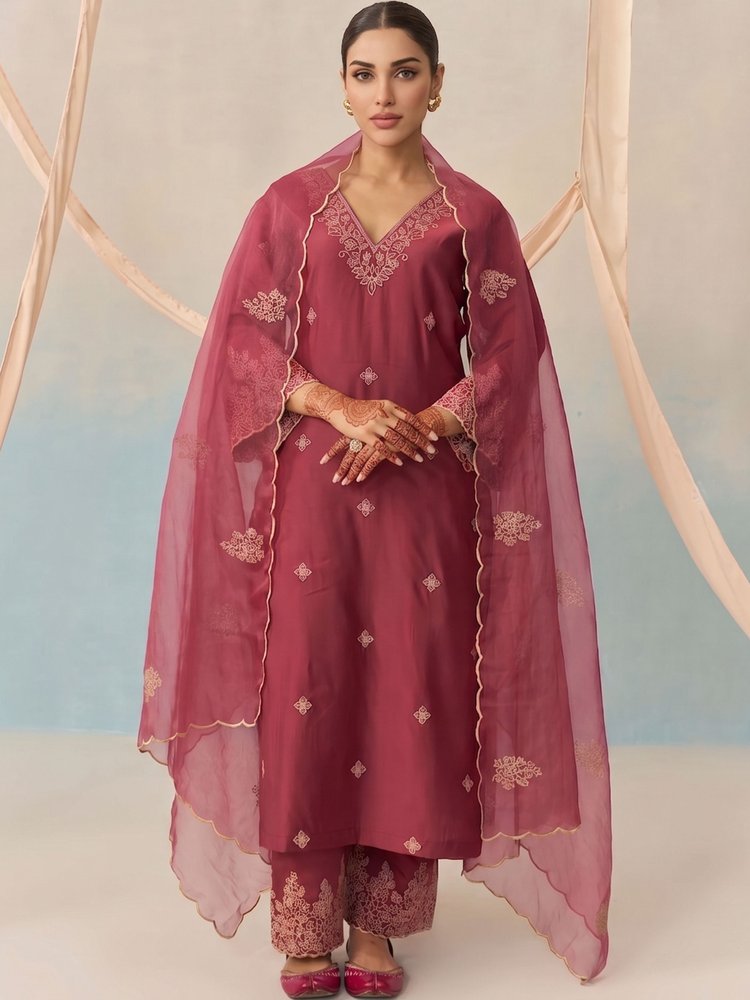
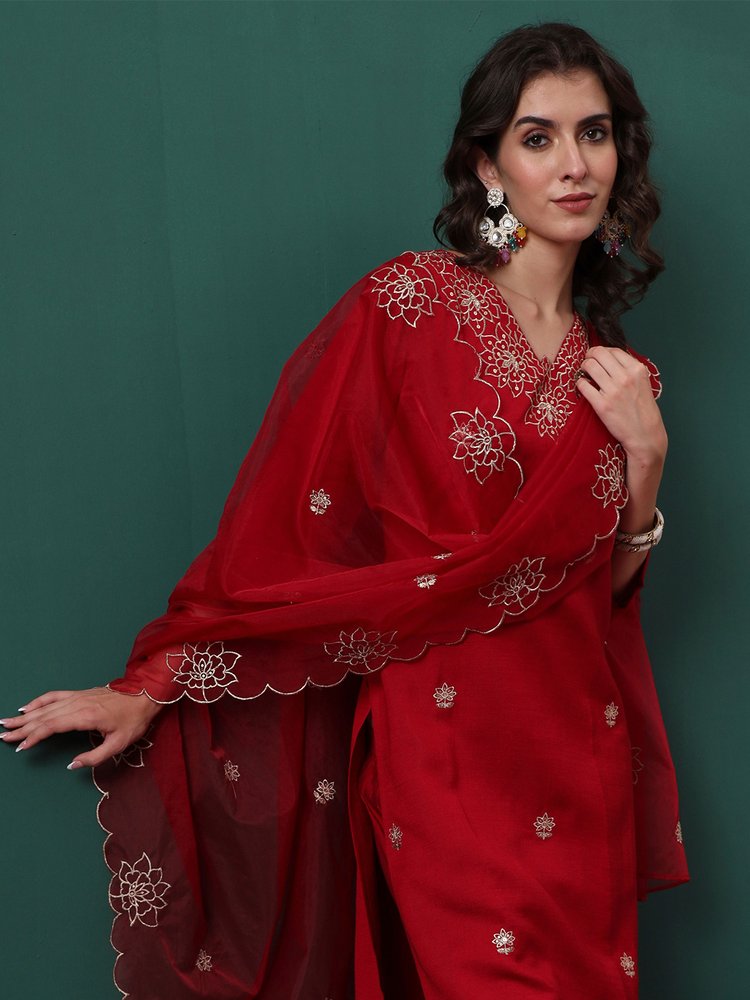
Sets that are already dressed up
Organza drapes and tonal embroidery.

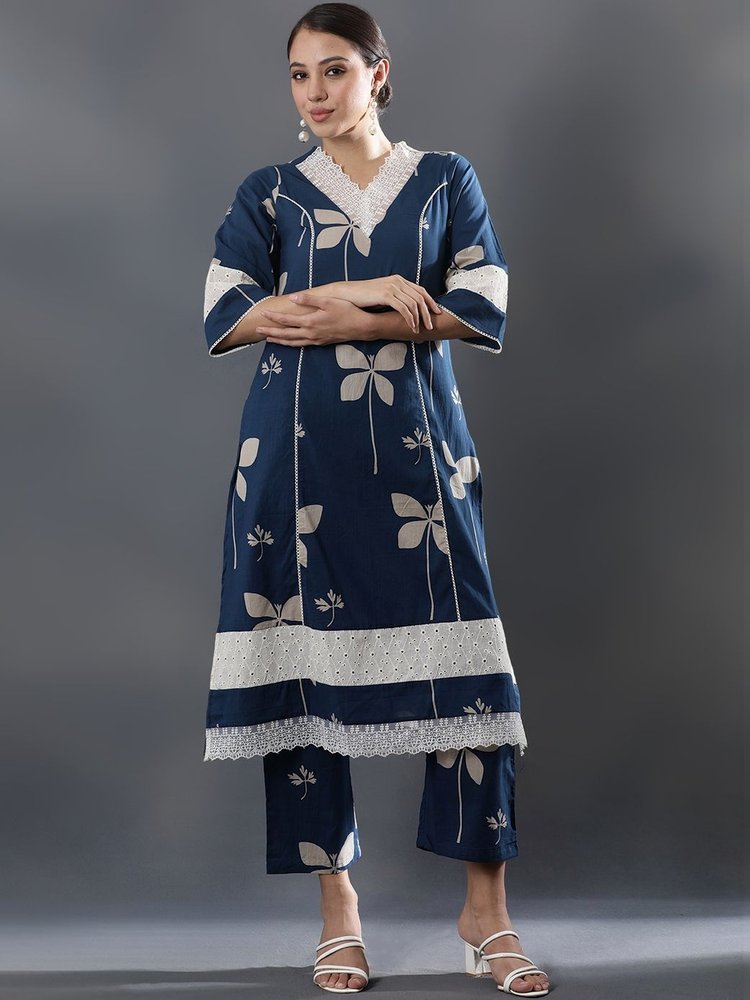
Can you wear a kurta set to work or brunch outside India?
Yes. A plain or quietly printed two-piece set looks polished in most offices, and a floral one suits brunch. The work edit gathers more ideas. Treat it as you would a tailored dress: clean lines, simple shoes, nothing that catches the light before evening.
- For the office, choose a straight cut in navy, olive, rust or black with slim pants, a closed neckline and little or no shine. A blazer over a knee-length kurta looks sharp for meetings.
- For brunch, go for a soft floral print in cotton or a cotton-linen blend, sleeveless if it is warm, with flat sandals or juttis.
- Skip the long dupatta for a commute or a busy desk. It catches in car doors and escalators. A short scarf gives the same colour with far less fuss.
Easy for a desk or a brunch table
No dupatta to manage.

What do men wear as a kurta set?
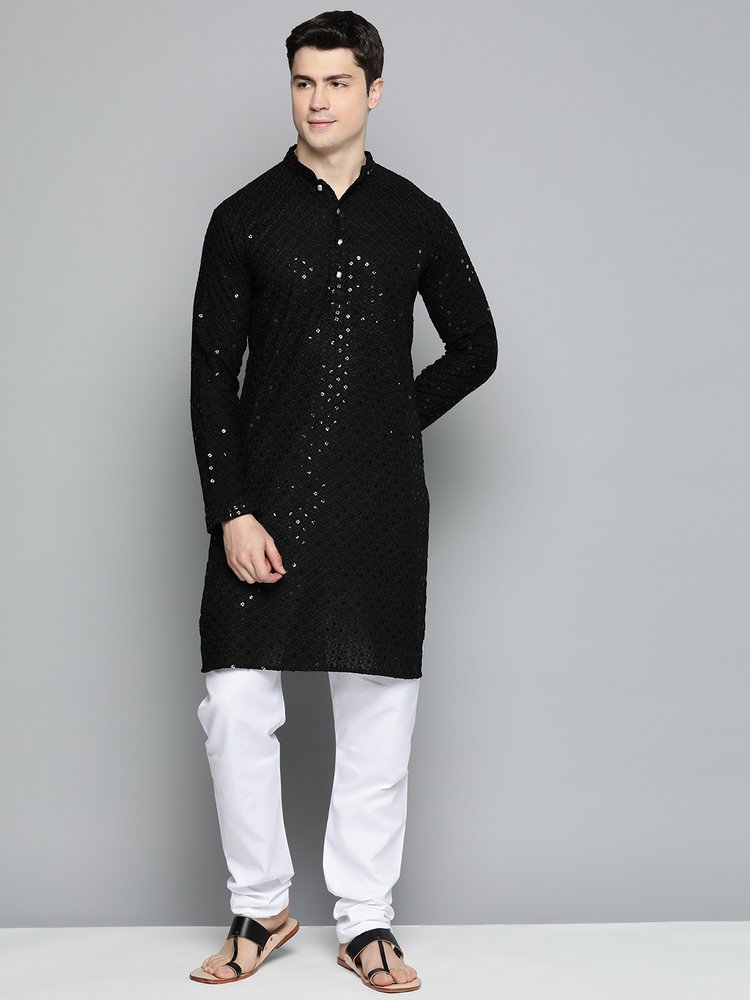
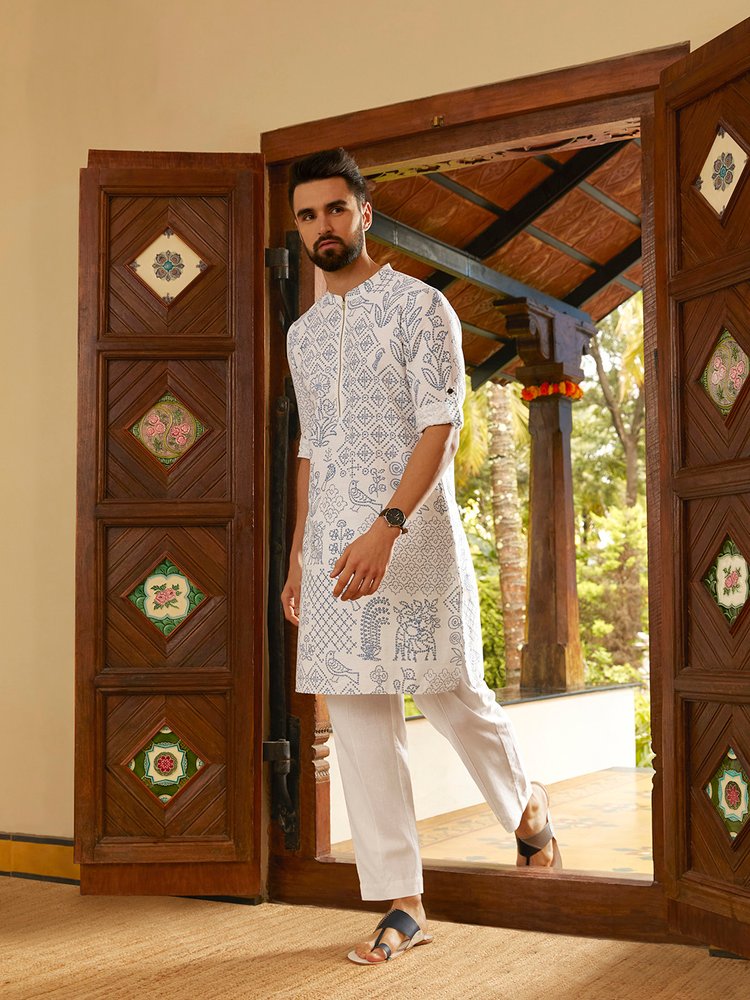
A men's kurta set is usually a knee-length kurta with pyjamas or slim trousers, in cotton for the day or with embroidery for an evening. A dupatta is rare outside a wedding, and most men add sandals or juttis. See the full men's kurtas.
Sequins and white pyjamas for a party, or a light cotton and linen blend for a summer lunch.
Keep reading
Questions people ask
What is a 3 piece kurta set?
It is a kurta, a matching bottom and a dupatta sold together, so the outfit is complete from the start. A 2 piece set has the kurta and bottom only. Choose the 2 piece for daily wear and the 3 piece when you want the drape.
Is a kurta set the same as a salwar kameez?
They are very close. A salwar kameez is a tunic with loose pants gathered at the ankle, while a kurta set can come with many bottoms, salwar among them. Most people use the two names loosely, so read which bottom a listing includes.
What is the difference between a kurta set and a kurti set?
The top's length. A kurti usually stops near the hip, and a kurta runs to the knee or below. A kurti set suits flared bottoms such as a sharara, while a longer kurta sits better over slim pants.
Is a kurta set formal?
It can be either, depending on the fabric. Printed cotton is casual, a plain straight cut is smart enough for many offices, and silk or embroidered sets suit weddings and formal dinners. For a very conservative office, start with a plain dark set.
Can I wear a kurta set to an interview?
In many workplaces, yes, if it is a plain straight cut in a dark colour with slim pants and no long dupatta. For a conservative company where you are not sure of the dress code, a suit is the safer pick. A blazer over the kurta can bridge the two.
Can I wear a kurta with jeans?
Yes. Shorter kurtas and kurtis look relaxed with straight jeans, and many people wear them this way for daily errands. Keep the kurta to the upper thigh or knee so the jeans still show, and add flat sandals or sneakers.
About the numbers
- TiaBow size charts, about 4,000 kurta sets, read 3 November 2026: Median and middle 80% of front length by listed length at size M; median garment bust and hips by size; about 9 of 10 sets vary by no more than 1 in across sizes; bottoms typically about 38 in from waist to hem.
- TiaBow product details, kurta sets, read 3 November 2026: Dupatta lengths of about 2.1 to 2.3 m on the sets checked.
- Wikipedia, Kurta and Kurti top, read 3 November 2026: Origin of the word, open side seams, the kurti as a shorter version.