What to Wear to an Indian Wedding as a Guest, Function by Function
Wear something bright, festive and modest: a kurta set, saree, lehenga or long colourful dress. Skip bridal red, plain white and all black, and plan one outfit per function.
In short
- Guests at an Indian wedding wear bright, festive clothes that cover the shoulders and knees at the ceremony, and either Indian dress or a long colourful Western outfit is welcome.
- Plan one outfit for each function you are invited to, which for most guests means two or three: light for a mehendi, playful for a sangeet, traditional for the ceremony and glamorous for the reception.
- Skip bright bridal red, plain white and all black at the ceremony unless the couple or their family says otherwise; jewel tones and pastels are safe everywhere.
- Non-Indian guests are welcome to wear a saree, lehenga or kurta, and the only things to leave out are the marks of a married woman or a bride, such as sindoor and bridal bangles.
- Bring a scarf or dupatta to cover your head and wear shoes you can slip off, because a gurdwara or temple ceremony usually asks for both.
As a guest at an Indian wedding, wear something bright, festive and modest enough to sit on a floor in. A kurta set, saree or lehenga is welcome on anyone, and a long colourful dress works too. Skip bridal red, plain white and all black, and plan one outfit for each function.
That is the short version. The long one matters because an Indian wedding is rarely one event. It is a run of parties and rites, each with its own mood, and the outfit that looks perfect at a Friday night sangeet looks odd at a Saturday morning ceremony. Here is how to dress for each one, wherever in the world the wedding happens to be. If you want to browse while you read, start with ethnic wear.
How many outfits do you need for an Indian wedding?
You need one outfit for each function you are invited to, and for most guests that is two or three. Read the invitation closely: each event usually gets its own line or page, often with a dress code or even a colour theme. Friends of the couple might only be invited to the ceremony and reception. Close family may have five events across three days.
Not sure what a phrase like "Indian formal" or "festive attire" means for this family? Ask a sibling or cousin of the couple rather than the couple themselves. They will be glad you asked, and they will know whether the aunties are wearing silk or sequins.
What should you wear to each function?
Dress lighter for daytime functions and build up towards the evening. This table is the whole guide on one screen; the sections below explain each row.
| Function | What happens | Women | Men | Shoes |
|---|---|---|---|---|
| Haldi | Turmeric paste is rubbed on the couple, usually with close family | Cotton kurta in yellow, nothing precious | Old or cotton kurta | Slides you can rinse |
| Mehendi | Henna for the bride and guests, often daytime and seated | Light kurta set or sharara | Cotton or linen kurta | Flat juttis or sandals |
| Sangeet | An evening of music, dancing and family performances | Lehenga, sharara or ready-to-wear saree | Silk kurta, printed Nehru jacket | Flats or a low block heel |
| Ceremony | The wedding rites, in a hall, temple or gurdwara | Silk saree, silk kurta set with dupatta, long-sleeved gown | Kurta set and Nehru jacket, or a suit | Anything that slips off fast |
| Reception | Dinner, speeches and a dance floor | Gown, organza saree, lehenga or long evening dress | Suit, sherwani or Nehru jacket | Your dressiest pair |
What do you wear to a mehendi?
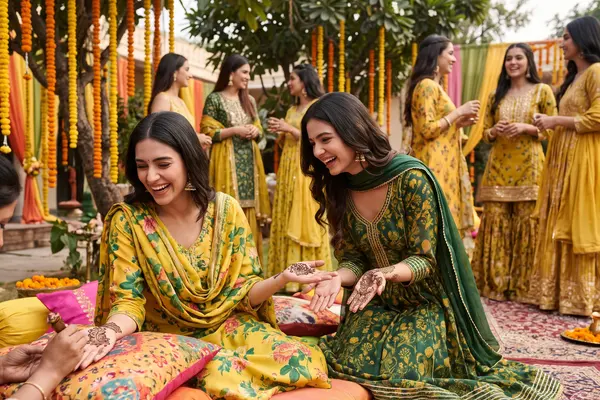
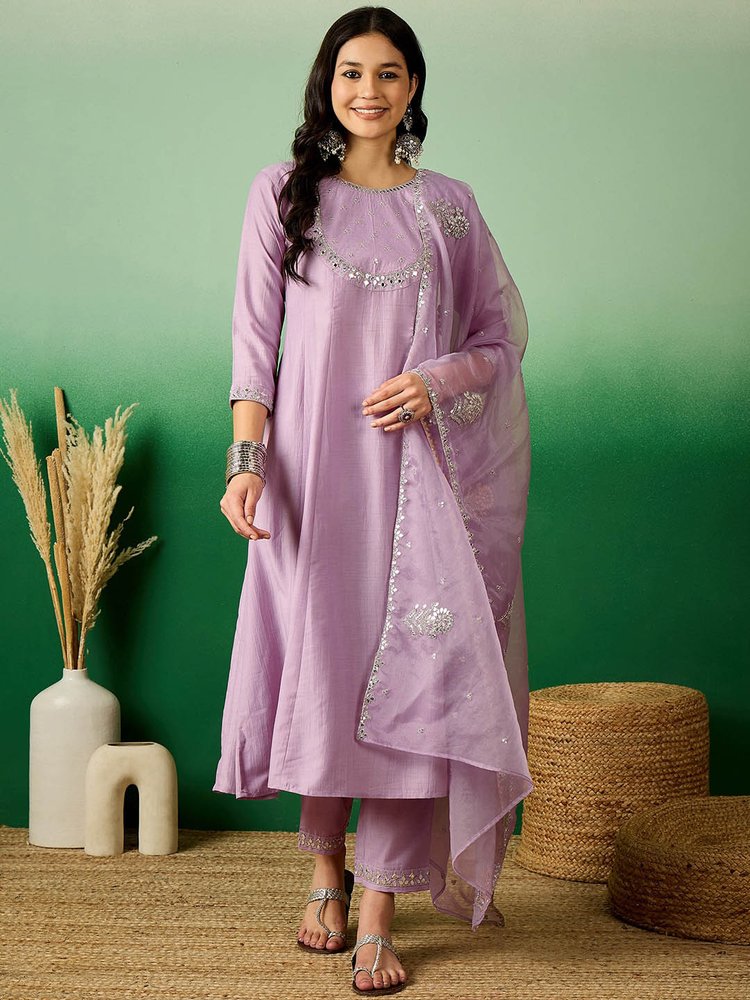
Wear something light, cheerful and easy to move in. A mehendi is the party where henna is drawn on the bride's hands and feet, and guests often queue for a small design too. Daytime and outdoor settings are common, so this is the place for yellow, lime, lavender and soft florals in a kurta set or a sharara, which is a pair of wide, flared trousers.
One practical thought: wet henna needs time to dry, and you cannot use your hands while it does. Choose sleeves that push above the elbow, a dupatta (the long scarf worn with Indian outfits) that stays pinned, and nothing that fastens with tiny hooks at the back.
Soft colour for a daytime party
A sharara or straight trousers sits easily when you are on a floor cushion waiting for henna to dry.


What do you wear to a sangeet?
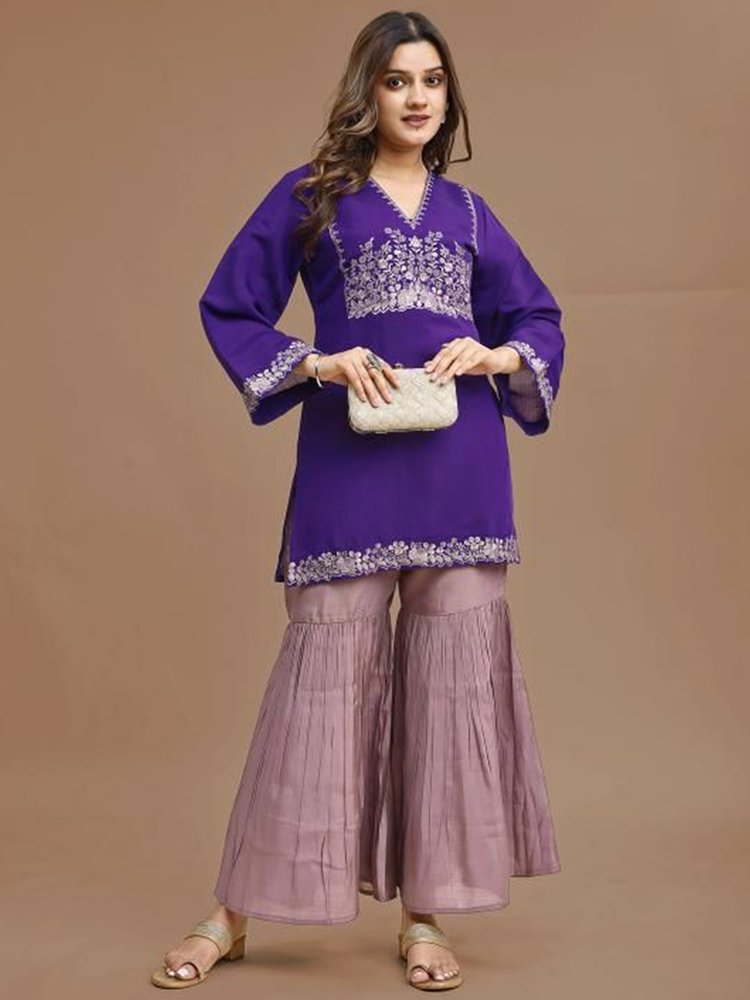
Wear your most playful outfit, because a sangeet is the party where everyone dances. A lehenga, a long full skirt worn with a cropped blouse and a dupatta, is the classic choice. Mirror work, sequins and bold prints all belong here.
Do the dance test at home. Raise both arms, spin twice and sit down. If the blouse rides up or the dupatta slides off, pin it at the shoulder and at the waist. Check the skirt hem with the shoes you plan to wear so you do not tread on it. Gujarati families may add garba, a circle dance with a lot of spinning, and for that a wide skirt and flat shoes are the sensible pair.
Made for a dance floor
Full skirts and flared trousers that move when you do.


What do you wear to the wedding ceremony itself?
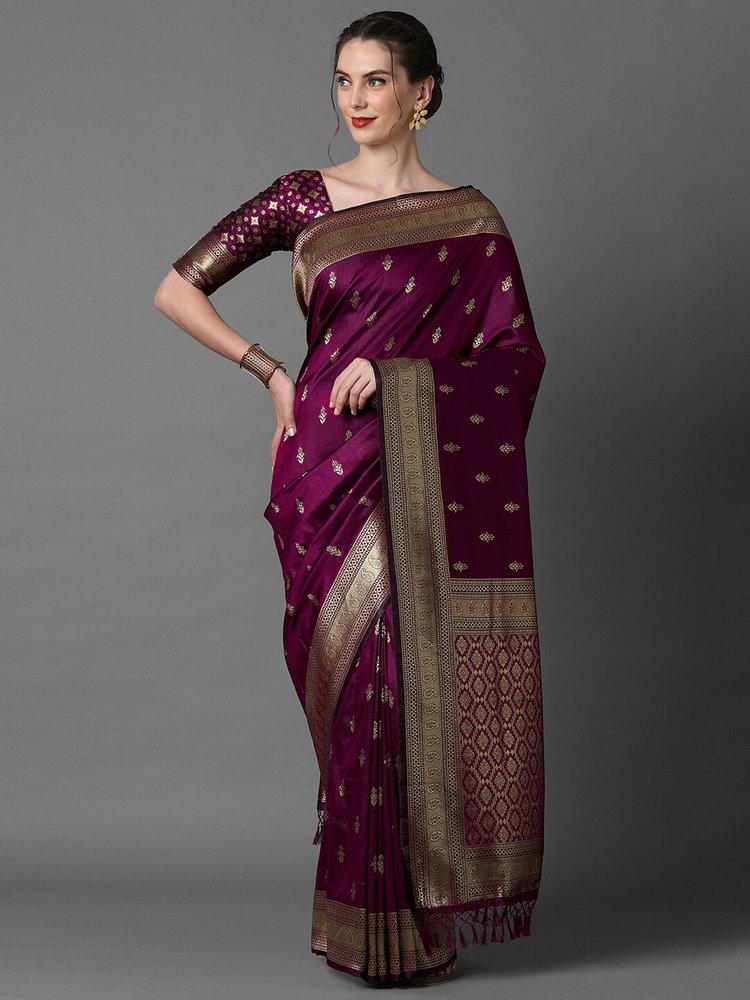
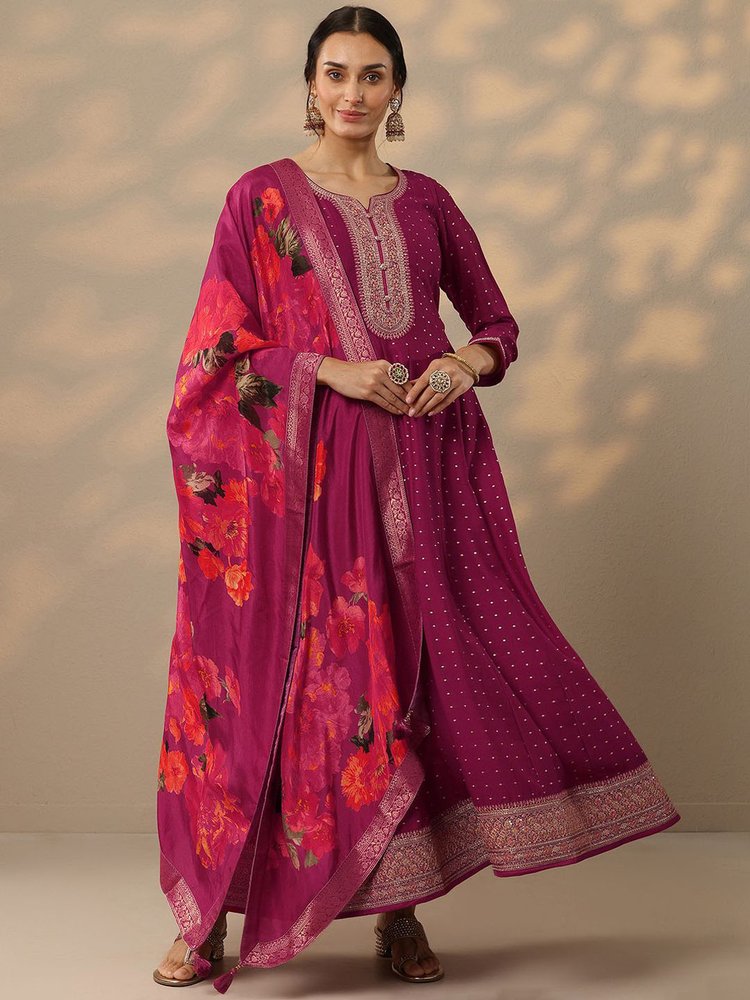
Wear your most traditional and most covered outfit, with your shoulders covered by a blouse, sleeve or dupatta. Rites often run two or three hours, sometimes in the morning, and you may be sitting for most of them. A silk saree, a silk kurta set with a dupatta or a long-sleeved ethnic gown all suit the mood.
A saree is one long length of cloth, usually about 6 yards (5.5 metres), pleated and wrapped over a fitted blouse and a petticoat. Many come with a blouse piece, which is uncut fabric for a tailor to make up, so book the tailor early. A plain ready-made blouse in a matching colour is a perfectly good backup.
The kind of ceremony changes the practical details:
- Sikh (Anand Karaj, in a gurdwara): everyone covers their head, shoes come off at the door and guests sit on the floor. Choose something you can sit cross-legged in, and keep your feet from pointing at the holy book. A fitted gown or pencil skirt is the wrong choice here.
- Hindu: the rites take place under a canopy called a mandap. Guests usually keep their shoes on in a hotel ballroom but take them off in a temple or near the mandap, so follow what the family does.
- South Indian: many ceremonies start early in the morning, so silk in daylight colours looks better than heavy evening sparkle.
- Muslim (nikah): modest is the word. Long sleeves are a good idea and many women bring a scarf for their hair.
Traditional, covered and comfortable for a long sit
Woven silk sarees, a silk kurta set and a long-sleeved gown.


What do you wear to the reception?
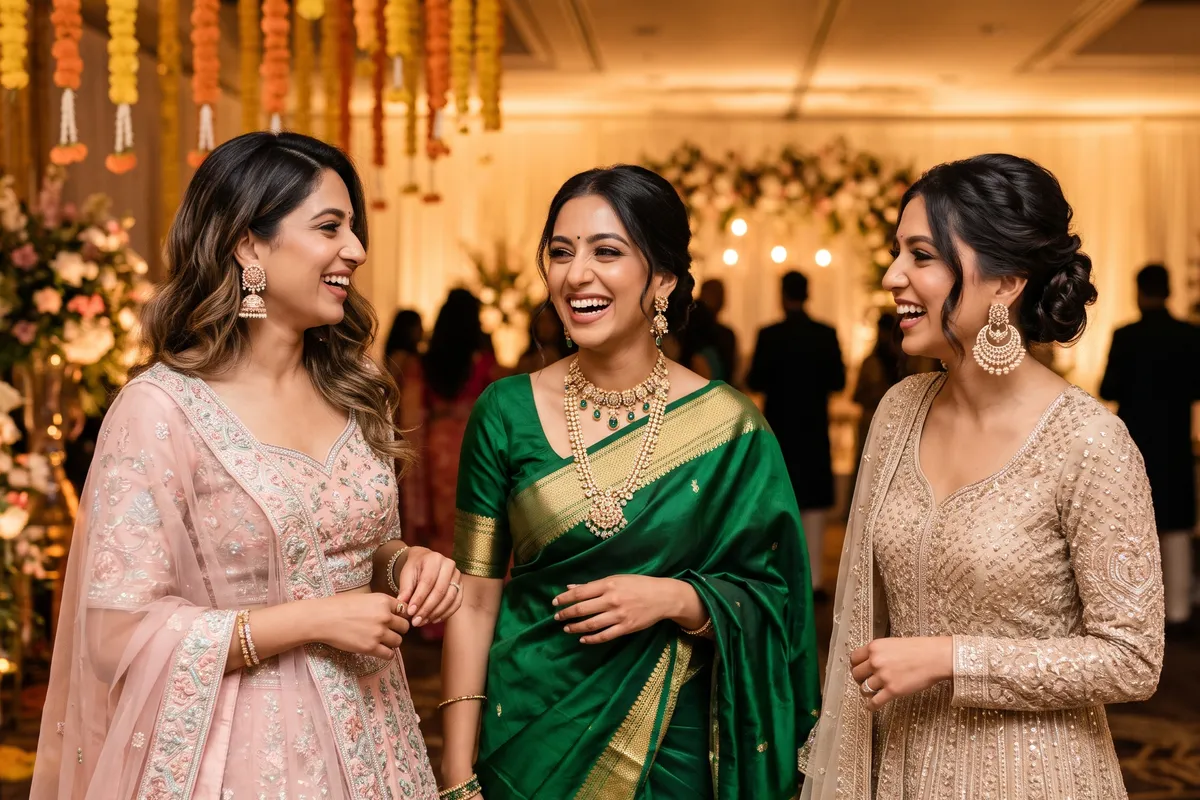
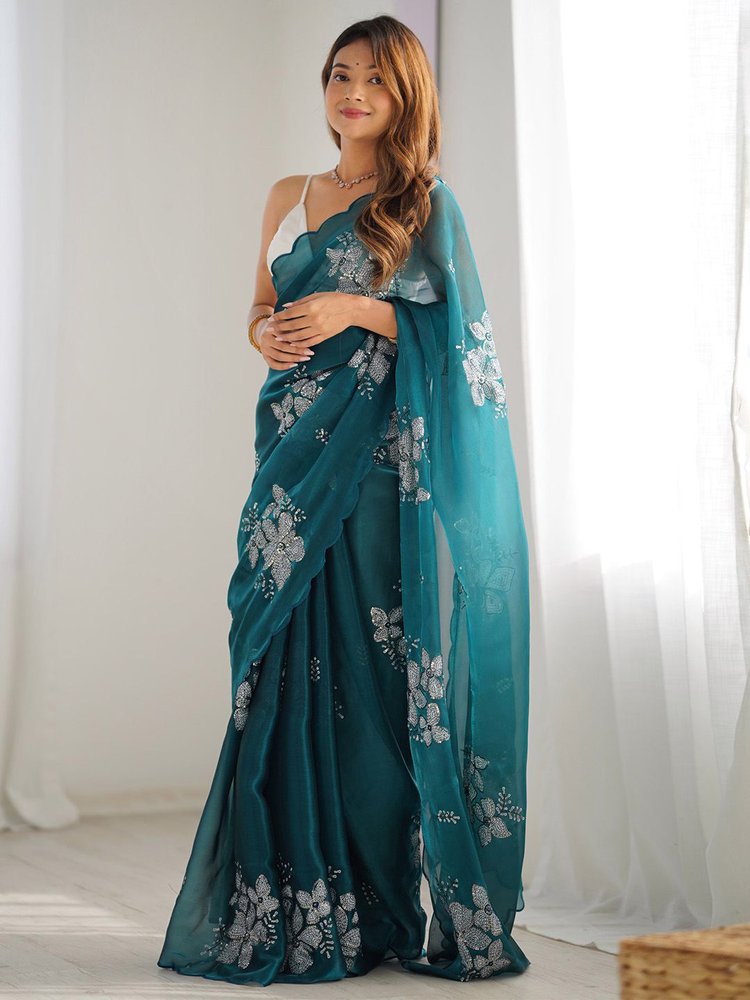
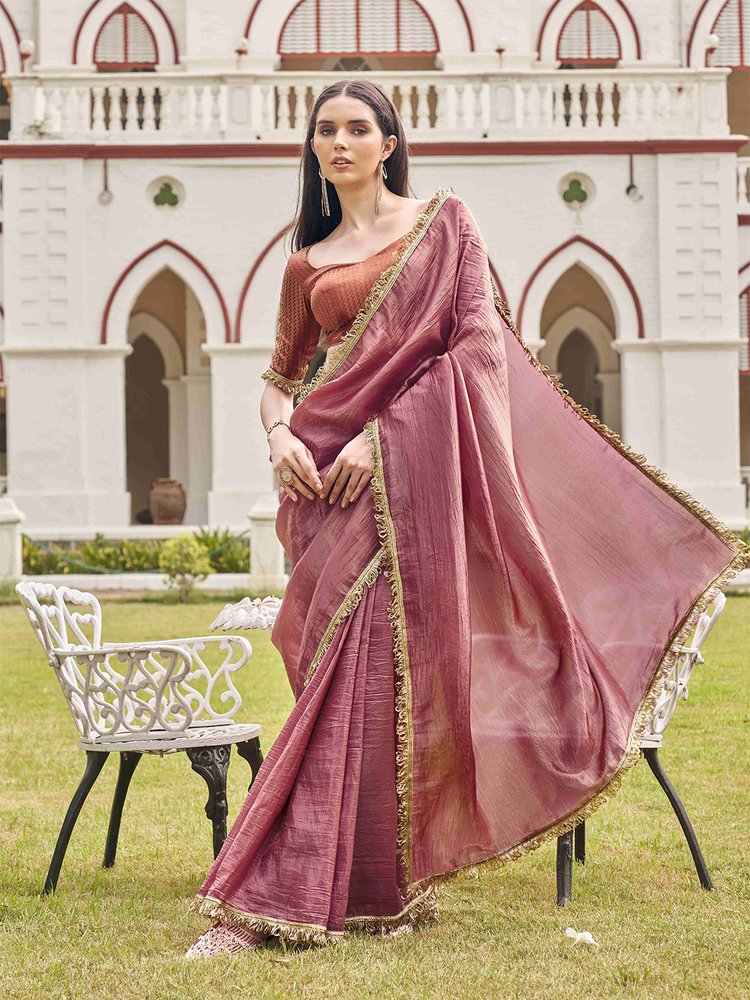
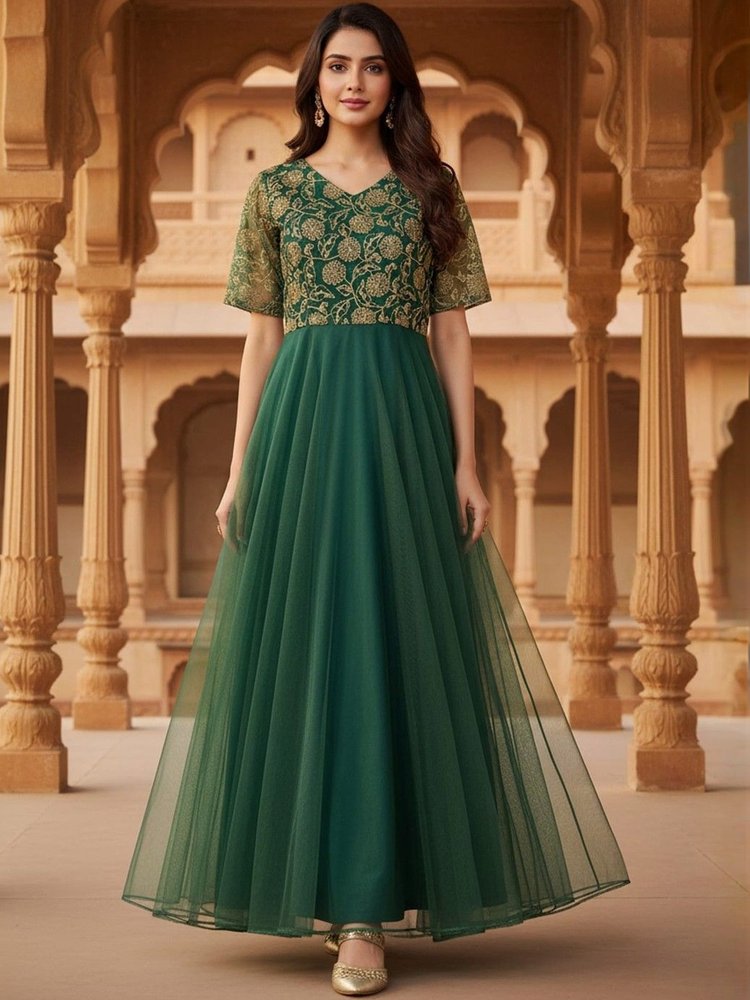
Wear your most glamorous outfit, because the reception is the closest thing to a Western black-tie party. Floor-length gowns, sequinned organza sarees and embroidered lehengas all work, and so does a long evening dress in a strong colour. This is also where Western outfits fit most naturally, which makes it a good place to start if you are nervous about a saree.
Evening shine
Sheer organza and net with a little sparkle, in colours that stay well clear of the bride's.
Which colours should you wear and avoid at an Indian wedding?
Choose jewel tones, pastels and warm brights, and avoid bridal red, plain white and all black at the ceremony. The reasons are real but they vary by family, so treat this as the default and let the hosts overrule it.
| Colour | At the ceremony | Why |
|---|---|---|
| Bright red | Skip it | It is the traditional bridal colour in many communities. Wine, plum and deep magenta are usually fine. |
| Plain white or ivory | Skip it | Many Hindu and Sikh families link white with mourning. Kerala is a lovely exception, where cream and gold is the traditional wedding look. |
| All black | Skip it | Some families consider it unlucky at the rites. Most are relaxed about it at a sangeet or reception. |
| Teal, emerald, purple, navy | Wear it | Rich colours look festive in every setting and photograph well. |
| Pink, peach, yellow, lavender | Wear it | Lovely in daylight, and at their best at a mehendi or a morning ceremony. |
| Gold and metallics | Wear it | Gold is everywhere at an Indian wedding, so you will not stand out for the wrong reason. |
Check for a colour theme too. Many couples now give each function a palette, and a quick message to the family saves you from being the one person in turquoise at an all-marigold mehendi.
Can non-Indian guests wear Indian clothes?
Yes, and hosts are usually delighted when they do. The invitation is the permission: you are joining a celebration on the family's own terms, which is the opposite of wearing a costume. Nobody will mind if you drape it imperfectly, and an aunt will probably fix your pleats without being asked.
If this is your first time, a few things make it easy:
- Start with a kurta set or an anarkali. An anarkali is a long kurta fitted to the waist and flared below, and it goes on like a dress.
- Want a saree without the wrapping? A ready-to-wear saree comes already pleated. Otherwise ask someone at the wedding to help you drape one, and leave plenty of time.
- Leave out the marks of marriage. Sindoor (the red powder in a married woman's parting), a mangalsutra necklace and the red-and-ivory bridal bangles called chooda carry real meaning, so they are not accessories for a guest.
- A bindi is optional. Plenty of guests wear a small one and plenty do not. If a family member offers you one, take it as the kind gesture it is.
- Prefer Western clothes? That is correct too. Go for a midi or long dress in a strong colour with covered shoulders or a wrap. Men can wear a navy or grey suit with a bright pocket square.
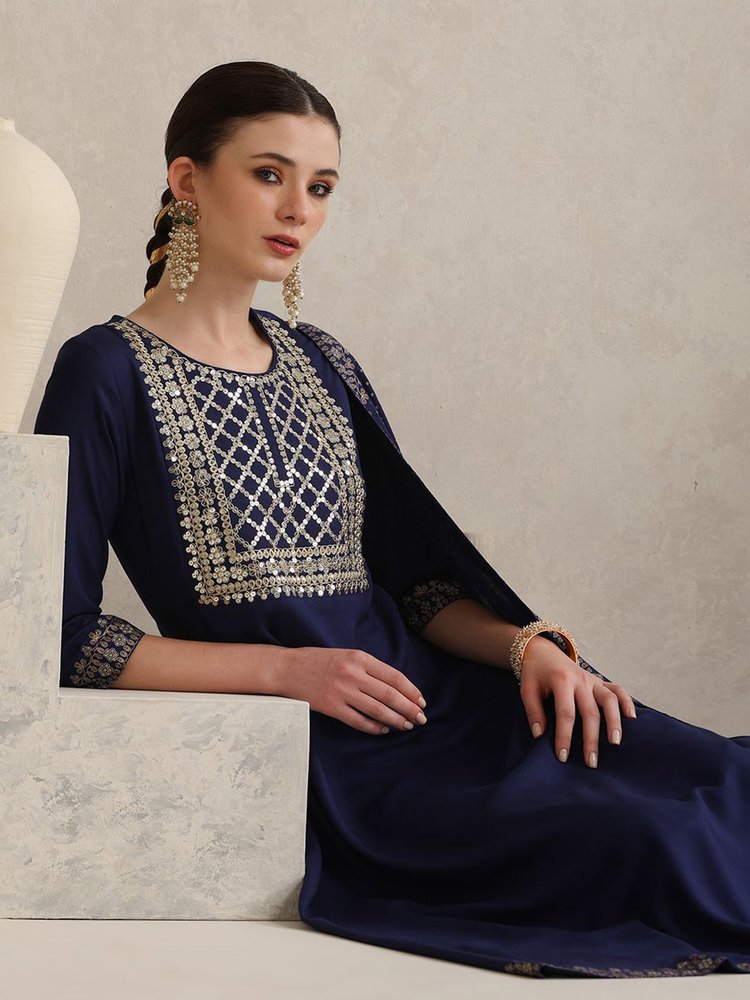
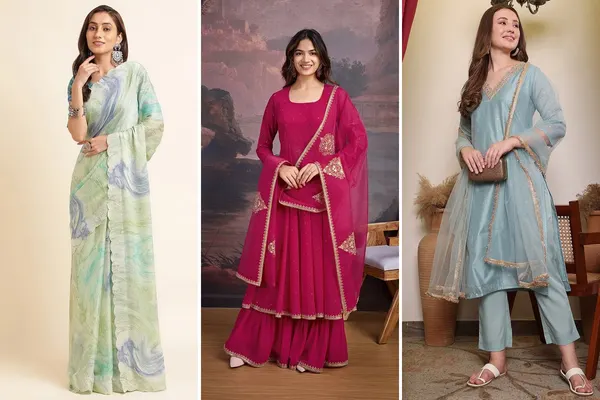
An easy first Indian outfit
A navy anarkali with a gold embroidered yoke, a round neck and three-quarter sleeves, worn with palazzos and a dupatta. It is covered enough for a ceremony and dressy enough for an evening.
- Pulls on like a dress, with nothing to drape
- Navy keeps it well away from any bridal colour
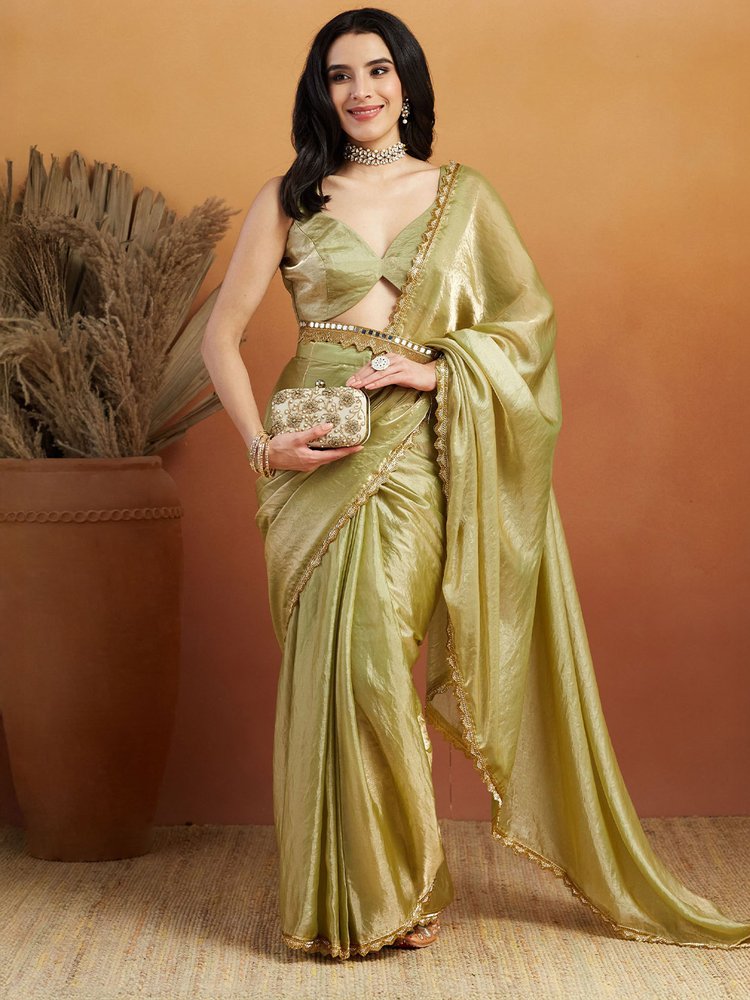
A saree you do not have to wrap
A ready-to-wear saree in a soft sage green with a gold gotta patti border, a shiny ribbon trim stitched along the edge. It gives you the full saree look at a sangeet or reception with no pleating.
- Comes with the drape already made
- Pale green with gold suits daytime and evening alike
How covered do you need to be?
Cover your shoulders, cleavage and knees at the ceremony, and relax a little in the evening. The rules are not quite what Western eyes expect. A bare midriff under a saree or lehenga blouse is completely normal, while a short skirt or a deep neckline reads as out of place. Carry a dupatta or shawl so you can cover up in a temple or gurdwara. Men should stick to long sleeves and long trousers.
What shoes should you wear to an Indian wedding?
Wear shoes that slip off quickly and that you can stand and dance in for hours. Temples and gurdwaras ask you to leave shoes at the door, so buckles and laces get tiresome fast, and clean socks are a good idea if you would rather not go barefoot.
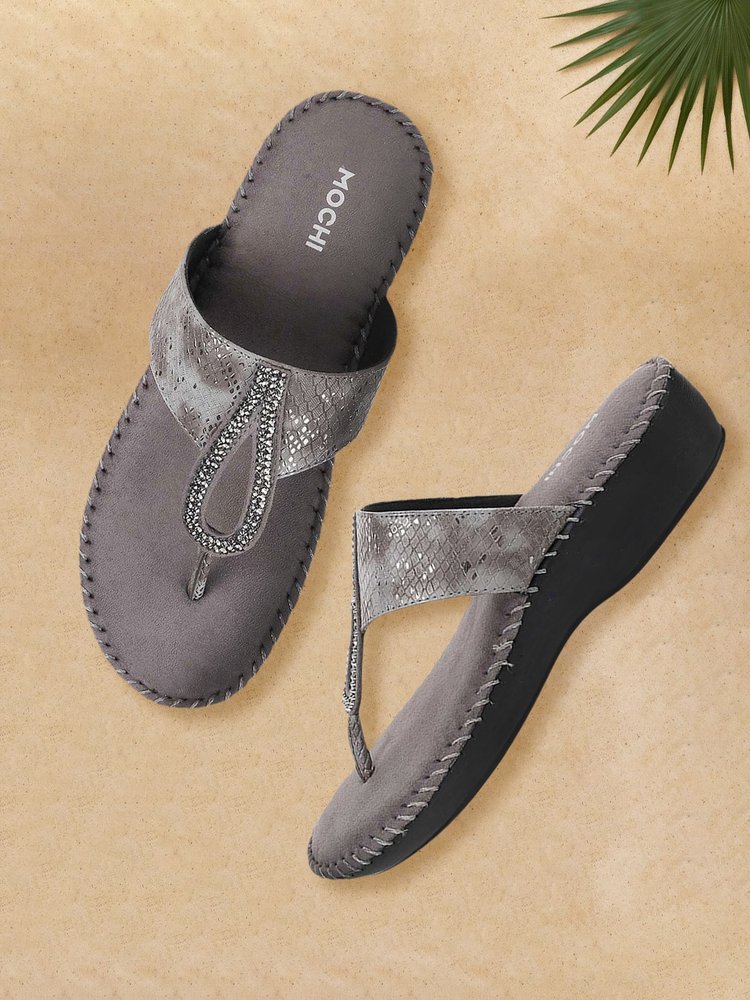
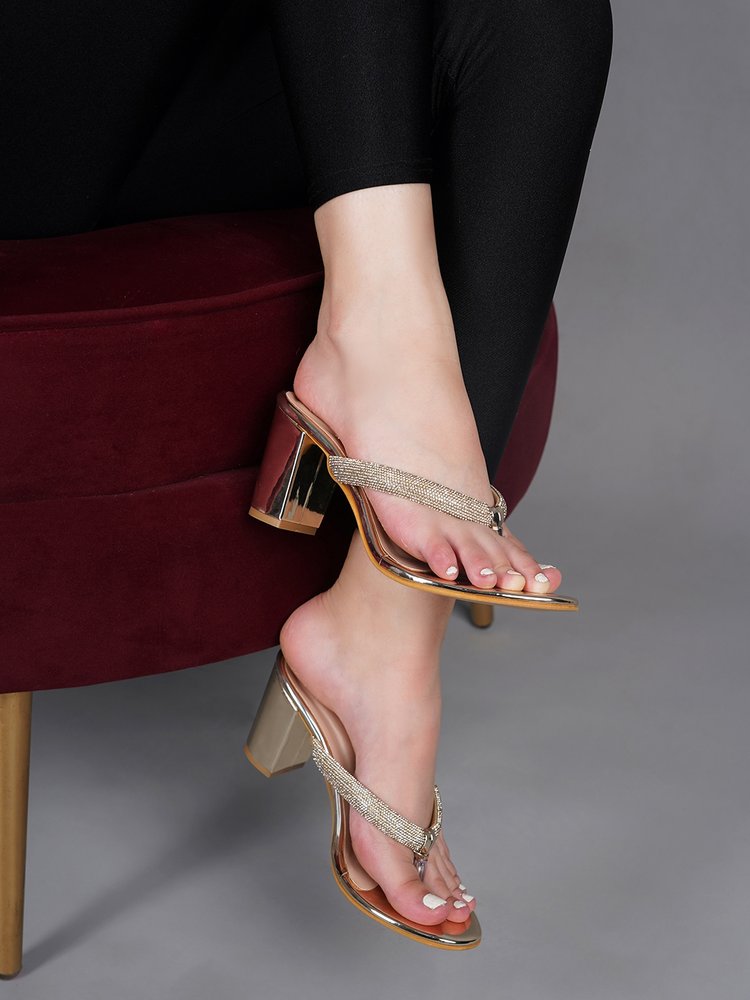
Juttis are the obvious answer. A jutti, also called a mojari, is a flat, closed slipper, usually embroidered or beaded. For height, choose a block or kitten heel of around 2.5 inches (6 cm), since stilettos sink into a marquee lawn. Sizing tip: many Indian footwear labels follow the UK scale, so a US women's 7 is usually a UK 5 or an EU 38. The size chart on each pair has the final word.
Flats and low heels that last all night
All of them slip off without any fuss at the door.


How much jewellery is too much?
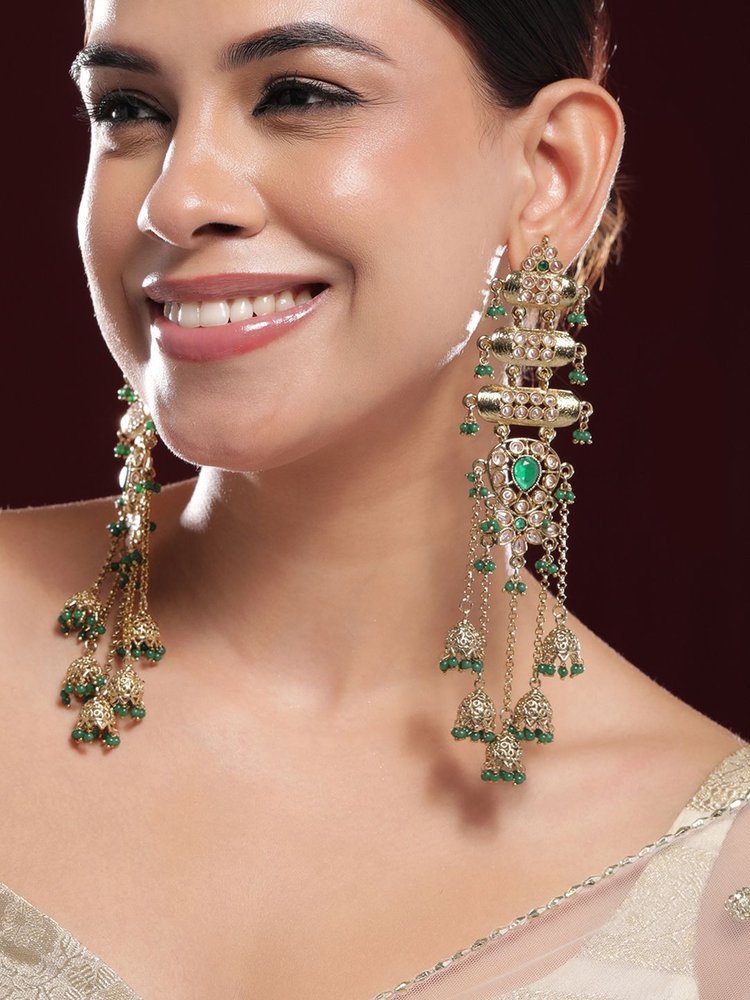
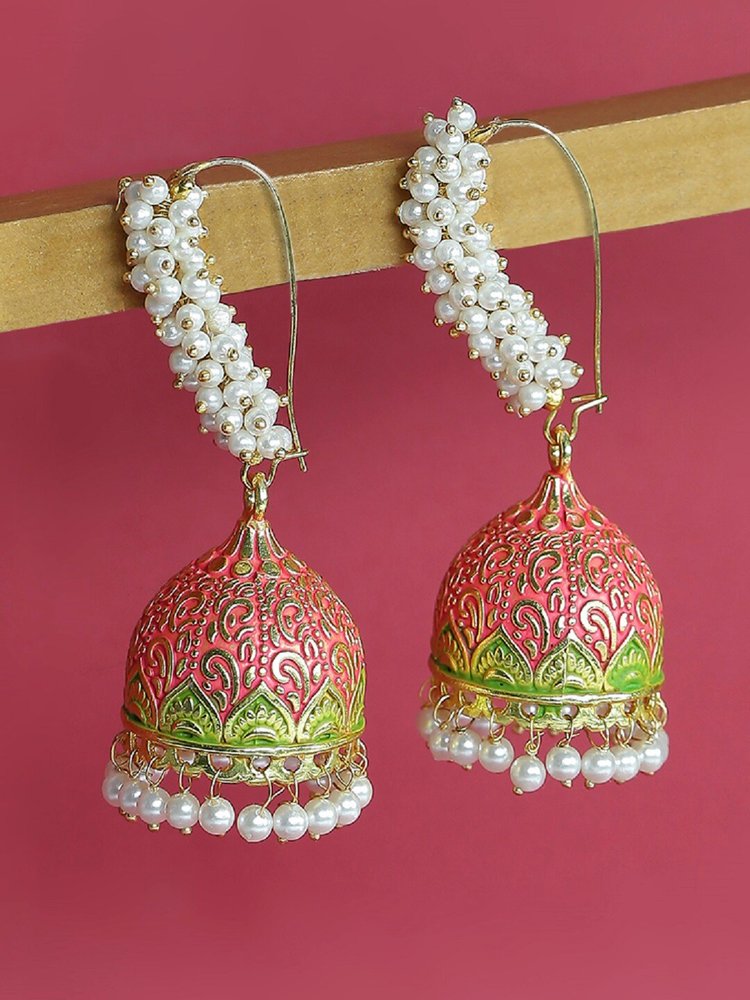
At an Indian wedding it takes a lot, but choose one focal point so the look stays yours. Big earrings suit a high or embroidered neckline. A necklace set suits a plain V-neck. Two words to know: jhumkas are bell-shaped drop earrings, and kundan is a traditional setting of stones in gold-toned metal.
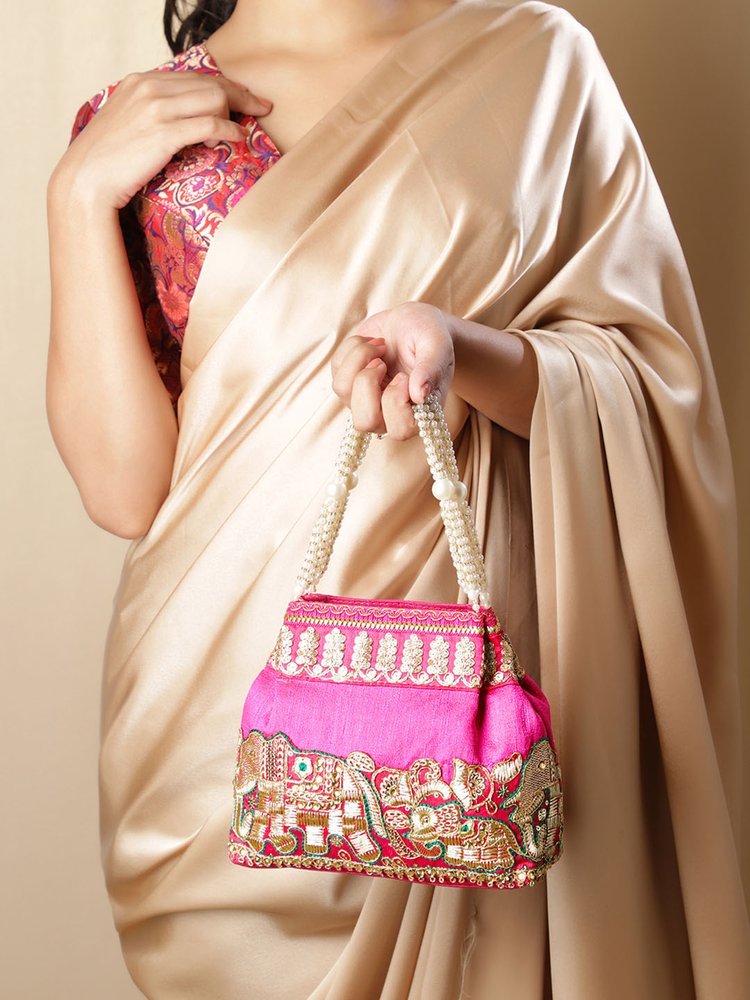
Gold-plated and imitation pieces are completely normal at a wedding, so wear them with confidence. Wipe them with a soft dry cloth and keep them away from perfume. For your phone and lipstick, a potli, a small drawstring pouch, leaves your hands free and looks right with everything.
One statement piece, and a bag to match
Bold earrings, a full necklace set and two embellished potlis.


What do you wear in cold, heat or humidity?
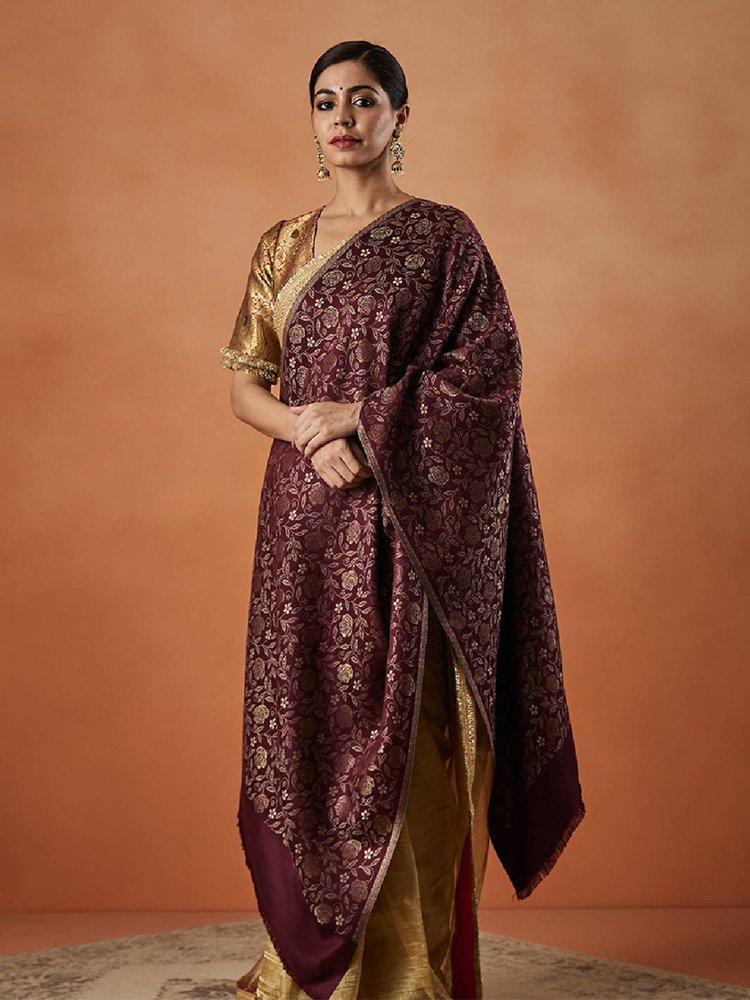
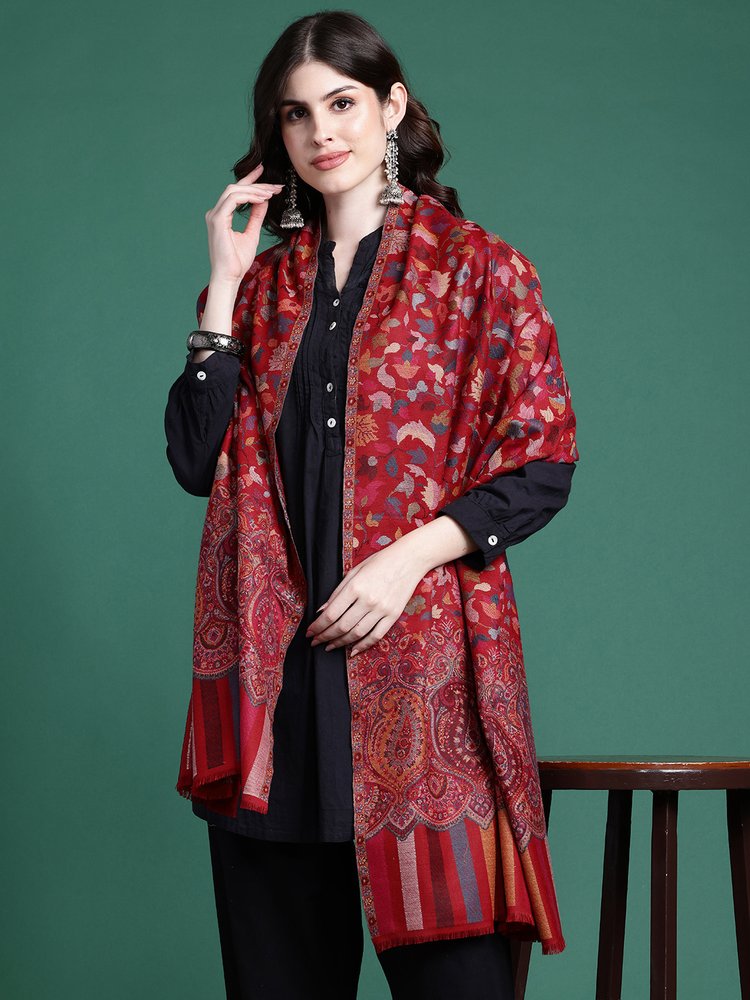
Choose your fabric for the climate first and the colour second. Indian wedding clothes are often pictured in warm weather, and a lehenga in a Toronto January or a heavy silk in Singapore takes some planning. A woven shawl solves a lot of the cold-weather problem.
| Where and when | Fabric | What else helps |
|---|---|---|
| Cold: winter in Canada, the UK, Germany or the northern US, below about 50°F (10°C) | Velvet, raw silk, brocade, long sleeves | A thin thermal top under a kurta, a shawl or tailored coat for the walk in, closed juttis |
| Dry heat: summer in Australia, Texas or the UAE, above about 86°F (30°C) | Georgette, organza, light cotton silk | Skip heavy linings and long net layers, bring a hand fan, choose flat shoes for grass |
| Humid: Singapore or Malaysia, any time of year | Light, well-lined georgette or cotton silk | Busy prints hide damp patches, and a light shawl helps in a very cold air-conditioned hall |
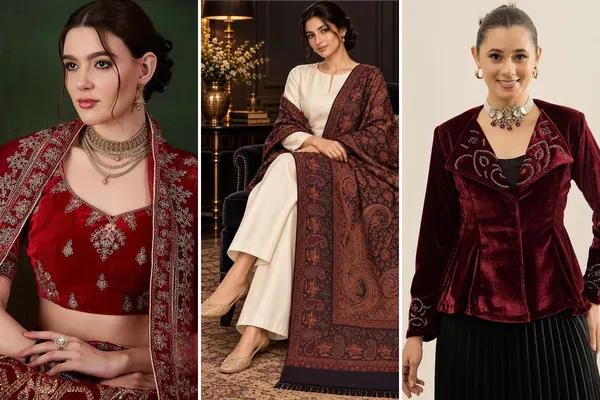
A warm layer that still looks dressed up
A woven shawl over a kurta set beats a puffer jacket in every photo.
What should men wear as guests?
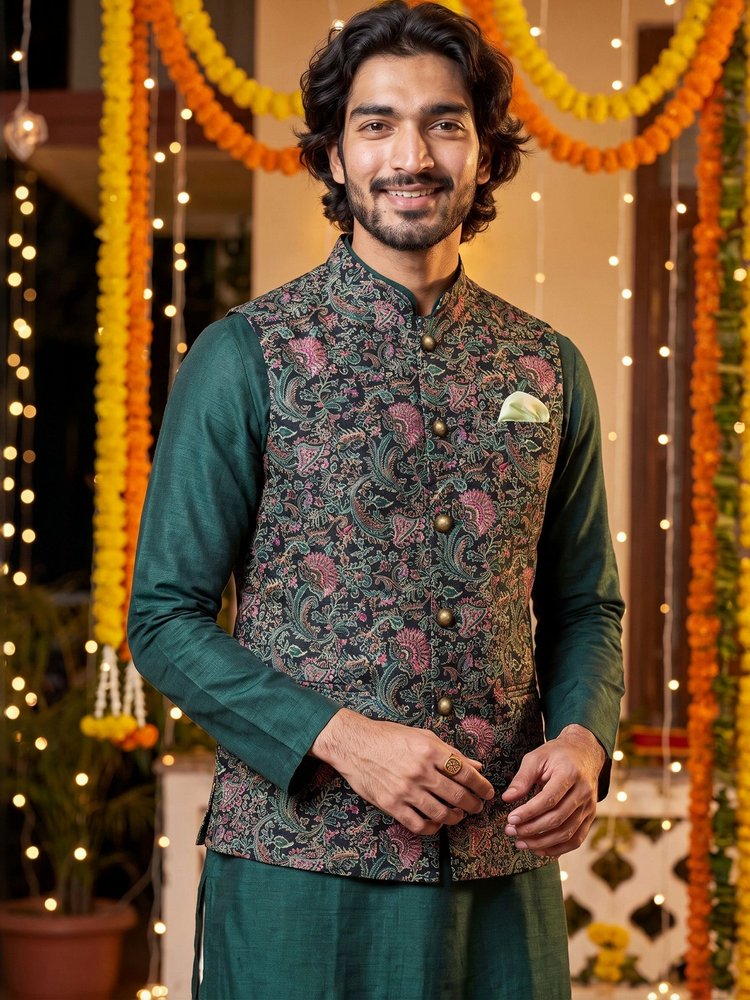
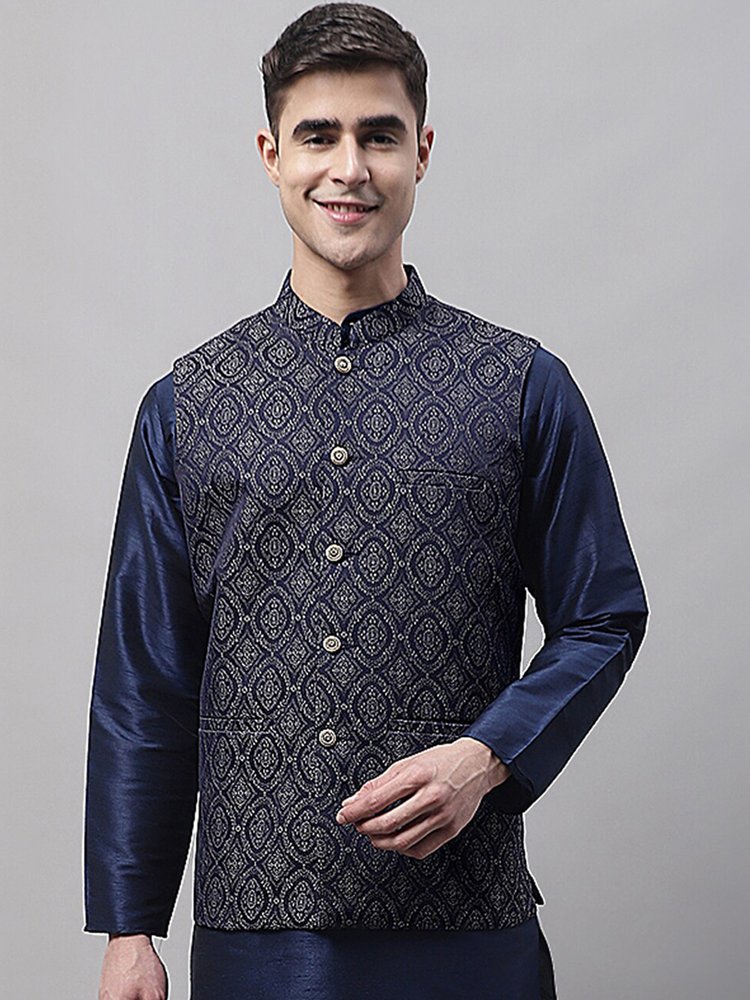
Men should wear a kurta set, a Nehru jacket over a kurta, or a well-cut suit. A kurta is a long, loose tunic worn with slim pyjamas or churidar trousers. The Nehru jacket, sleeveless with a stand collar, is the easiest way to look put together without any effort. A sherwani, the long formal coat, is mostly for the groom and close family, though it is welcome at a reception.
Colour counts for men as well, so try teal, mustard or bottle green. Carry a clean handkerchief or scarf for covering your head at a gurdwara, though many gurdwaras keep spare ones at the door.
Easy options for men
Sets and jackets that work from a sangeet through to a reception.


How do you get the fit right from another country?
Go by your measurements rather than the size letter, because Indian labels cut differently from one another. Measure your bust, waist and hips in inches and centimetres, then compare them with the size chart on the piece you like. For a lehenga, measure from your waist to the floor while wearing your wedding shoes.
| US | UK and AU | EU | Bust (inches) | Bust (cm) |
|---|---|---|---|---|
| 4 | 8 | 36 | 33 to 34 | 84 to 86 |
| 6 | 10 | 38 | 34 to 35 | 87 to 89 |
| 8 | 12 | 40 | 36 to 37 | 91 to 94 |
| 10 | 14 | 42 | 38 to 39 | 97 to 99 |
| 12 | 16 | 44 | 40 to 41 | 102 to 104 |
| 14 | 18 | 46 | 42 to 43 | 107 to 109 |
Your wedding guest checklist
- List the functions you are invited to, with any dress code or colour theme.
- Choose one outfit per function, keeping the most covered for the ceremony.
- Check the bride's colours if you can, and stay away from them.
- Book a tailor early if a blouse needs stitching or a hem needs taking up.
- Wear the full outfit around the house once, shoes included, and do the dance test.
- Pack safety pins, a scarf or dupatta, clean socks and a small wrap for cold rooms.
Keep reading
Questions people ask
Can a white person wear a saree or lehenga to an Indian wedding?
Yes. You have been asked to join in, and most Indian families take it as a warm compliment when guests of any background wear Indian clothes. Choose a colour that stays clear of the bride's and leave out sindoor and bridal bangles. If you are unsure, ask someone in the family and they will almost always say yes.
Is it rude to wear Western clothes to an Indian wedding?
No. A colourful midi or long dress, or a suit for men, is perfectly polite. Keep the shoulders and knees covered at the ceremony and avoid all black or plain white there. Check the invitation, because a few couples ask for Indian dress at particular functions.
What colours should you not wear to an Indian wedding?
Avoid bright bridal red, plain white and all black at the ceremony. Red belongs to the bride in many communities, white is linked with mourning in many families and black is seen as unlucky by some. Every family is different, so a colour theme on the invitation overrides all of this.
What is the difference between ceremony and reception outfits?
The ceremony calls for traditional and covered clothes, such as a silk saree or a kurta set with a dupatta, and you may need to sit on the floor or take off your shoes. The reception is an evening party, so it is the place for a gown, an organza saree or a long evening dress. Sequins and a lower neckline sit more comfortably at the reception.
Do you have to cover your head at an Indian wedding?
At a Sikh ceremony in a gurdwara, yes: everyone covers their head, men and women alike. A dupatta or scarf works for women and a clean scarf or handkerchief for men. Some Hindu and Muslim ceremonies ask the same, while at a hotel reception you will not need to, so bring something just in case.
Can I wear the same outfit to more than one function?
It is better to change, since most guests do and the functions have different moods. If you are travelling light, one kurta set can do two events: wear it with a dupatta and small earrings by day, then swap to big jewellery and a shawl in the evening. Nobody will hold it against you.
What should a man wear to an Indian wedding as a guest?
A kurta with slim pyjamas, a Nehru jacket over a kurta or a suit in a colour are all right for a guest. Bring a scarf or handkerchief for a gurdwara ceremony and shoes that slip off easily. A sherwani is usually for the groom and close family, so keep it for a reception if you wear one.
About the numbers
- Google autocomplete, United States, read 2026-11-02: The questions this guide answers are the ones people type: what to wear as a guest, as a westerner, as a white person, ceremony vs reception, sangeet, and what not to wear.