How to Style an Anarkali Suit: Dupatta, Jewellery, Shoes and Fit
Style an anarkali by letting the flare lead: pick the length for the event, drape the dupatta so the skirt still shows, wear one statement jewel, and choose shoes before you settle the hem.
In short
- An anarkali suit is a long kurta fitted to a seam at or above the waist and flared below it, worn with slim or wide bottoms and usually a dupatta.
- Choose by the number, not the label: on our charts, ankle-length and floor-length anarkalis share the same typical front length, about 50 in (127 cm).
- Drape the dupatta over one shoulder or as a cape when you want the skirt seen, and across the front when you want more cover at a ceremony.
- Wear one statement piece: big earrings with a high or embroidered neck, a necklace with a plain square, sweetheart or V neck.
- For winter, add a thermal layer underneath, long sleeves and a velvet shawl or long jacket on top, and keep the flare free below the waist.
To style an anarkali suit, let the flare do the talking. An anarkali is a long kurta, fitted to a seam at or above the waist and flared below it. Choose the length for the event, drape the dupatta so the skirt still shows, wear one statement jewel, and pick your shoes before you settle the hem.
Most guides stop at a list of accessories. This one also shows how to drape a dupatta step by step, what the length labels really measure, and how to dress the same shape for a daytime function, an evening party and a cold night in Toronto or Melbourne.
What makes a suit an anarkali?
Two things make it one: a fitted top and a skirt that opens out from a seam placed high on the body. Many are cut in panels, so the hem moves when you walk and swings when you turn. The set usually has three pieces, the kurta, a bottom and a dupatta, which is a long scarf.
The name means pomegranate bud in Hindi and Urdu. The story of a courtesan called Anarkali is a legend, but the shape has a real ancestor: the peshwaz, a long, flared court gown seen in Mughal paintings from the 1600s. If you want the wider picture, read what a kurta set is, then browse kurta sets and single kurtas.
- Churidar: slim trousers that gather at the ankle. The classic pairing, and it makes the skirt look fuller by contrast.
- Straight pants: the easy modern choice, good for work events and walking.
- Palazzos: wide trousers that soften the line. They suit a calf-length kurta and move well on a dance floor.
- No bottoms at all: works only on a floor-length, fully lined style, and then it is really being worn as a gown.
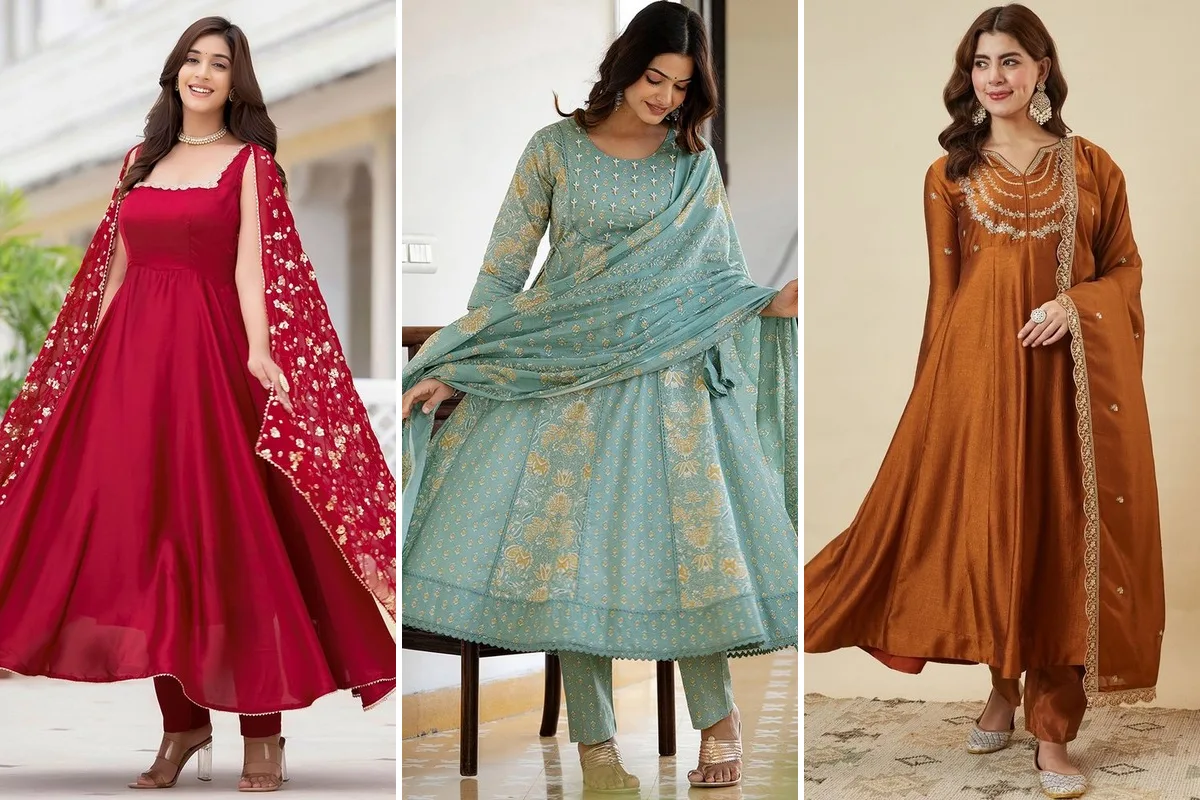
Four takes on the shape
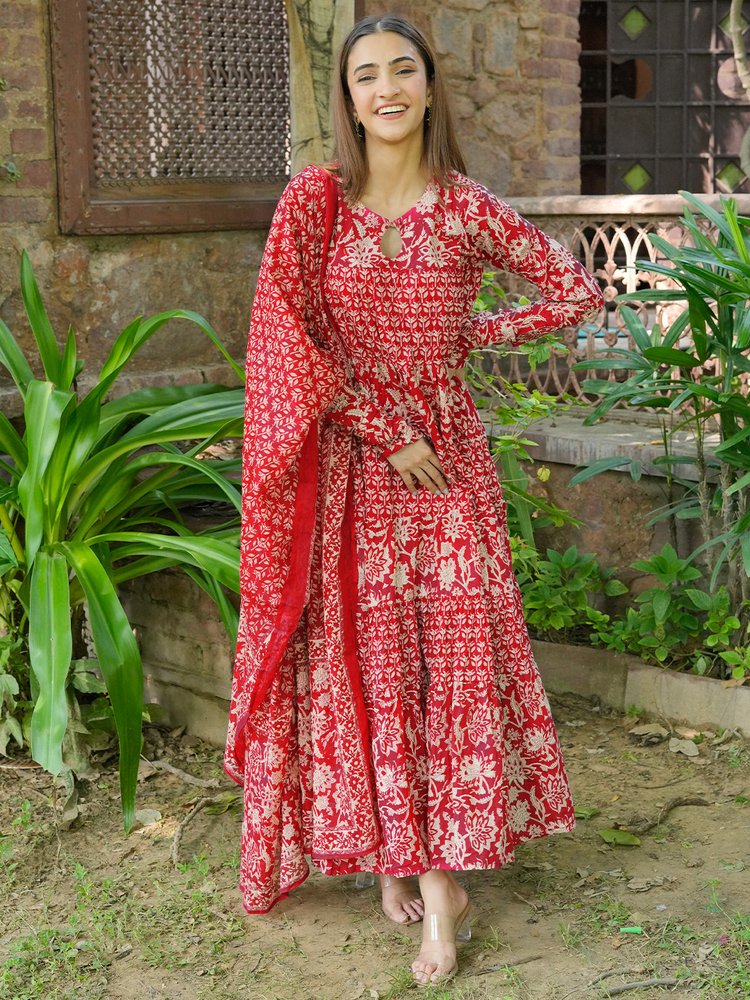
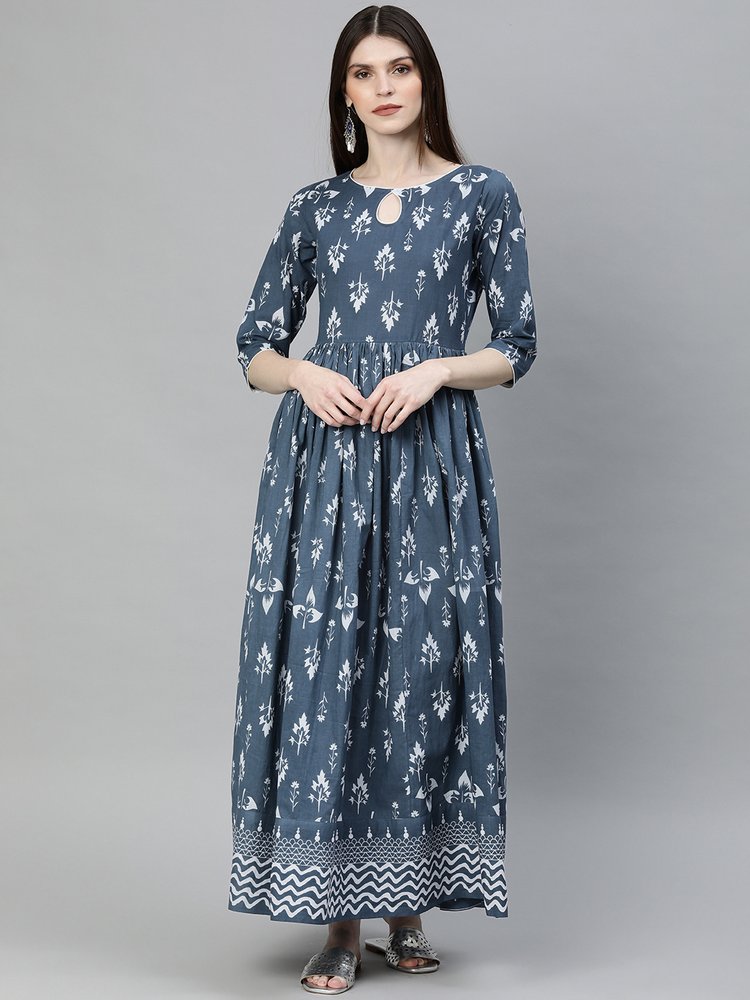
A floor-length panelled cut, a wrap-front angrakha, a layered print and an ankle-length cotton.


Anarkali vs gown: what is the difference?
An anarkali is a kurta with separate bottoms underneath, while a gown is one complete dress. From across a room they can look almost the same, and many pieces sit between the two, so read what the set includes. If you want one dress and no bottoms, start with lehengas and gowns.
| Anarkali suit | Ethnic gown | |
|---|---|---|
| What you get | Kurta, bottoms, often a dupatta | One dress, sometimes with a dupatta or jacket |
| Under the skirt | Churidar, pants or palazzos | Nothing, or a built-in lining |
| Sitting on the floor | Easy, your legs stay covered | Harder in a fitted skirt, fine in a full one |
| Best moment | Ceremonies, pooja, mehendi, Diwali | Receptions, cocktail nights, sangeet |
| Getting dressed | Goes on like a dress, then bottoms | Often a zip, so it is one step |
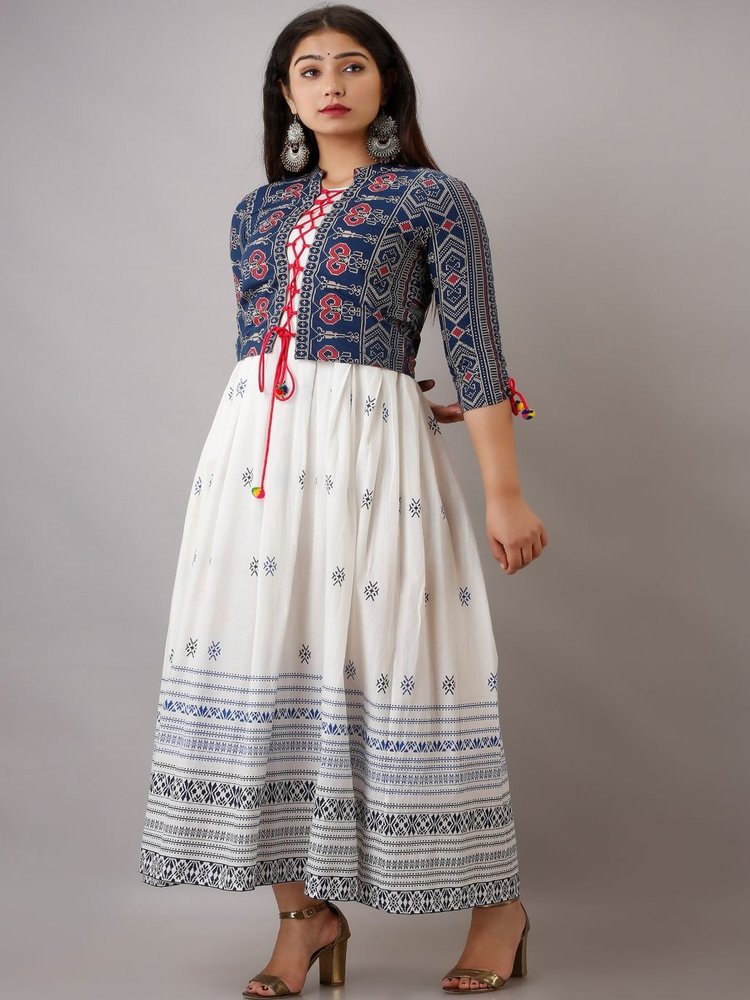
When you want the one-piece version
Flared, full-length and complete in one piece.


Which anarkali length should you choose?
Pick the measurement you want, because the length labels overlap. We read the size charts of about 2,300 anarkalis on this store, and an "ankle length" and a "floor length" had the same typical front length at size M. A knee-length label usually means well below the knee.
| Label on the page | Typical front length | Most fall between | Good for |
|---|---|---|---|
| Knee length | 45.5 in (116 cm) | 38 to 48 in (97 to 123 cm) | Day events, with slim pants |
| Calf length | 48 in (122 cm) | 45 to 50 in (114 to 127 cm) | Mehendi, pooja, office Diwali, dancing |
| Ankle length | 50 in (127 cm) | 46 to 54 in (117 to 137 cm) | Sangeet, dinners, a little more drama |
| Floor length | 50 in (127 cm) | 46 to 55 in (117 to 141 cm) | Evening, with heels |
| Maxi | 53.5 in (136 cm) | 46 to 56 in (117 to 142 cm) | Receptions, formal nights |
To check your own, stand against a wall in the shoes you plan to wear. Have someone measure from the top of your shoulder, where a seam would sit near the neck, down to where you want the hem. Compare that number with the chart on the product page.
How do you wear a dupatta with an anarkali?
Decide first how much of the skirt you want seen, then pick a drape. Most dupattas listed with these sets run about 2.2 to 2.5 m (87 to 98 in), so you have plenty to work with. Sheer fabrics slip, so keep two small safety pins in your bag.
The one-shoulder drop
- Fold the dupatta lengthwise into a band about 5 in (13 cm) wide.
- Lay it over your left shoulder, with one end hanging to your hip in front and the long end behind you.
- Pin it from underneath at the shoulder seam so the pin stays out of sight.
This shows the most of your outfit, and it suits a yoke with heavy embroidery.
The cape
- Hold the dupatta open by one long edge, with the middle of that edge at the back of your neck.
- Bring the edge forward over each shoulder, so the fabric hangs down your back and the two ends fall at your sides.
- Pin once on each shoulder and let the fabric float when you walk.
A cape is the easy answer for a sleeveless anarkali and for an evening party. It works best with a light, printed or sequinned dupatta.
The front drape
- Start at your left shoulder with a short end hanging down your back.
- Sweep the fabric across your front, low enough to clear the neckline.
- Take the rest over your right forearm or shoulder and let it fall.
This gives the most cover, so it is the one for a pooja or a wedding ceremony. Keep the ends off the floor, or someone will step on them.
The belted drape
- Pin the band to your left shoulder.
- Bring it across your body to the right hip.
- Fasten a slim belt over it at the seam line.
Hands stay free and nothing slides, which makes it the best drape for garba or a long sangeet. For more options, browse dupattas and stoles.
What jewellery goes with an anarkali?
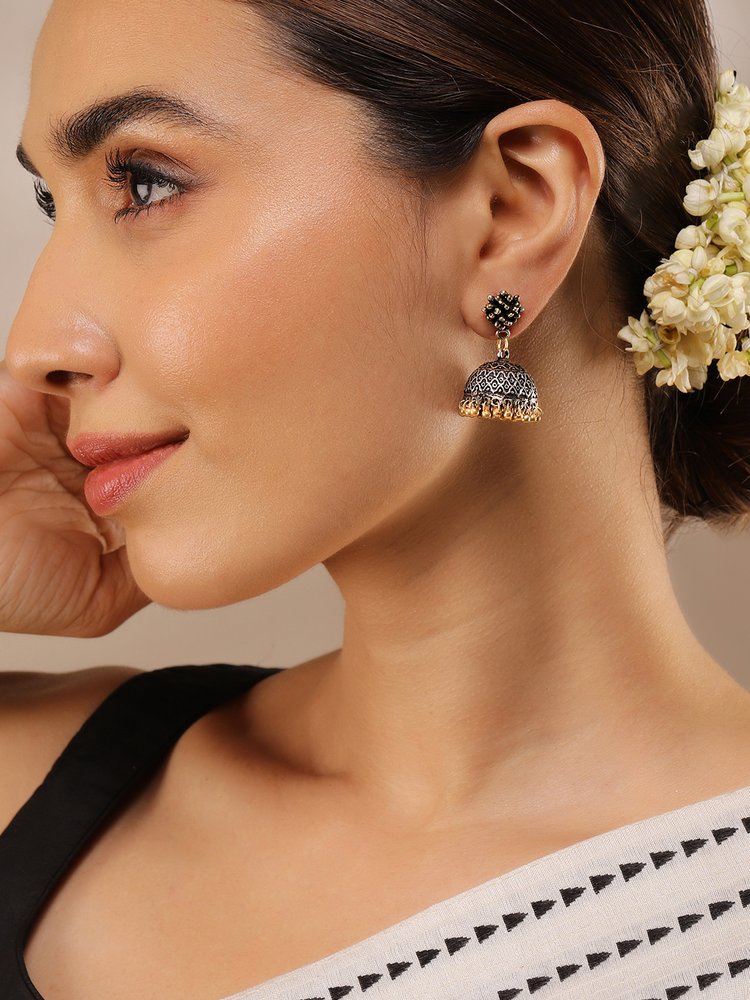
Let the neckline choose, and wear one main piece. The kurta already has plenty going on, so a full necklace with big earrings and a heavy yoke will compete. Jhumkas, the bell-shaped drops, are the safest start; kundan, with stones set close in a gold-toned frame, dresses up the same look for evening.
| Neckline | Wear | Skip |
|---|---|---|
| Round or high, with an embroidered yoke | Statement earrings, a stack of bangles | A necklace on top of the embroidery |
| Plain V-neck | A collar necklace or short pendant | A long chain lost under the dupatta |
| Square or sweetheart | A choker or short set, small earrings | Shoulder-length earrings plus a choker |
| Keyhole or tie neck | Earrings only, the neck detail is the jewel | Anything that hangs over the opening |
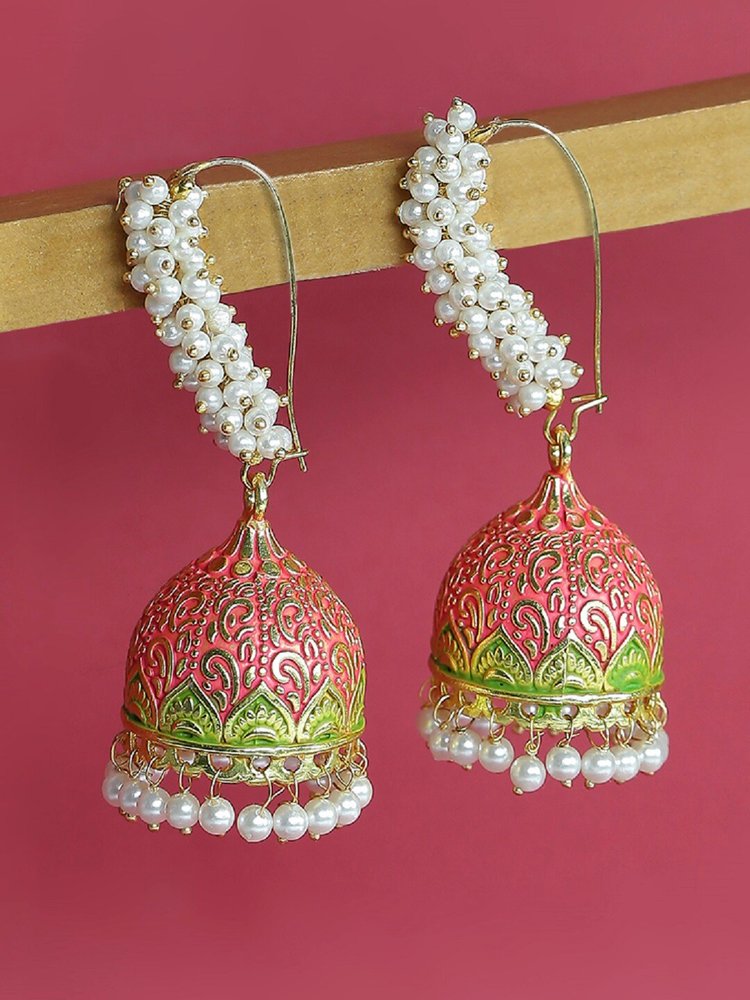
One main piece at a time
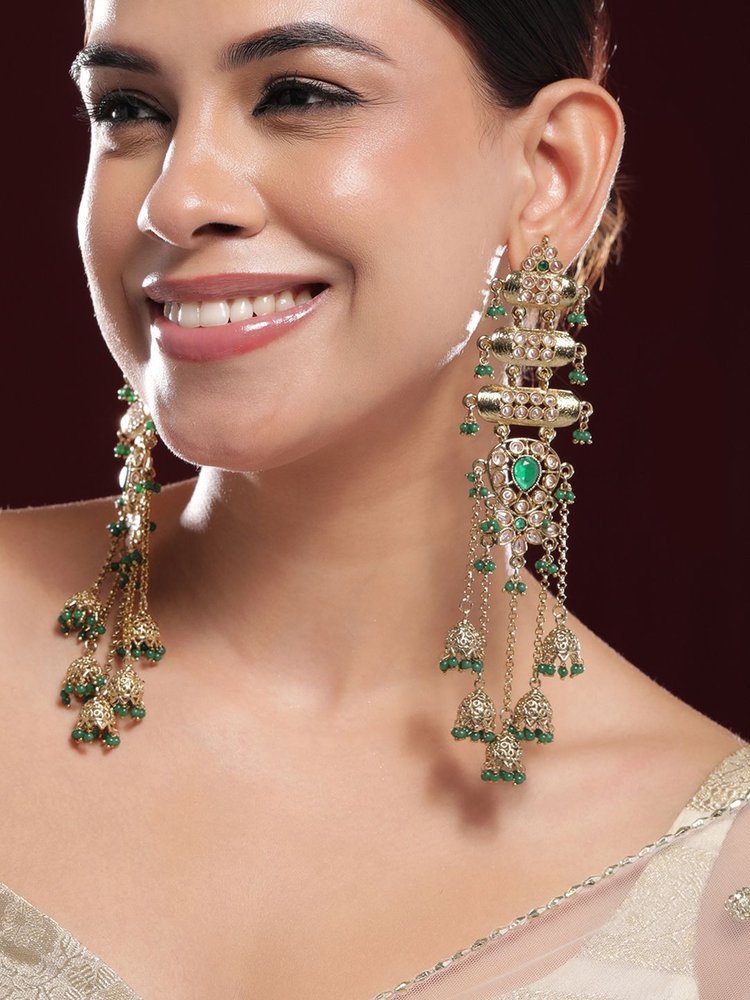
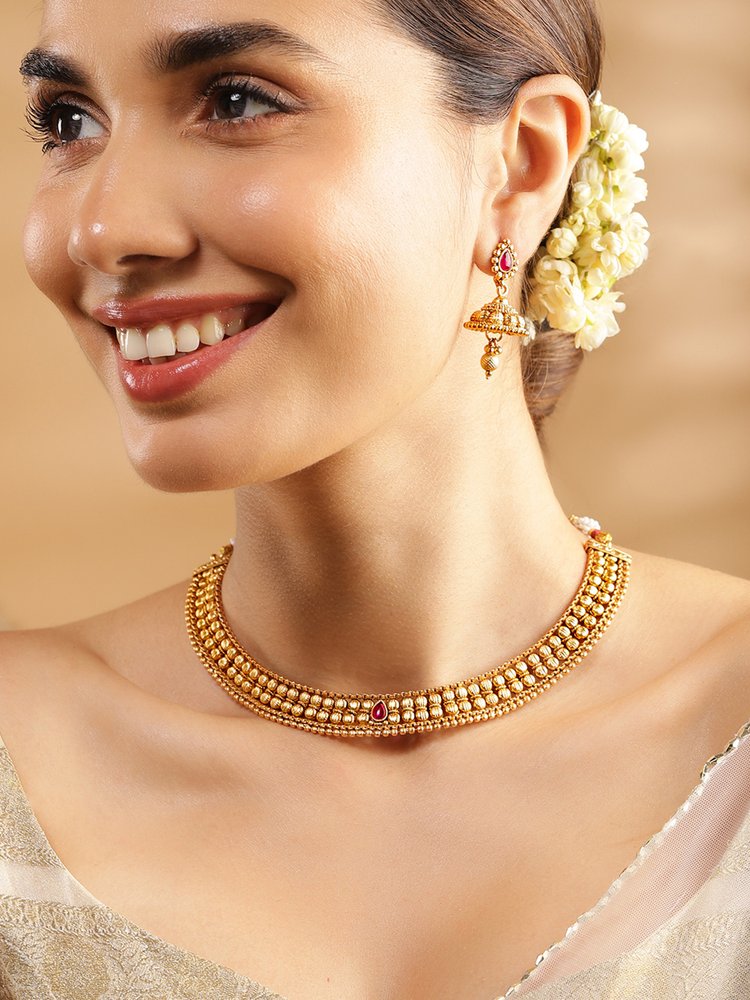
Bell-shaped jhumkas in enamel and oxidised silver tones, a shoulder-length pair, and a short necklace set for a bare neckline.
What shoes do you wear with an anarkali suit?
Wear flat juttis for a day function or calf-length kurta, and a mid block heel for a long skirt at night. A jutti is a closed, flat shoe with a soft upper worked in thread or beads. Whichever you choose, try the kurta with those shoes before any tailoring, because a heel changes where the hem lands.
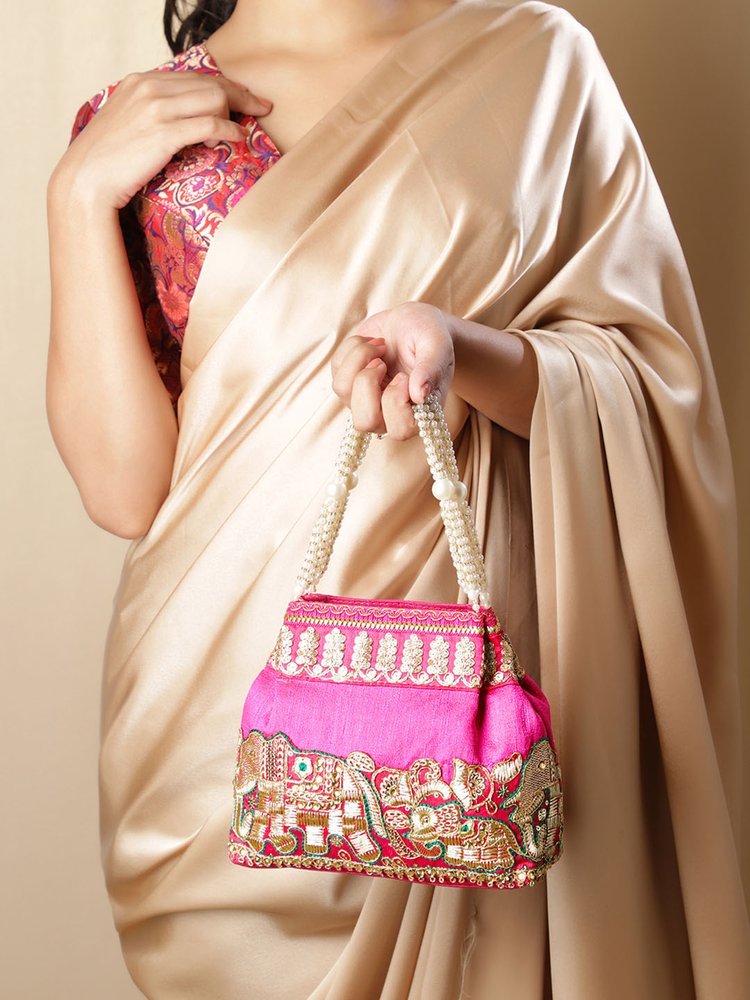
Block heels are safer than stilettos on lawns, marquee floors and stairs. For a bag, carry a small potli, a soft drawstring pouch: a boxy clutch fights the dupatta, while a potli hangs from the wrist and leaves both hands free for food, photos and hugs.
Finish the look
Sequinned and woven juttis, a low block heel and an embroidered potli.


How do you style an anarkali for a day function?
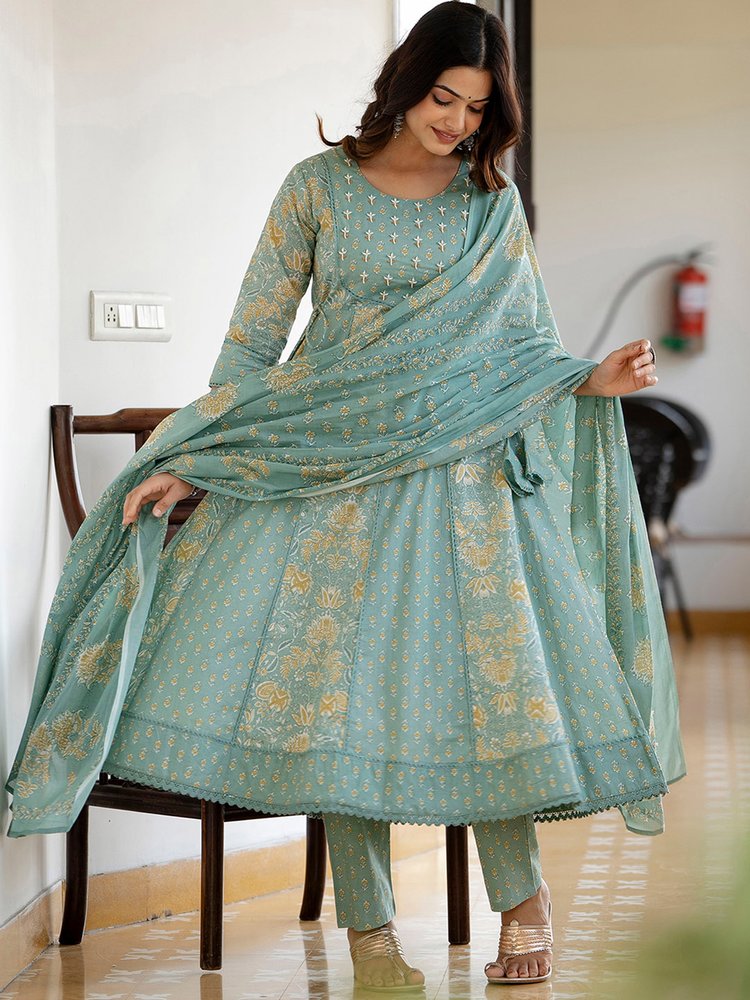
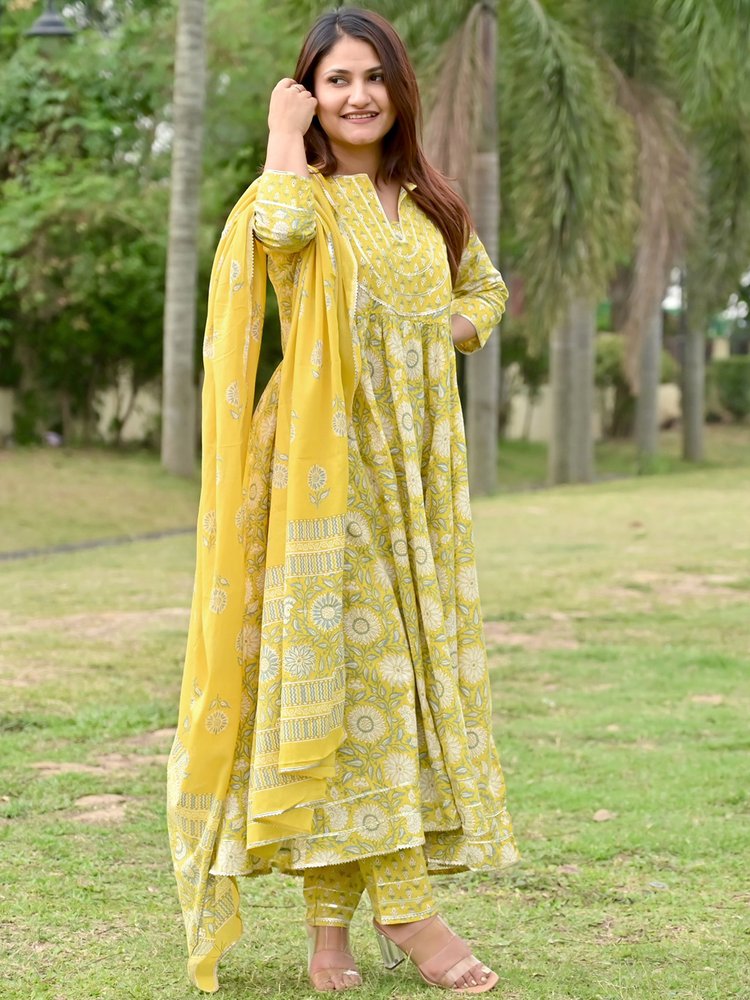
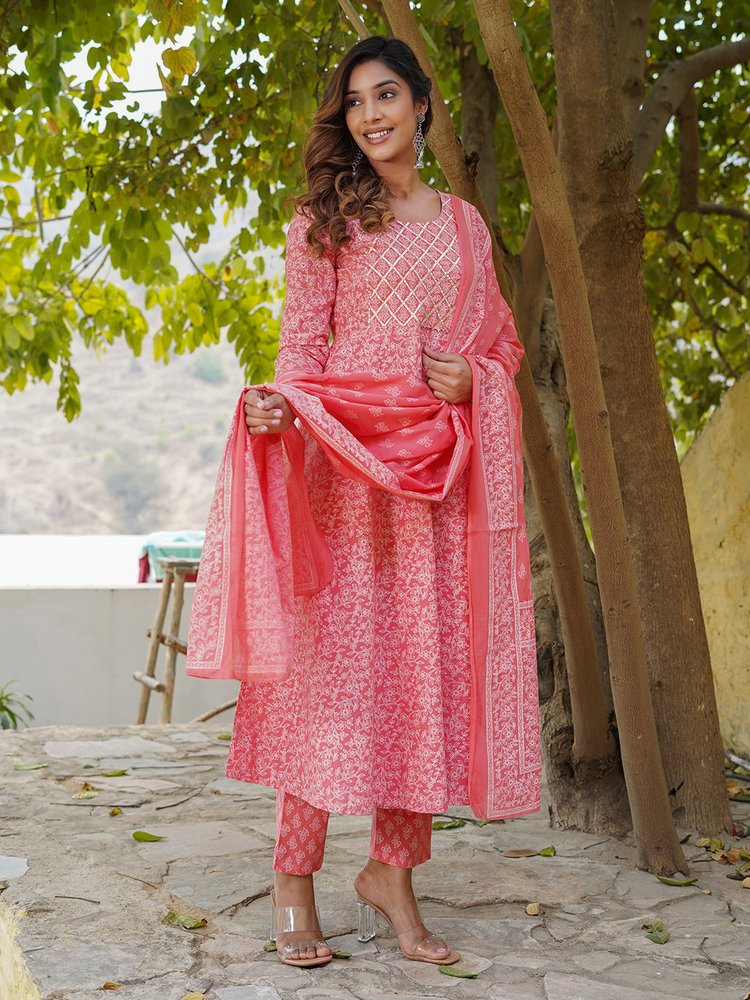
Go light: cotton, voile or a soft print, in a calf or ankle length, with flat shoes and oxidised or pearl earrings. A day event such as a mehendi, a pooja, a baby shower or a Diwali lunch means sitting, eating and being outdoors, so the outfit should forgive all three.
- Fabric: pure cotton breathes in heat and takes a block print or gotta patti, the flat gold ribbon work that catches daylight without looking like a party.
- Colour: yellow, coral, sea green and soft florals. Save the darkest shades for after sunset.
- Hair and make-up: a loose braid or low bun, fresh flowers if you like, and skin that still looks like skin.
- Dupatta: the one-shoulder drop, pinned, so it stays out of the food.
Cotton anarkalis for daylight
Each of these is a set, so the bottoms and dupatta are sorted.


How do you style an anarkali for an evening function?
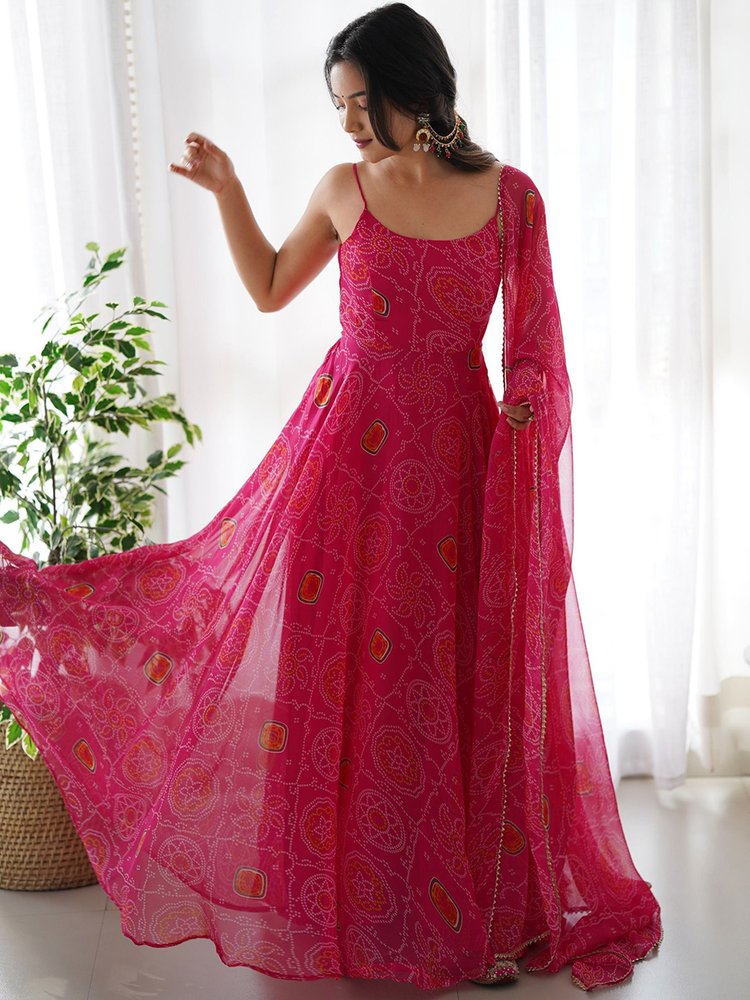
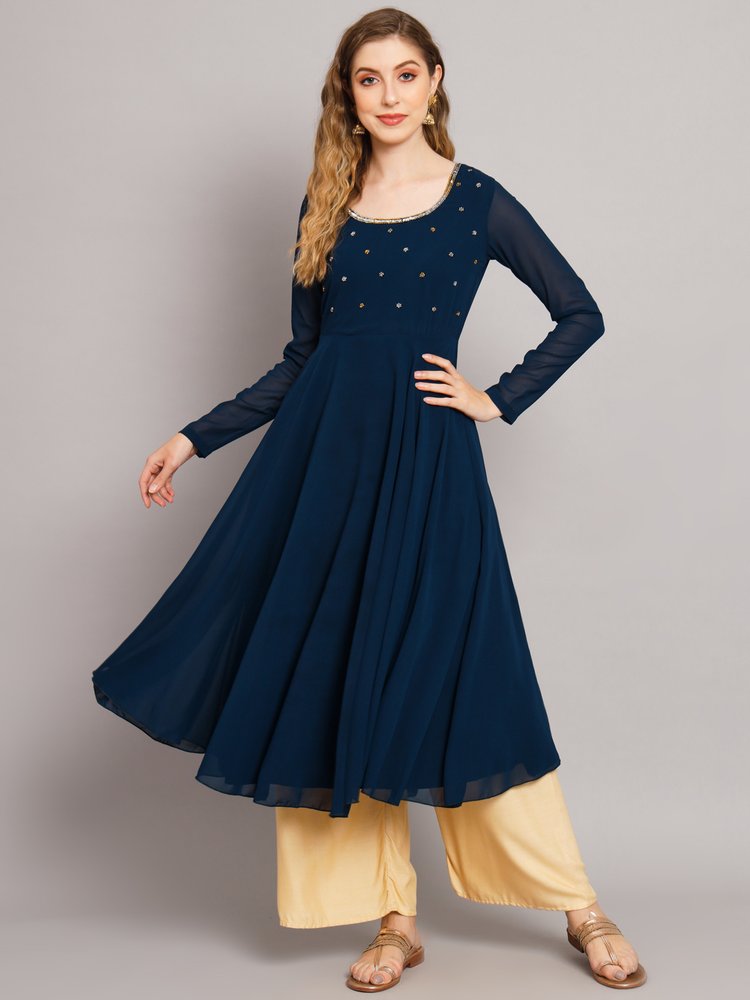
Choose a fabric with weight or shine, such as satin, silk blend or georgette, then take the length down to the ankle or floor. A sangeet, a cocktail night or a reception is where the flare earns its place, since a heavier fabric swings and catches the lights.
Pair it with a cape or a sheer one-shoulder drape, one strong jewel and a heel you can dance in. As a wedding guest, check the colour against the function: our guide on what to wear to an Indian wedding as a guest covers why bridal red, plain white and all black are usually skipped at the ceremony, and this wedding-guest edit gathers ideas for each event.
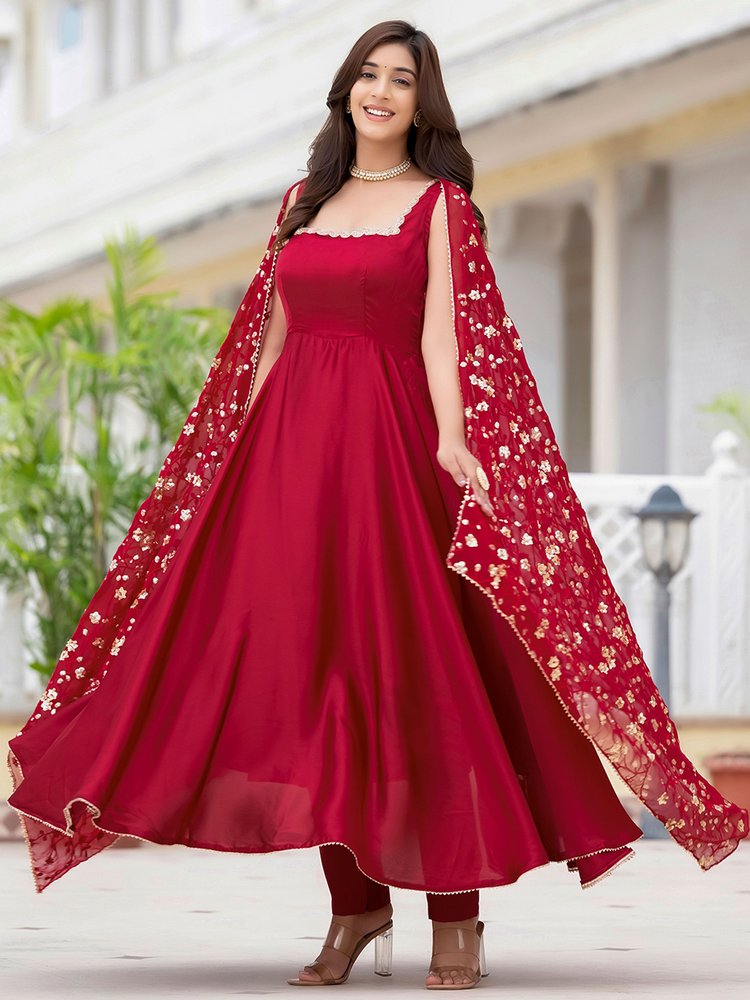
A strong choice for a reception
This sleeveless satin kurta has a square neck and sequinned details, with a silk georgette dupatta that works well as a cape. The deep maroon-red suits a party, so for a ceremony ask the hosts first or choose another jewel tone.
- About 50 in (127 cm) front length at size M, which sits just above the ankle on the 5 ft 8 in model
- Satin kurta, silk crepe trousers, silk georgette dupatta
More evening anarkalis
Silk blend with an embroidered yoke, bandhani chiffon that pools on the floor, and georgette with a scatter of embellishment.

How do you style an anarkali in winter?
Layer close to the body and leave the skirt free. A thermal top with a low scoop neck stays hidden under most kurtas, thermal leggings slip under a churidar or straight pants, and long sleeves in silk blend or velvet do the rest of the work indoors.
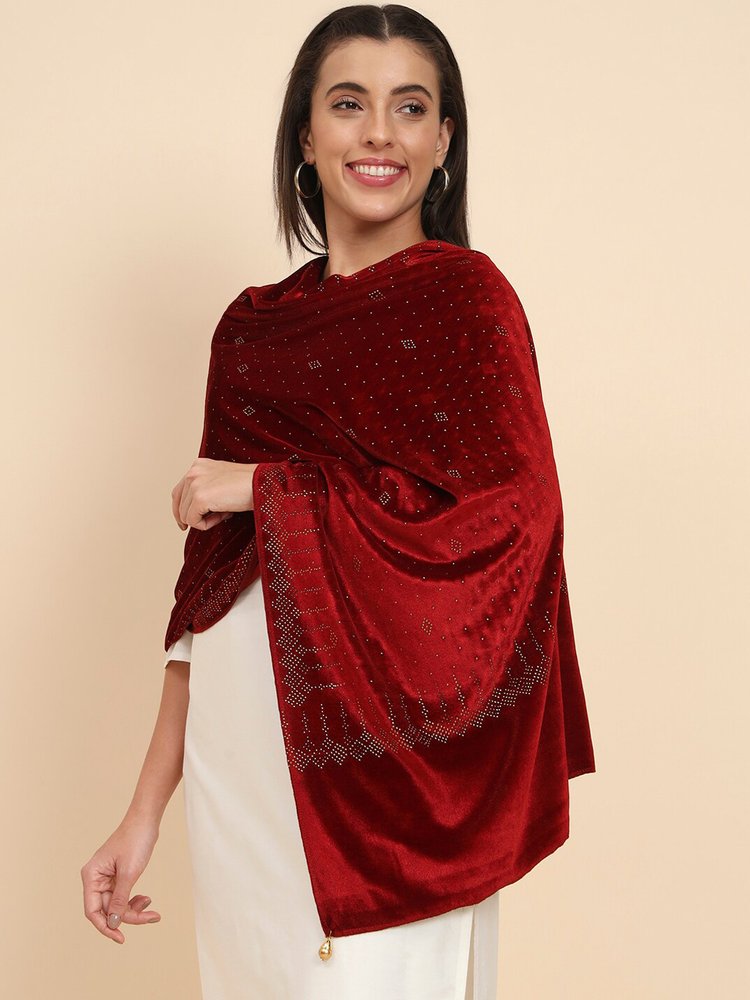
- Swap the dupatta for a shawl. A velvet shawl is about 2 to 2.3 m long and 71 to 100 cm wide (79 to 91 in by 28 to 39 in) on the ones below. Wear it over both shoulders, or fold it and pin it on one side like a dupatta.
- Try a long jacket. An open jacket over a sleeveless anarkali keeps the flare in view and looks planned.
- Choose the coat for the skirt. A knee-length or longer tailored coat, worn open, sits better over a flare than a short puffer. Leave it at the door for the photos.
- Wear boots for the walk. Ankle boots under a long hem are fine in snow, with juttis or heels in your bag for the hall.
Dark jewel tones, velvet and zari, the metallic thread work, read best on a winter evening. For the full plan, read our cold-weather wedding guide for Canada or browse the winter edit.
Warm layers for a flared skirt
Velvet shawls in deep colours, plus a long jacket style. Velvet usually needs dry cleaning, so check the care label.


How should an anarkali fit at your height?
Fit the shoulders and bust first, then choose the length your height needs. The skirt has room to spare, so the top half is what makes an anarkali sit well. Every height can wear this shape; what changes is the number on the chart.
Most anarkali pages here show a model who is 5 ft 8 in (173 cm), and on her a 46 in kurta ends around mid-calf, 50 in lands just above the ankle and 55 in reaches the floor. Use that as your anchor, and allow for your own height.
| Your height | For a hem above the ankle | For a hem at the floor | Good to know |
|---|---|---|---|
| Under about 5 ft 3 in (160 cm) | About 44 to 46 in (112 to 117 cm) | About 50 in (127 cm) | Many floor-length styles will pool. Heels help, and a plain hem is easy for a tailor to lift, while a heavy border is not. |
| About 5 ft 3 to 5 ft 7 in (160 to 170 cm) | About 46 to 49 in (117 to 124 cm) | About 51 to 54 in (130 to 137 cm) | Most labels will land close to what they say. |
| About 5 ft 8 in (173 cm) and over | About 50 to 52 in (127 to 132 cm) | About 55 in (140 cm) and up | Check the number on floor-length styles, as many are shorter than you expect. A calf-length kurta over slim pants looks deliberate. |
- Seam line: it should sit just under your bust or at your natural waist. If it cuts across the bust, it is too high, so look for a natural-waist cut with a longer bodice.
- Long or short body: a long body often prefers a natural-waist seam, and a short body a high empire seam, which starts the flare just under the bust.
- Between sizes: go by your bust. A tailor can take in a waist far more easily than let out a bust.
To turn your measurements into US, UK, EU and AU sizes, use our Indian size chart for women with the chart on each product page.
What are the most common anarkali styling mistakes?
- Three statements at once: heavy yoke, big necklace and huge earrings. Pick one.
- Hemming in flats, then wearing heels: or the reverse. Settle the shoes first.
- A dupatta left to chance: it will slip all night. Two hidden pins fix it.
- Skipping the lining check: georgette and chiffon can be sheer in flash photos, so look for a lined skirt or add a slip.
- Wearing a floor-length hem to an outdoor mehendi: grass and henna will find it. Save it for the evening.
Keep reading
Questions people ask
Can I wear an anarkali to an Indian wedding as a guest?
Yes. It is one of the easiest choices for a guest, because it goes on like a dress, covers the legs and lets you sit comfortably. Choose cotton or a light print for a daytime function, and silk blend, georgette or satin for a sangeet or reception. At the ceremony, the usual guidance is to skip bridal red, plain white and all black unless the hosts say otherwise.
What is the difference between an anarkali and a gown?
An anarkali is a flared kurta with separate bottoms, usually worn with a dupatta. A gown is one dress, with a built-in lining or nothing beneath it. Anarkalis are simpler for ceremonies and floor seating, and gowns suit receptions and cocktail nights.
How do I wear a shawl with an anarkali in winter?
Wear it instead of the dupatta. Open it over both shoulders for warmth, or fold it lengthwise and pin it on one shoulder if you want the top of the outfit to show. Velvet or wool with a border looks right with silk and velvet kurtas.
How do I style an anarkali for garba?
Choose a calf or ankle length so you never step on the hem, in cotton or another light fabric that spins easily. Wear flats, and use the belted drape or tie the dupatta across your body so it stays put. Bright mirror work, bandhani and block prints all feel right on the dance floor.
Do I need to wear anything under an anarkali?
Usually only the bottoms that come with it. If the fabric is sheer, check that the skirt is lined, or wear a slim slip underneath. In winter, a thermal top with a low neck and thermal leggings fit under most styles.
Can someone who is not Indian wear an anarkali?
Yes, and hosts are usually delighted when guests do. Wear it as the outfit it is: a full, well-fitted set with the dupatta, rather than a piece of a costume. If you are unsure about colour or head covering at a ceremony, ask the family.
About the numbers
- TiaBow size charts, about 2,300 anarkalis, read 3 November 2026: Median and middle 80% of front length by listed length at size M; on more than 8 in 10 charts front length varies by no more than 1 in across sizes.
- TiaBow product details and photos, anarkalis, read 3 November 2026: More than 8 in 10 pages name a model 5 ft 8 in tall; hem positions on that model at 46, 50 and 55 in front length; dupatta lengths of about 2.2 to 2.5 m on the sets that list one; shawl dimensions on the three pieces shown.
- Wikipedia, Peshwaj, read 3 November 2026: The anarkali's descent from the peshwaz, a long flared court gown fashionable in the 17th century; the courtesan Anarkali is a legend rather than a documented figure.