What Is Indo-Western Style? Shapes, Outfit Ideas and Occasions
Indo-Western style mixes Indian fabric, embroidery or drape with Western cuts such as crop tops, blazers and gowns. Also called fusion wear, it suits sangeets, parties and smart dinners.
In short
- Indo-Western style combines Indian and Western dress in one outfit, usually an Indian fabric, embroidery or drape on a Western cut.
- The five shapes to know for women are the cape set, dhoti pants, crop top and skirt, jacket lehenga and gown with dupatta.
- For men the easiest versions are a bandhgala with slim trousers, an asymmetric kurta, or a kurta set with a Nehru jacket.
- It works well at sangeets, cocktail nights, receptions and festive parties, but check with the hosts before wearing it to a wedding ceremony or a temple.
- "Indo-Western" on an invitation asks for a real mix of both, so a plain cocktail dress with no Indian detail misses the brief.
Indo-Western style is clothing that mixes Indian and Western dress in one outfit: Indian fabric, embroidery or drape on a Western cut, such as a zari crop top with a flowing skirt, or a bandhgala jacket with slim trousers. People also call it fusion wear, and it suits sangeets, cocktail nights, parties and smart dinners.
If you live in Toronto, London or Sydney, this is often the outfit that solves the problem: you look like you belong at the function and still feel like yourself at the after-party. Below are the shapes worth knowing, what men can wear, where each one fits, and the real measurements to check. Browse the fusion edit as you read.
What does Indo-Western actually mean?
It means one outfit draws on both wardrobes, so that neither side could claim it outright. A lehenga with its matching blouse is traditional. A plain sheath dress is Western. Wear that lehenga skirt with a structured crop top and a long jacket, and you are in the middle.
| Traditional | Indo-Western | Western | |
|---|---|---|---|
| Women | Saree, lehenga with choli (a fitted blouse), salwar suit | Cape set, dhoti pants, gown with dupatta | Cocktail dress, trouser suit |
| Men | Sherwani, kurta with pyjama, dhoti | Bandhgala with trousers, asymmetric kurta | Lounge suit, blazer and chinos |
| Fabric and detail | Silk, zari (metallic thread), heavy embroidery | Indian embroidery or print on a clean cut | Plain or lightly patterned, little handwork |
| Sleeves and length | Long, covered, floor length | Shorter tops, capes, slits and open jackets | Anything goes |
The mix is older than the word. Under British rule, educated Indian women paired sarees with puffed-sleeve blouses in the Victorian manner, and films and designers traded ideas in both directions through the 1960s and 1970s. Designer Wendell Rodricks said in 2012 that the style began in Goa, which lived under Portuguese rule for centuries. Today it simply describes how many people of Indian origin already dress.
What are the main Indo-Western shapes for women?
There are five you will meet again and again, and each one solves a different problem. Most sit under co-ords, kurta sets or lehengas and gowns, so it helps to know what to look for by name.
| Shape | What it is | Best for | Watch out for |
|---|---|---|---|
| Cape set | A top or kurta with a flowing layer instead of a dupatta | Sangeets, receptions, anyone who dislikes managing a scarf | Wide capes catch on chair backs and door handles |
| Dhoti pants | Ready-stitched pants with soft folds at the front and a low drop | Mehendis, Diwali parties, dancing | Low-drop styles can shorten the leg, so wear a heel if that bothers you |
| Crop top and skirt | A short top with a long skirt, sold matched | Cocktail nights, parties, warm weather | Shows the midriff, which some family functions may not welcome |
| Jacket lehenga | A lehenga skirt and short top under a jacket or shrug | Sangeets, cold-weather functions | Three layers get warm on a dance floor |
| Gown with dupatta | A one-piece floor-length dress with a matching drape | Receptions, formal dinners | Hem length, since many run long on shorter frames |
Cape sets
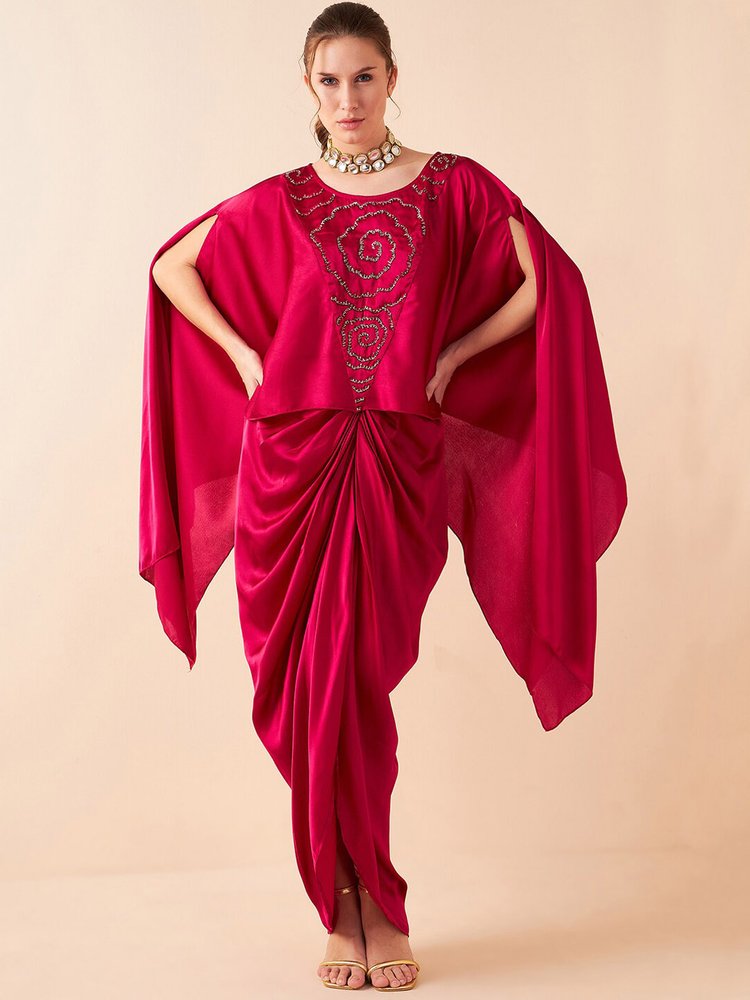
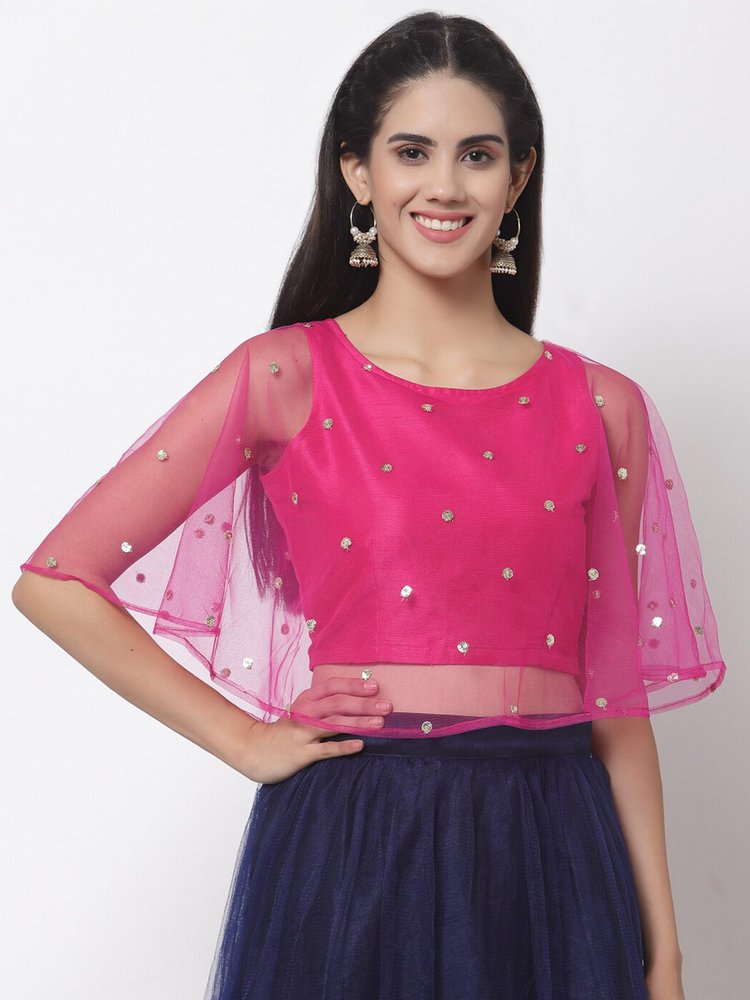
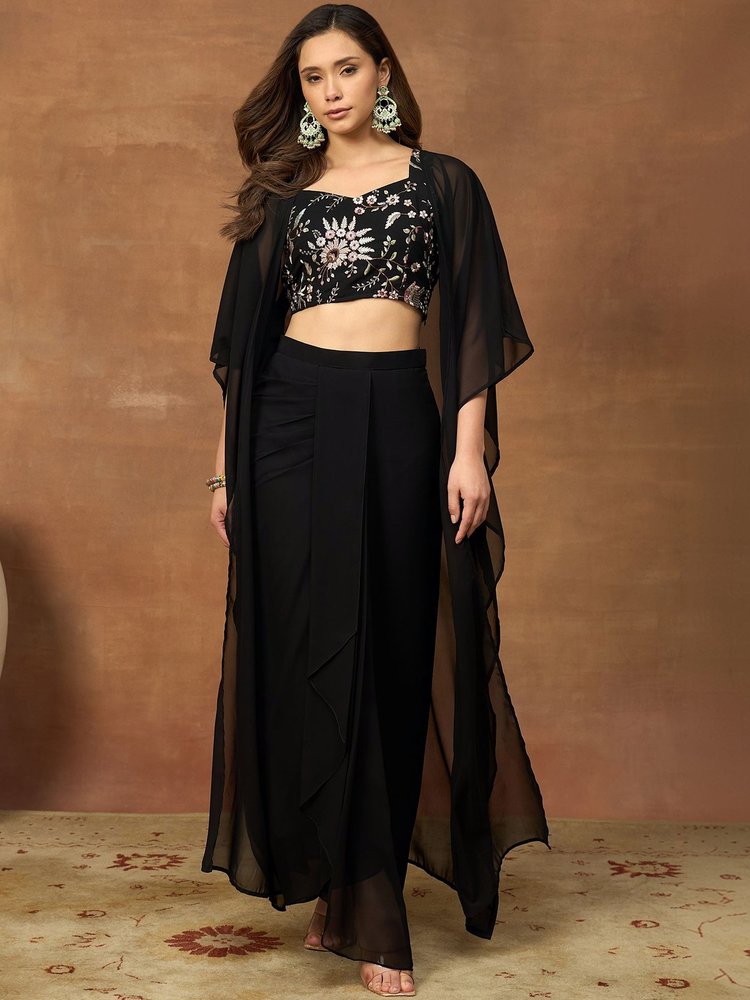
A cape gives you the movement of a dupatta without the pinning. Sheer net looks light and suits a warm evening, while satin or georgette falls with more weight. Your arms stay free, which matters once the music starts.
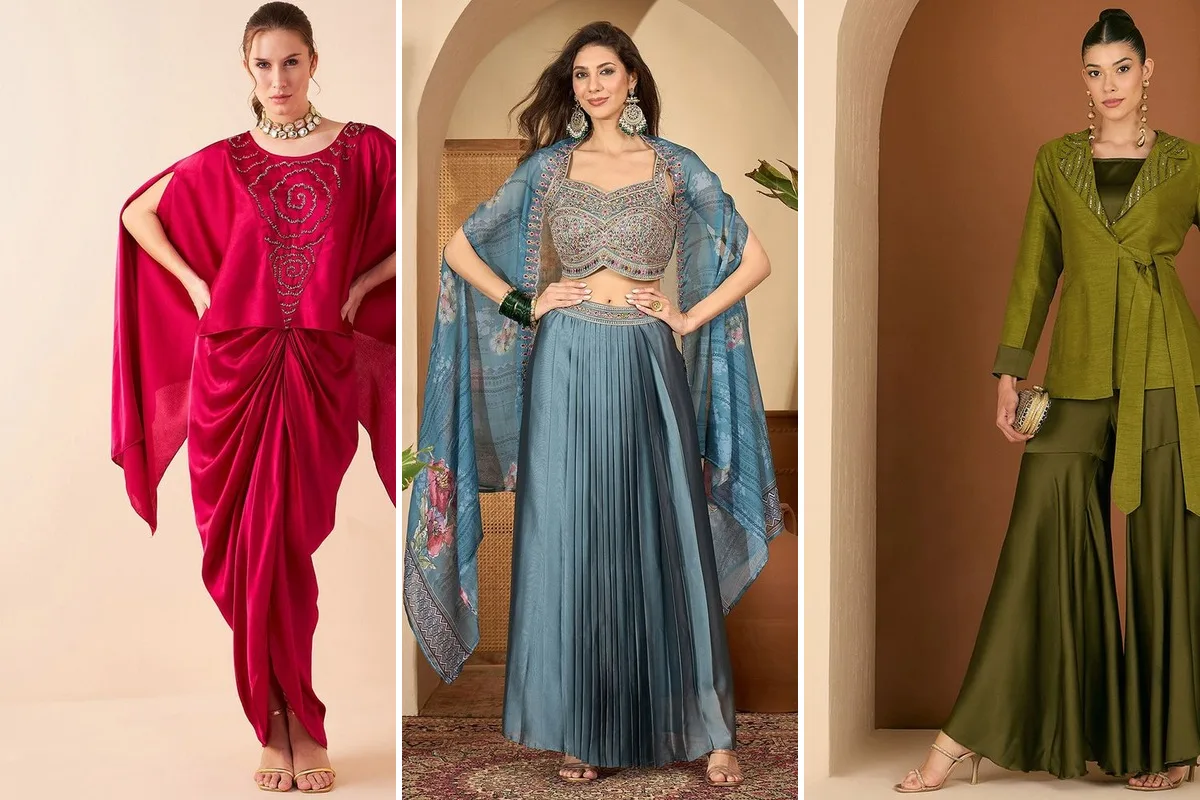
Glossy cape sleeves over a draped skirt, a sheer net cape top, a green anarkali dress with its cape, and a three-piece with a long chiffon layer.


Dhoti pants
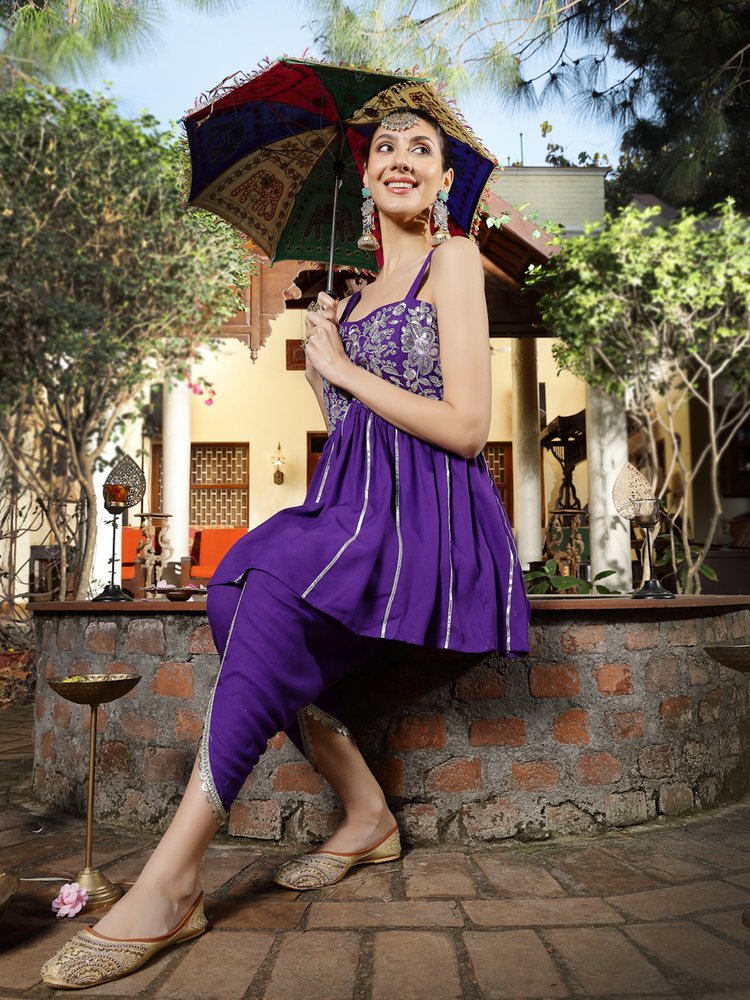
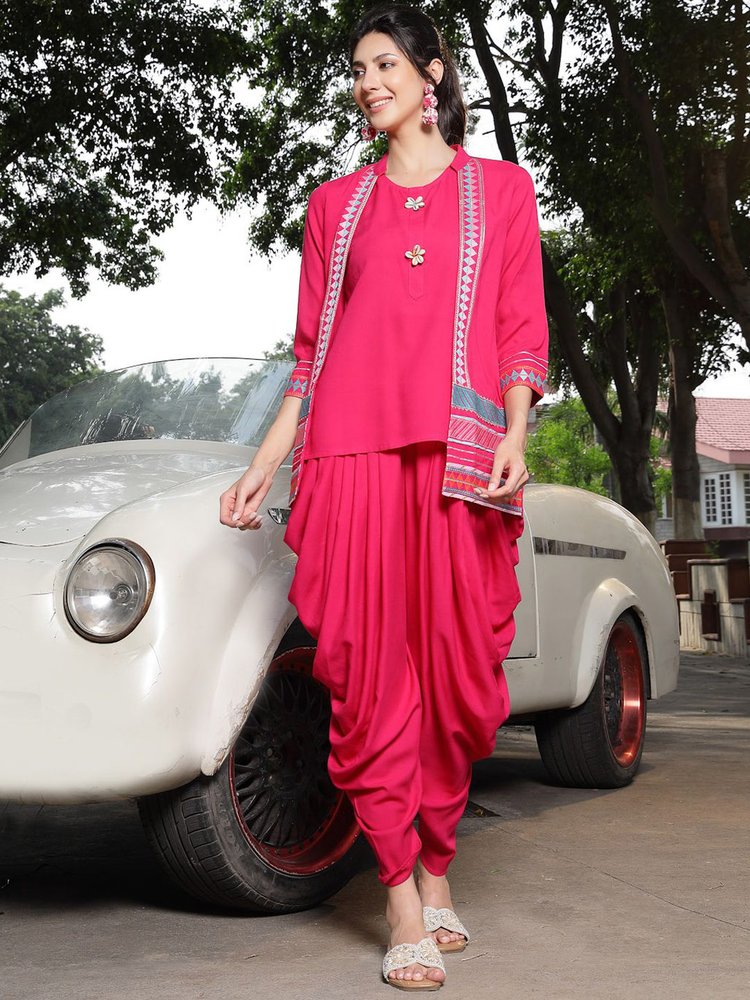
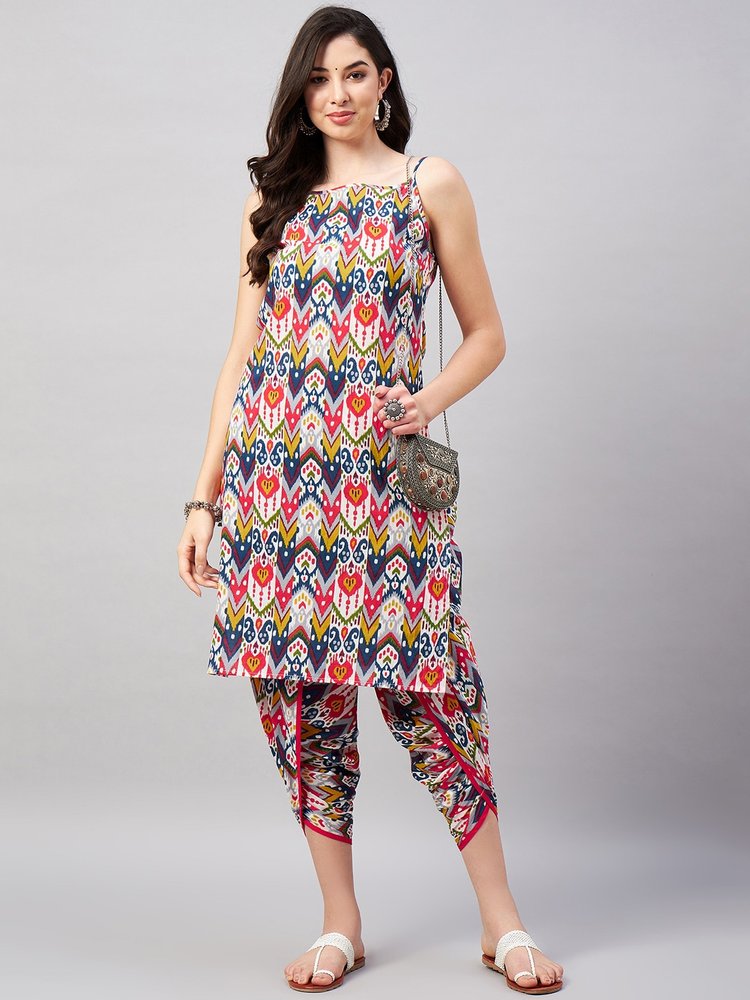
Dhoti pants borrow the draped folds of the traditional men's garment and stitch them in place, so there is nothing to tie. They look best under a short kurti or a top that ends above the knee, which lets the folds show. The two viscose rayon sets here list machine wash, but read the label on any set you choose.
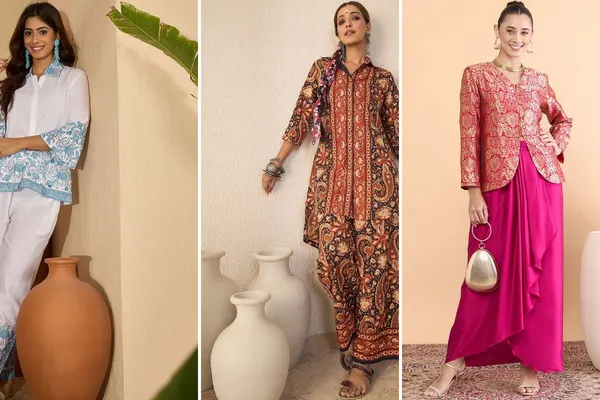
Violet with zari detail, pink with a matching jacket, and a printed cotton top for daytime.
Crop top and skirt
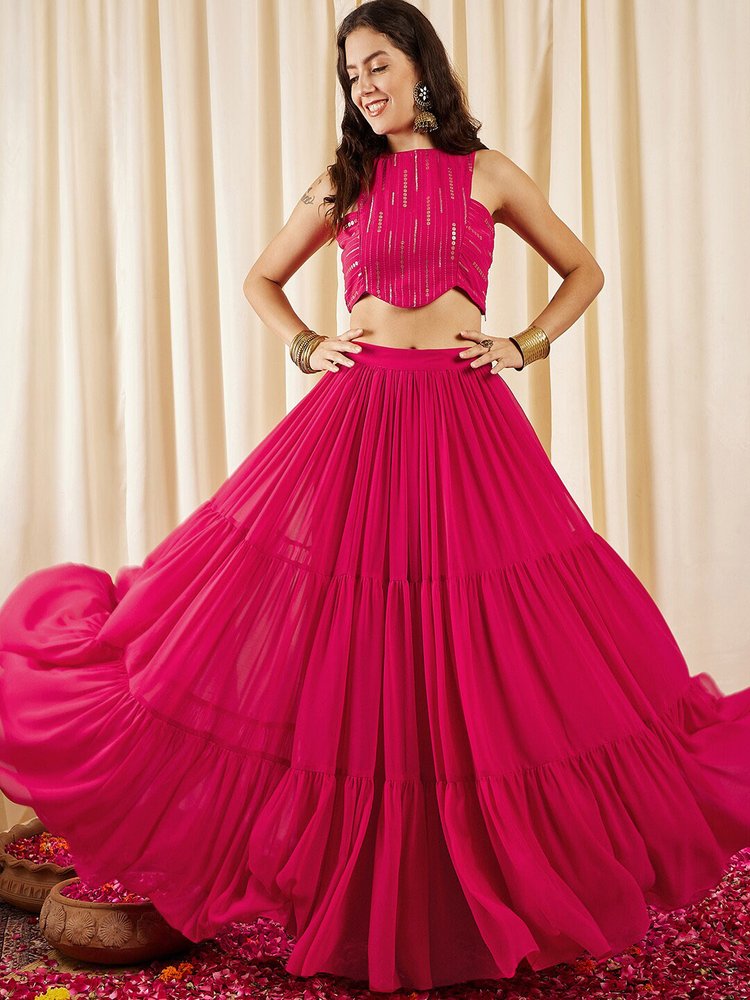
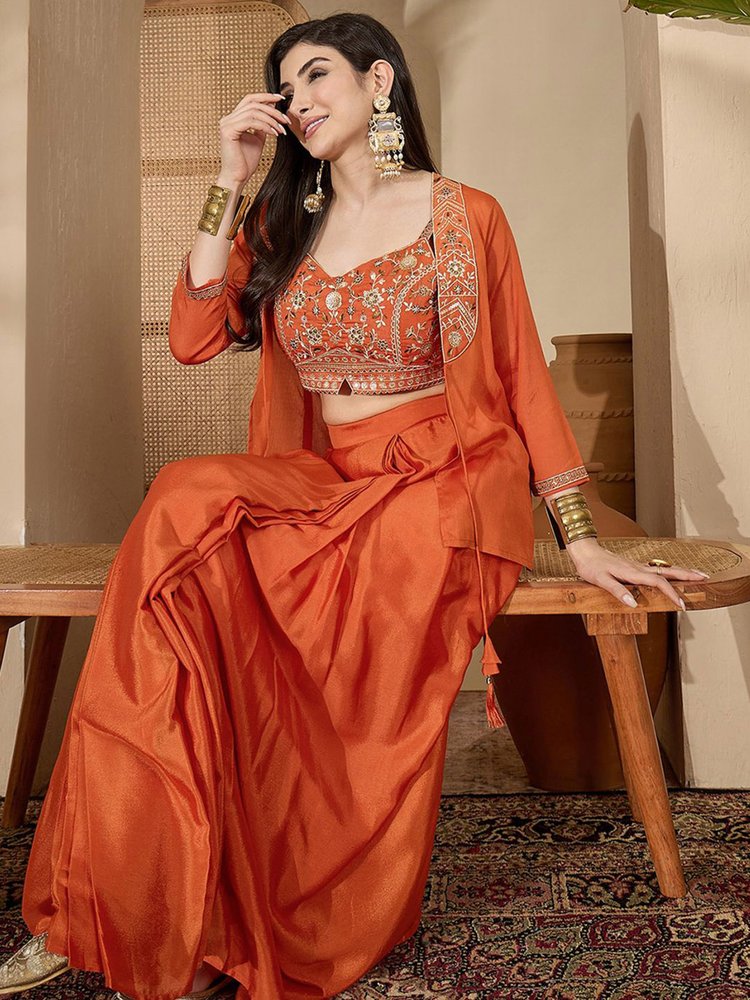
This is the shape closest to a Western party outfit, and the Indian part usually lives in the embroidery. A tiered skirt suits a dance floor. A draped one looks sharper at a cocktail table. If you would rather not show skin, ask a tailor to add a sheer panel or wear a jacket over the top.
Magenta tiers, a draped maroon skirt with embroidered sleeves, and an orange zari set with its own shrug.

Jacket lehenga
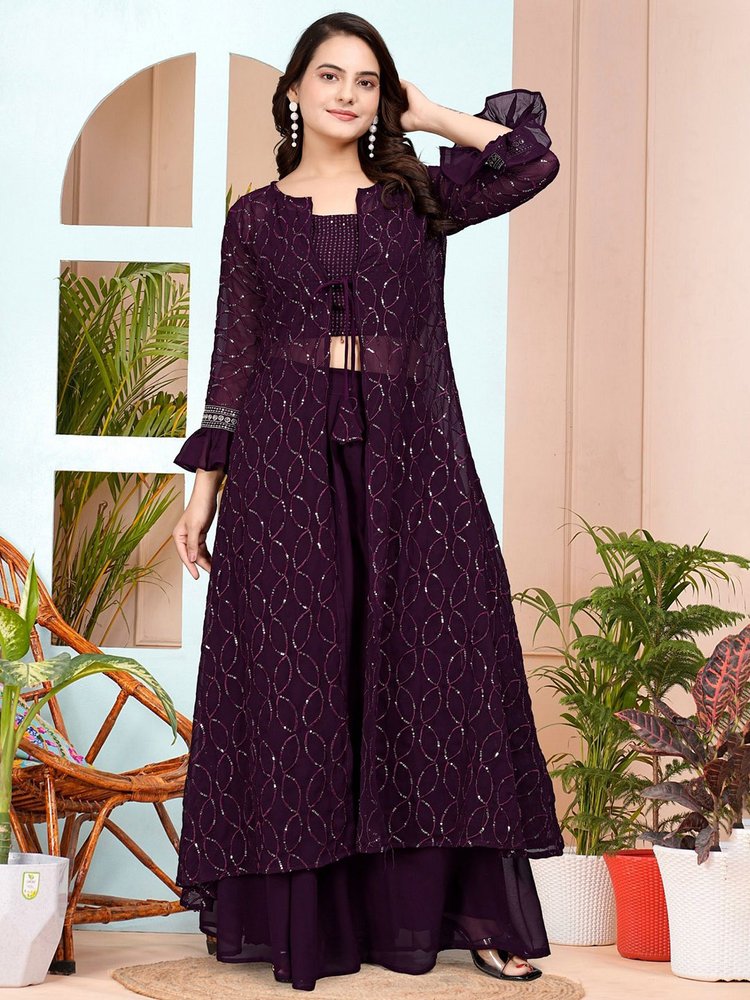
A jacket turns a lehenga, the long flared skirt, into something you can wear without a dupatta at all. Short jackets keep the skirt in view. Long ones read more formal and cover the midriff, which makes them a good choice for a family-heavy guest list. Separate jackets and shrugs can do the same job over a skirt you already own.
Floral with a short jacket, pleated satin with a printed shrug, and two long sequinned or sheer layers.


Gown with dupatta
A gown is the easiest choice if you want one piece and no thinking. It has a fitted top and a full skirt in the anarkali manner, with a matching dupatta over one shoulder. Leave the dupatta at the table for the party later, and the dress still stands on its own.
Flared chinon in chartreuse, sage green with an embellished waist, and a printed gown with a long open front.


Blazers and jackets with wide bottoms
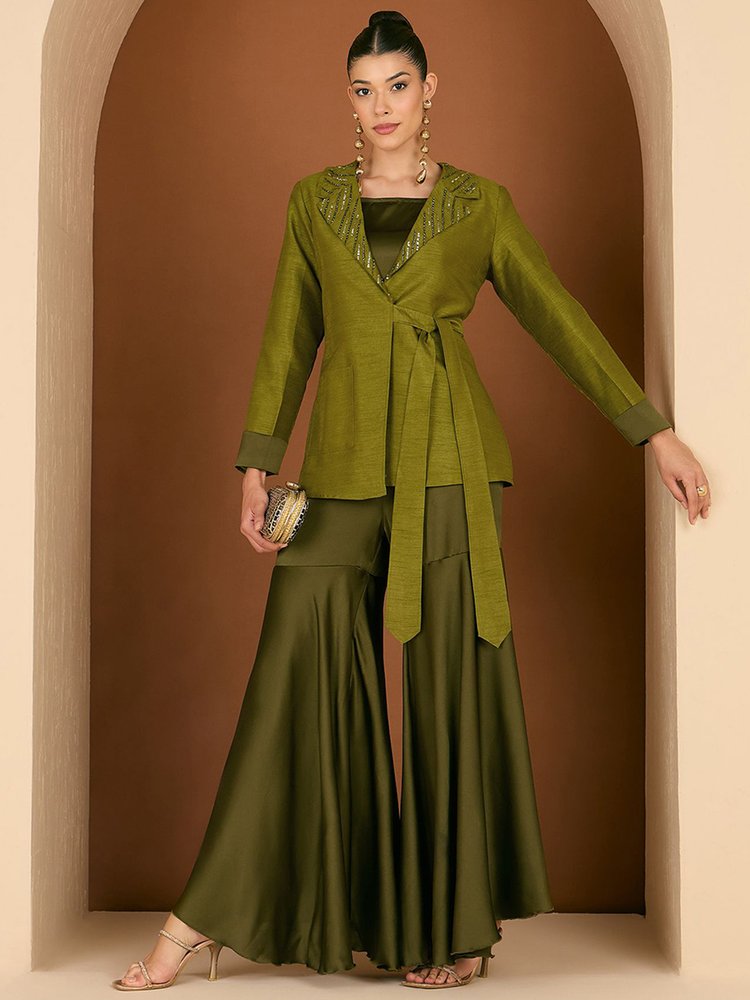
There is a sixth option too: tailoring on top, Indian volume below. A sharara, the wide pants flared from the knee, gives a blazer a very different mood from a pair of trousers.
The blazer and sharara
An olive blazer with an embellished collar and a tie belt, over a matching sharara. It covers more than a crop top does, so it suits a mixed crowd, and it needs no dupatta.
- The listing says machine wash
- Small earrings and a clutch are all it needs for a dinner
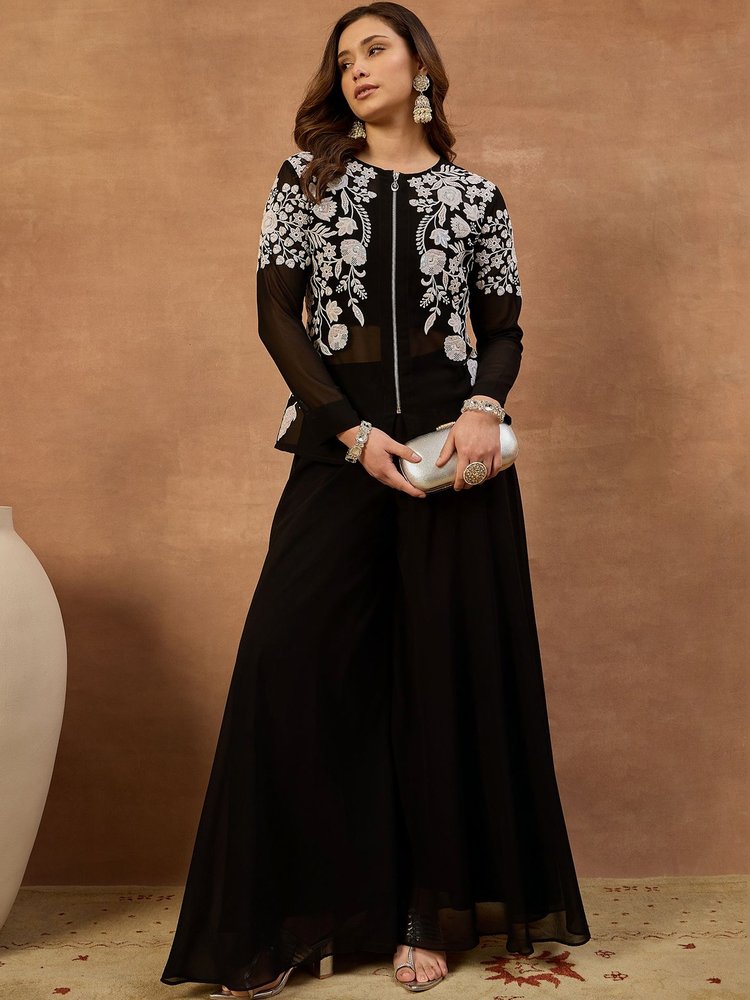
An embroidered jacket with palazzos in pink, and black with white embroidery for evenings.

What do men wear as Indo-Western?
Men have three easy routes: a bandhgala with trousers, an asymmetric kurta, or a kurta set with a jacket. Our wedding guide for men covers which function calls for what.
Bandhgala with trousers
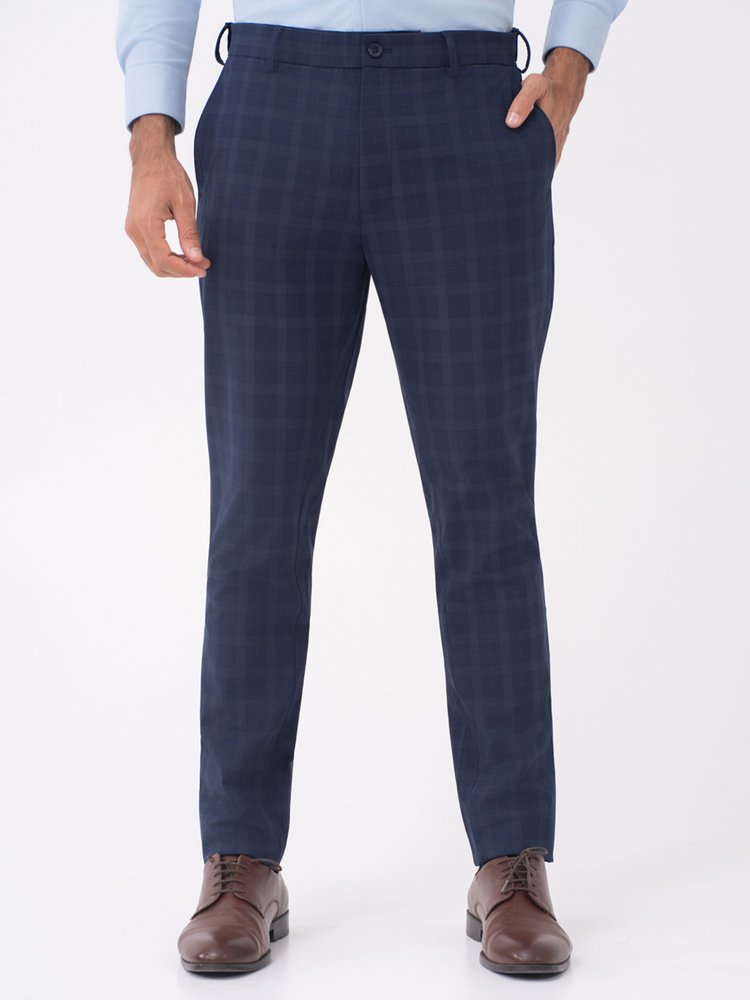
A bandhgala is a closed-neck jacket with a short stand collar, and it is the simplest step for someone who usually wears a suit. It feels like a blazer, needs no tie, and works with slim trousers you may already own. Velvet belongs in winter and at night. Jacquard is more versatile. More sit under men's jackets.
Rust self-design, navy velvet and a slim navy trouser to wear beneath either.


Asymmetric kurta
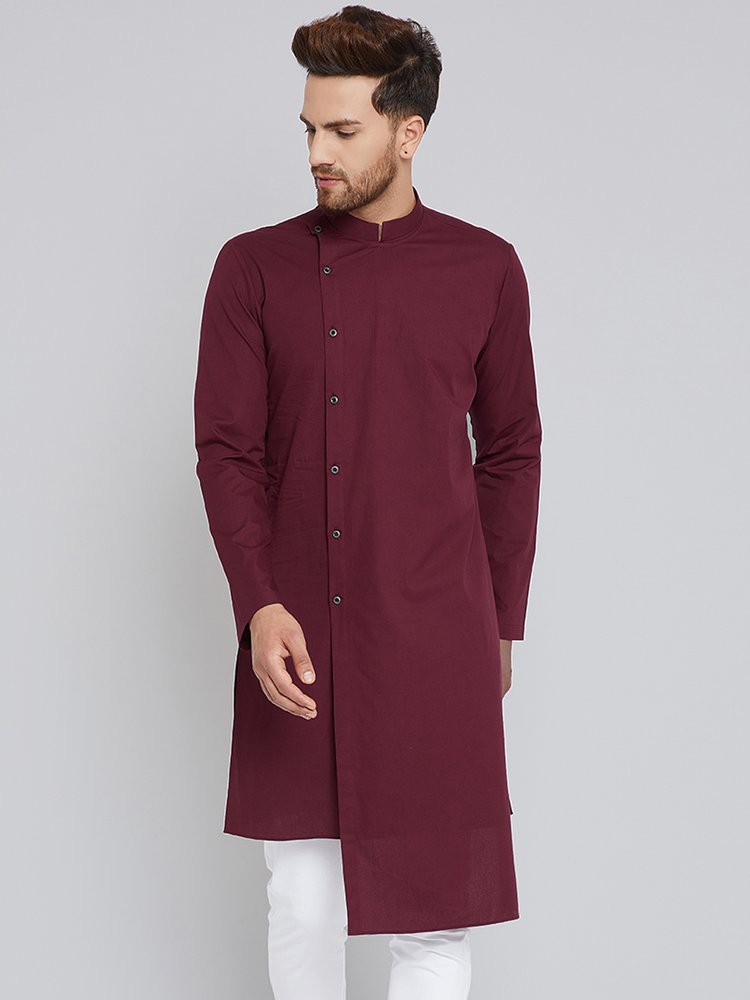
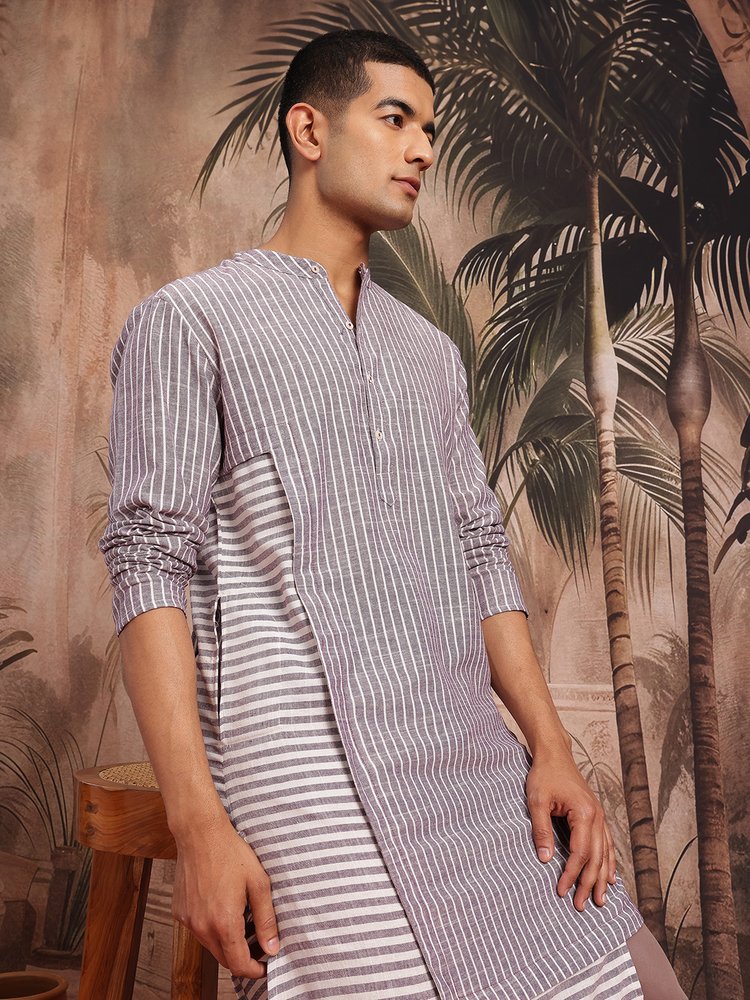
An asymmetric kurta has a hem cut at an angle, one side longer than the other, usually with a stand collar. It reads modern without any embroidery, and it looks good with slim trousers or straight dark jeans. Find more in men's kurtas. Plain cotton suits a mehendi or a daytime lunch; save embroidery for the evening.
A plain maroon cut and a striped version for daytime.
Kurta with a jacket, or a shorter sherwani
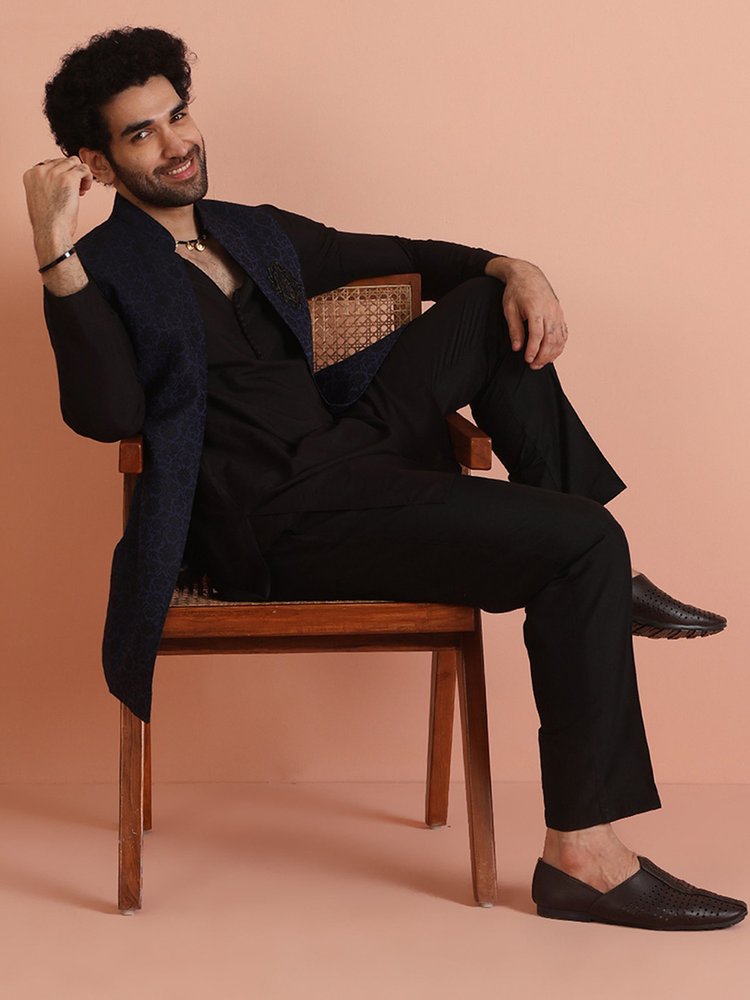
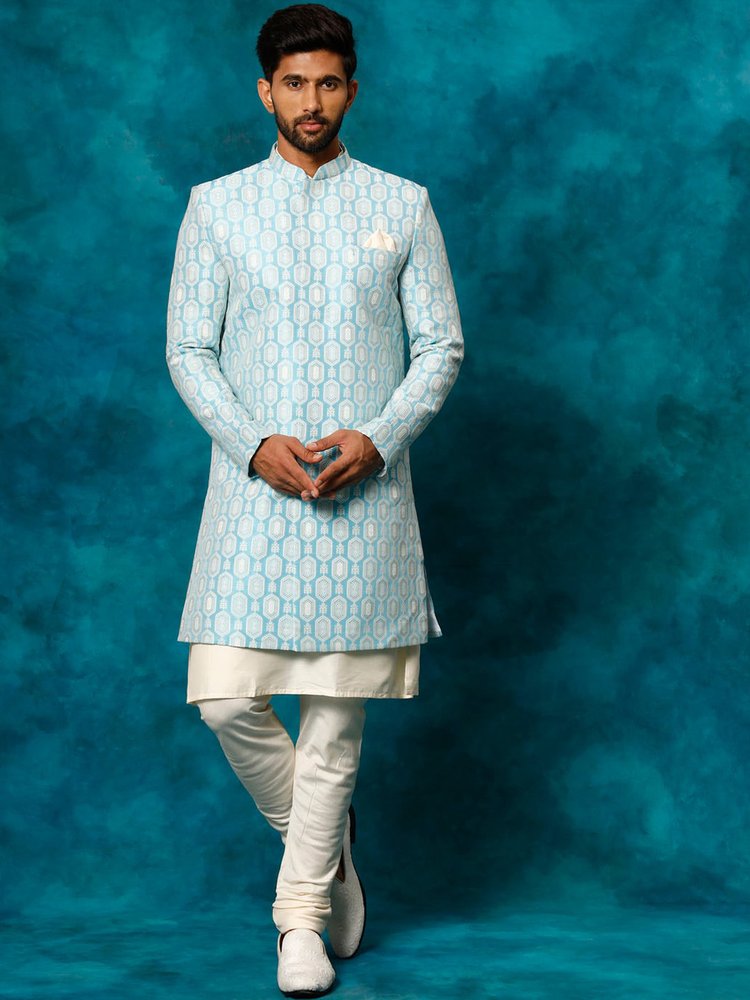
A Nehru jacket, sleeveless with a stand collar, turns a plain kurta into evening wear. For a sangeet or reception, an Indo-Western sherwani is the dressier version: a fitted, embroidered coat over a kurta and churidar (narrow pants that gather at the ankle). Browse sherwanis and Nehru jackets.
Navy and black jacquard with a matching jacket, and an embroidered sherwani set in pale blue.
Which occasions suit Indo-Western, and when is it wrong?
It fits best at the parties around a wedding and at festive evenings, and least well at the religious parts. The full run of events is in our guide to wedding functions, and the wedding guest edit gathers ideas by mood.
| Event | Does it work? | What to reach for |
|---|---|---|
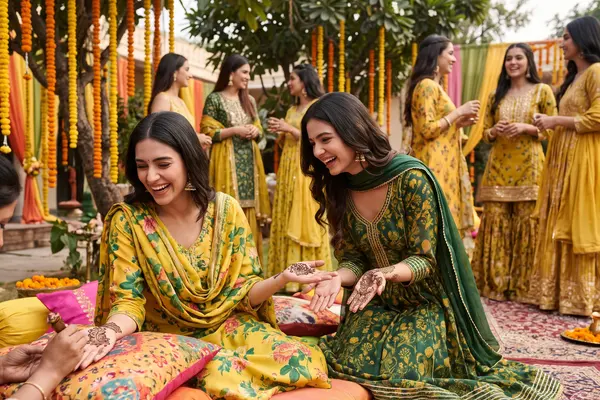
| Mehendi | Yes | Dhoti set or a printed crop top and skirt; asymmetric kurta for men |
| Sangeet | Yes, this is its natural home | Cape set, jacket lehenga, bandhgala |
| Cocktail or reception | Yes | Gown with dupatta, blazer and sharara, velvet bandhgala |
| Wedding ceremony | Ask the hosts first | Many families prefer a saree, lehenga or sherwani |
| Temple or puja | Usually not | A covered kurta set instead |
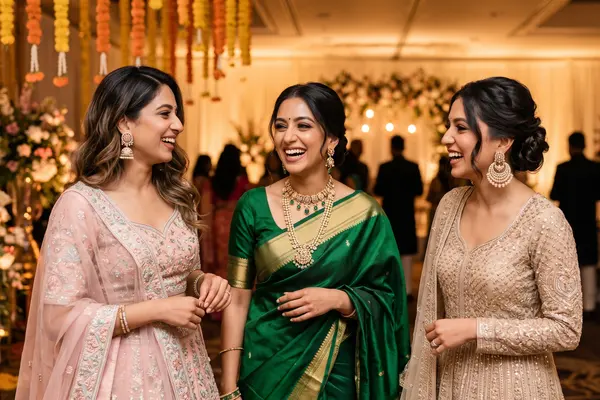
| Diwali or Eid party | Yes | Anything with embroidery, dressed to the host's house |
| Work dinner | Yes, if quiet | One Indian detail on a plain, clean shape |
When in doubt about a ceremony, our list of what not to wear to an Indian wedding covers the colours and cuts that cause the most awkward moments.
What does "Indo-Western" mean on an invitation?
It asks you to blend both styles, not to pick one. A cape set or a bandhgala with trousers answers it directly. A plain cocktail dress does not, though an Indian dupatta, embroidered jacket or statement earrings can bring it most of the way. If the card says "traditional" instead, read our guest guide, since that asks for fuller Indian dress.
How do you wear Indo-Western to a sangeet, a party or a work dinner?
Match the outfit to what you will physically be doing that night, then to the weather. A dress that looks right standing still may fail on the floor, in a hotel ballroom, or on a cold walk from the car park.
At a sangeet
A sangeet is the music and dance night before a wedding, so you will move. Try the outfit at home: raise your arms, spin once and sit down. Keep the hem clear of the floor, and carry flat juttis, closed flats with a curved toe, for when the heels give up. In Dubai or Singapore, the air conditioning can make a light jacket welcome even though the street is hot.
At a party
At a Diwali house party or New Year's night, you can go further with a draped skirt, a cape or a bold colour. Let one piece do the talking, then keep the rest quiet. The party edit has more ideas. In a northern winter, wear a long wool coat over the top and change your shoes at the door.
At a work dinner
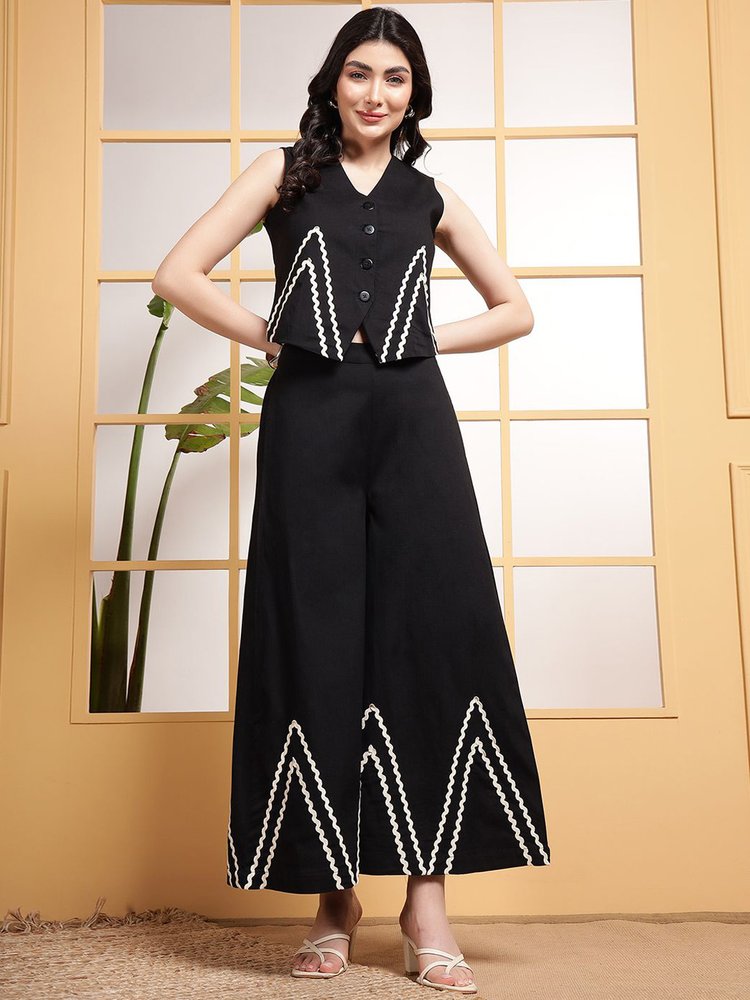
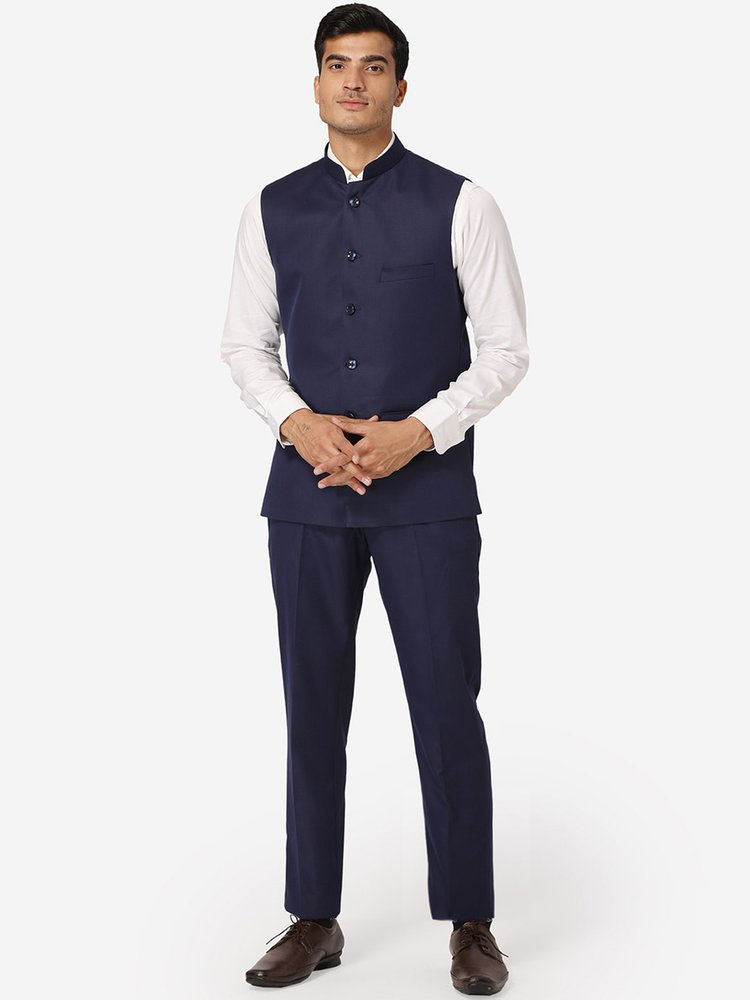
Here the mix should whisper. Pick one colour, a clean line and a single Indian note, such as a stand collar or a band of embroidery at the cuff. Skip sequins and exposed midriffs. A waistcoat with palazzos looks as tidy as a trouser suit, and men can wear a sleeveless bandhgala with matching trousers over a plain white shirt. Find more in the work edit.
A black waistcoat and palazzo set, and a navy sleeveless bandhgala with matching trousers.
How can you build an Indo-Western outfit from what you own?
Start with one Indian piece you already love and add Western basics around it. If you own a kurta set, you are halfway there.
- Short kurta and jeans. Wear it with straight dark denim and flat sandals for a casual Saturday.
- Lehenga skirt and a plain top. Swap the choli for a fitted tank or a bodysuit in a matching tone.
- Embroidered jacket over a dress. A plain slip or wrap dress takes on a whole new mood under it.
- Dupatta as a scarf. Drape one over a black dress or a white shirt and trousers.
- Saree blouse and wide trousers. A silk blouse under a blazer is an easy dinner outfit.
- For men, a Nehru jacket over a shirt. Add chinos or dark jeans and skip the tie.
How do you get the fit right?
Check the length on the size chart, not just the letter size, because these shapes depend on where the hem lands. We read the size charts of Indo-Western pieces on this store to find typical figures. Women's shapes are at size M, the kurta at M and the bandhgala at size 40. For your letter size, see our Indian size chart for women.
| Shape | Piece | Typical length | Middle 80% fall between |
|---|---|---|---|
| Crop top and skirt | Top | 16 in (41 cm) | 14 to 23.5 in (36 to 60 cm) |
| Crop top and skirt | Skirt | 35 in (89 cm) | 17.5 to 41 in (44 to 104 cm) |
| Top and jacket set | Bottom | 38 in (97 cm) | 35 to 41 in (89 to 104 cm) |
| Dhoti set | Top | 35 in (89 cm) | 28 to 46 in (71 to 117 cm) |
| Dhoti set | Pants | 38 in (97 cm) | 30 to 40 in (76 to 102 cm) |
| Gown | Shoulder to hem | 55 in (140 cm) | 48 to 56 in (122 to 142 cm) |
| Men's asymmetric kurta | Shoulder to hem | 41.5 in (105 cm) | 36 to 42 in (91 to 107 cm) |
| Men's bandhgala | Shoulder to hem | 29 in (74 cm) | 29 in on all 13 we read |
Skirts vary the most because the crop top group includes short skirts, so read the number if you want floor length. Almost every listing in this guide photographs women's looks on a model listed at 5 ft 8 in (173 cm) and men's at 6 ft (183 cm). If you are shorter than that, a gown or long skirt will likely reach the floor and beyond, so plan on hemming or on higher heels.
Keep reading
Questions people ask
Is Indo-Western traditional dress?
No, it sits between traditional and Western dress. It borrows Indian fabric, embroidery or drape but changes the cut. That is why it suits a party better than a religious ceremony, where many families prefer fully traditional clothes.
Is Indo-Western the same as fusion wear?
In everyday use, yes. Fusion wear can mean any mix of two styles, but in Indian fashion it almost always means Indian and Western together. You will see both names used for the same cape sets, dhoti pants and jacket sets.
What is the difference between Indo-Western, a sherwani and a jodhpuri for men?
A sherwani is a long, usually embroidered coat worn over a kurta with narrow pants, and it is the most traditional of the three. A jodhpuri is a bandhgala-style suit with a shorter closed-neck jacket and trousers. Indo-Western describes the wider mix, including shorter sherwanis, asymmetric kurtas and bandhgalas with plain trousers.
What is Indo-Western cocktail attire?
It means evening wear with an Indian touch. Women can choose a crop top and draped skirt, a blazer with a sharara or a gown. Men can wear a velvet or jacquard bandhgala with slim trousers.
Can I wear Indo-Western to a wedding if I am not Indian?
Yes, and hosts are usually happy to see it. It is often the easiest way in, since there is no saree to drape. Choose a rich colour, avoid all white or all black for a ceremony, and ask the hosts if you are not sure about a function.
What shoes go with Indo-Western outfits?
Heeled sandals suit most long skirts and shararas, as they keep the hem off the floor. Juttis work well with dhoti pants and kurtas, and men can wear loafers with a bandhgala. Bring flats for a sangeet.
About the numbers
- Wikipedia, Indo-Western clothing, read 3 November 2026: Puffed-sleeve saree blouses under British rule, the two-way exchange of the 1960s and 1970s, Wendell Rodricks's 2012 statement on Goa, and common pairings such as a kurta with jeans or a lehenga with a tank top.
- TiaBow size charts, Indo-Western pieces, read 3 November 2026: Median and middle 80% of garment length at size M (bandhgala at size 40). Samples: 120 crop top and skirt sets, 138 top and jacket sets, 147 dhoti sets, 87 gowns, 20 men's asymmetric kurtas, 13 men's bandhgalas.
- TiaBow product details, read 3 November 2026: Model heights of 5 ft 8 in and 6 ft and the care labels quoted, from the listings shown in this guide.
- Google autocomplete, United States, read 3 November 2026: The questions people type about Indo-Western style, dress codes and men's options.