What Is Kundan Jewellery? Kundan vs Polki, Jhumkas and Care
Kundan is an Indian way of setting stones, with gold foil holding each one in its mount. Polki is the stone and meenakari the enamel. Here is how to tell them apart, wear jhumkas and store it all.
In short
- Kundan jewellery is a way of setting stones, in which gold foil placed between the stone and its mount holds the stone in place.
- Polki is a thin, flat slice of polished diamond, kundan is the setting method, and meenakari is coloured enamel, so one necklace can use all three.
- Fine kundan uses gold and gemstones, while fashion kundan copies the look on a plated brass or alloy base, and every piece shown in this guide is fashion jewellery.
- Pair heavy earrings with a bare or embroidered neckline and a statement necklace with small earrings, so that one piece leads the look.
- Keep kundan dry, put perfume and hairspray on before the jewellery, wipe it with a soft cloth after wearing and store it flat in its own box.
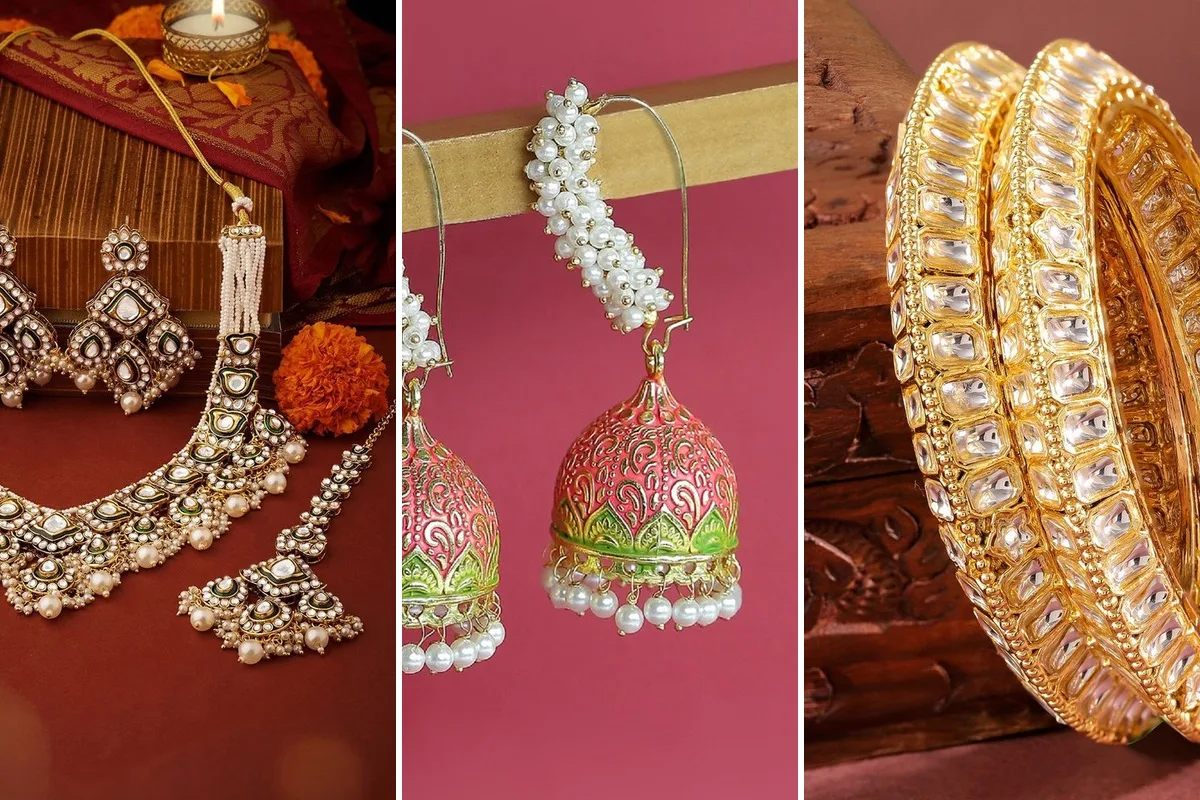
Kundan jewellery is an Indian style of setting stones: gold foil sits between each stone and its mount and holds it in place. Kundan names the craft, not a material. Polki is a slice of diamond, and meenakari is coloured enamel. One necklace can use all three, which is why the words get mixed up.
One plain fact before we go further: the pieces shown in this guide are fashion jewellery. Their product details name brass, alloy or other metal bases, most with gold or silver plating or a gold tone, and some name artificial stones or beads. The 18K and 22K in some titles describe the plating. None is described as solid gold or diamond set, so kundan or polki in these titles describes the look. Check the details on each piece, or browse all our jewellery as you read.
What is kundan jewellery made of?
Traditional kundan is made of gold, foil and stones; modern fashion kundan keeps the look on a cheaper metal. The word is said to mean pure gold. The style grew up around Rajasthan's royal courts, flourished under Mughal patronage, and Jaipur is still its traditional home. Court designs were later copied in silver, which took the look well beyond the palace.
The traditional process has six named stages:
- Ghaat: the metal framework is built.
- Paadh: wax goes into the framework and is shaped to the design.
- Khudai: stones are fitted into the framework.
- Meenakari: enamel work picks out the design.
- Pakai: gold foil is pressed in by burnishing, which fixes each stone without heat.
- Chillai: the stones are polished.
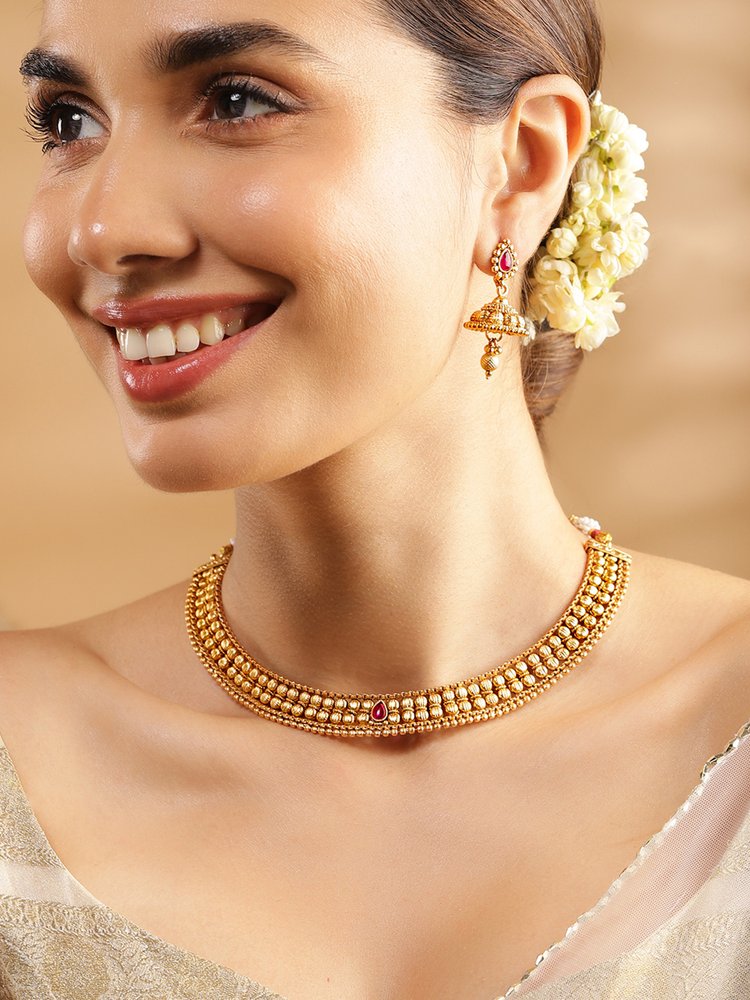
Kundan-look necklace sets
Short collars and long strands. Check each stated length: necklaces here run from 43 cm (17 in) to 63 cm (25 in), with chokers shorter still.


Kundan vs polki vs meenakari: what is the difference?
Polki is the stone, kundan is how the stone is set, and meenakari is the enamel decoration. They are three answers to three different questions, so asking which is better only makes sense once you know what you are comparing.
| Word | What it is | What to look for |
|---|---|---|
| Kundan | A setting method using gold foil | Stones edged in a smooth band of gold, with no claws |
| Polki | A thin, flat slice of polished diamond | A soft, milky glow rather than sharp sparkle |
| Meenakari | Coloured enamel fused onto metal | Bright pinks, greens and blues, often on the back of a piece or across a jhumka dome |
| Jadau | A word used beside kundan for the same family of stone setting | Often used interchangeably, so read what the stones and base are |
Two details worth knowing. Polki is often called an uncut diamond, but Harper's Bazaar India points out that this is a common mistake: it is a polished slice. And meenakari is real heat work, with powdered coloured glass fused onto metal at about 750 to 850°C (1,380 to 1,560°F). Rajasthan and Gujarat are both known for it.
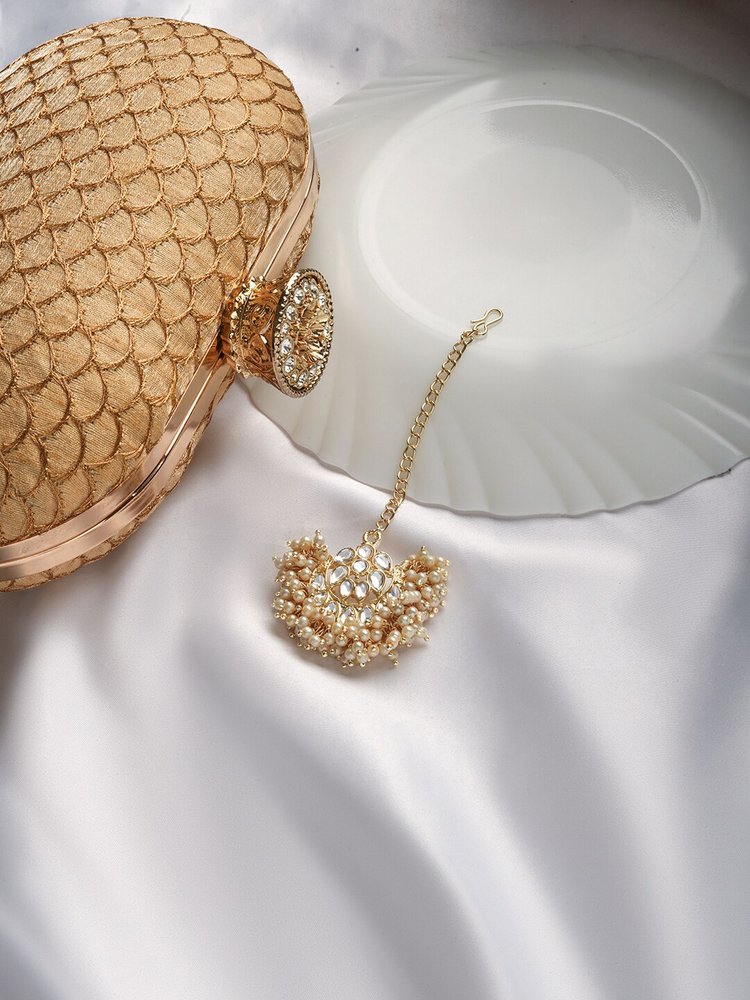
The polki look
Pearls and pale clustered stones, softer than a bright kundan set.


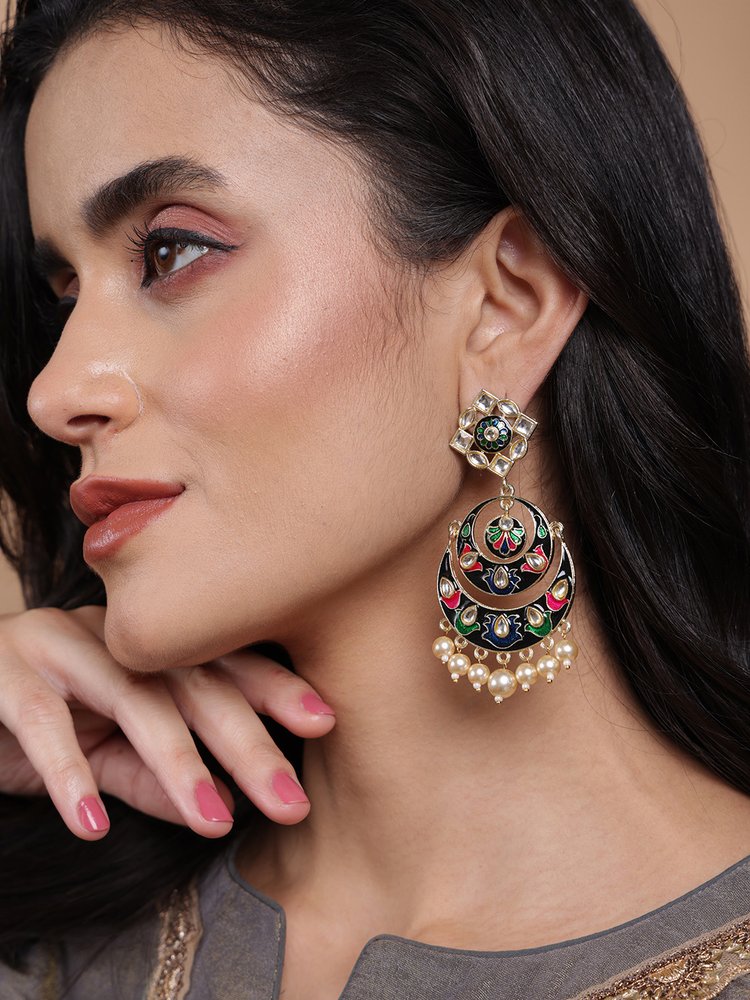
Colour from meenakari
Enamel-style colour with kundan-look stones, from a peacock necklace to a crescent chandbali.

Is kundan jewellery expensive?
Fine kundan is, and fashion kundan is not, because they share a look rather than materials. Decide by how often you will wear it and whether you want an heirloom or an outfit piece.
| Fine kundan | Fashion kundan | |
|---|---|---|
| Base | Gold | Brass or alloy, usually plated |
| Stones | Gemstones or polki | Glass, or other artificial stones |
| Made for | A bride's trousseau, a family piece | A wedding season, a party, a Diwali night |
| Good choice if | You want to keep and pass it on | You want many looks, or you are travelling |
What are the main jhumka styles?
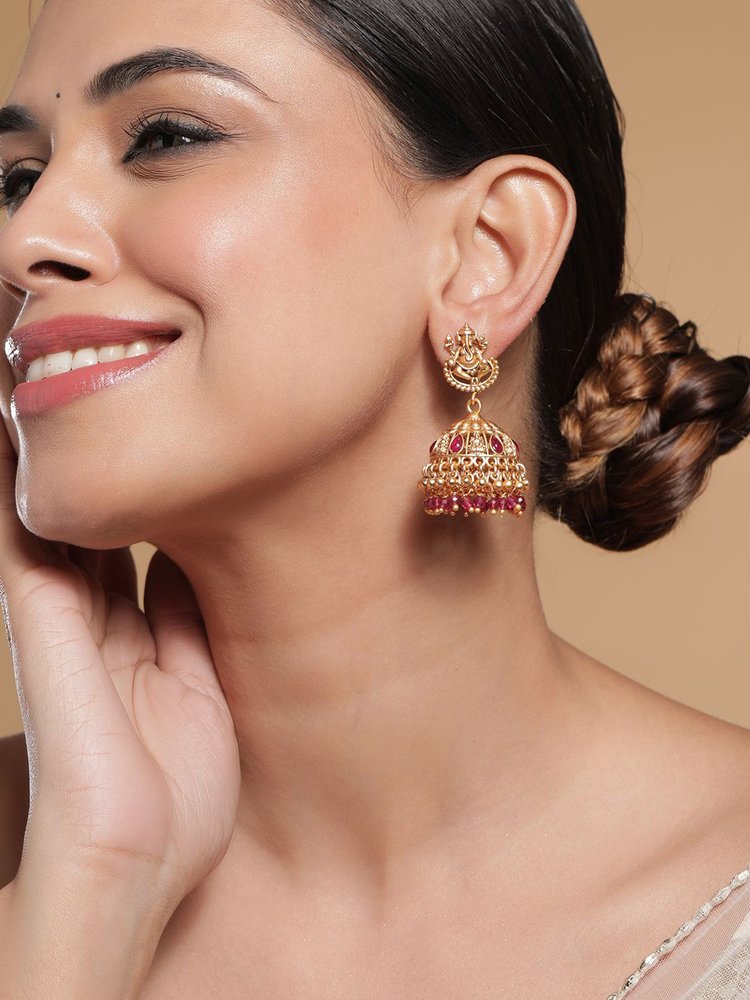
A jhumka is a bell-shaped earring, usually with a dome that swings below a stud and a fringe of tiny beads or pearls at the rim. The dome is the constant. What changes is the finish and how far it falls. Our earrings section holds all of these.
- Temple: gold-toned domes with carved motifs from South Indian tradition, such as peacocks or Ganesha. One pair below is about 4 cm (1.6 in) long. Lovely with silk.
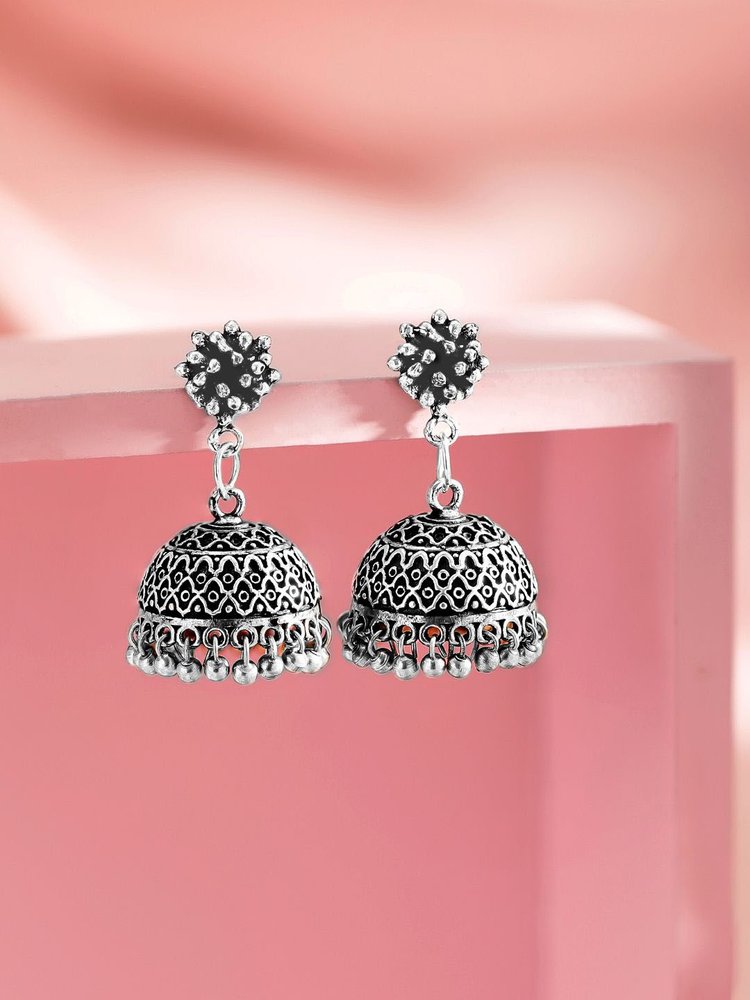
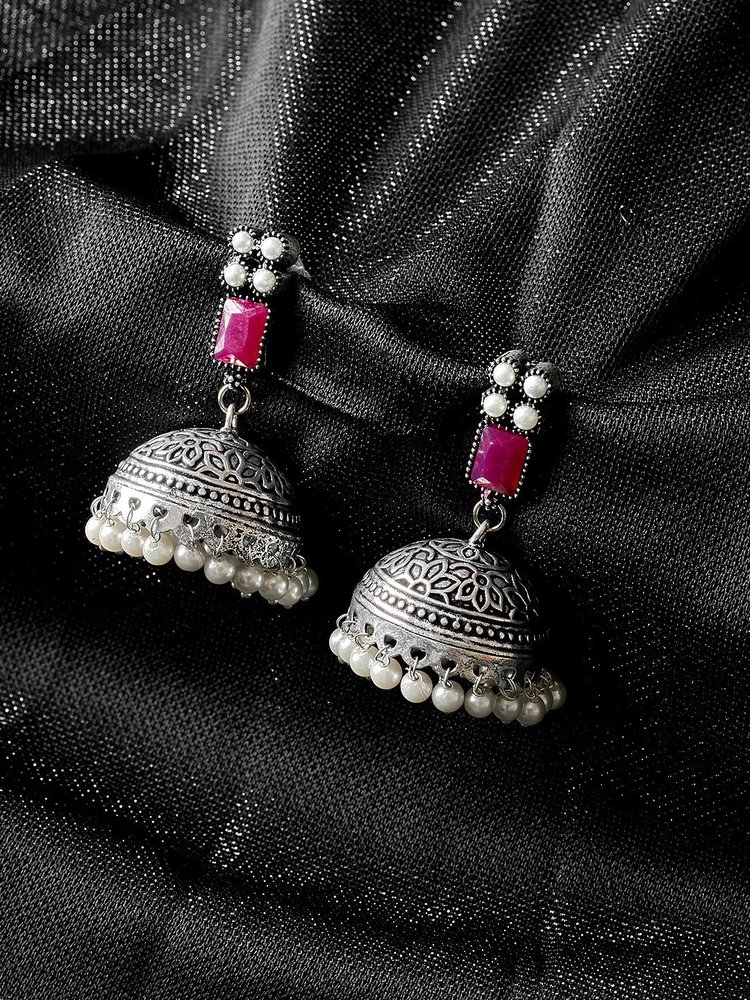
- Oxidised: silver-toned with darkened grooves. Relaxed, and the easy one with cotton, denim and a plain kurta.
- Meenakari: a painted, colourful dome, useful when your outfit is one solid colour.
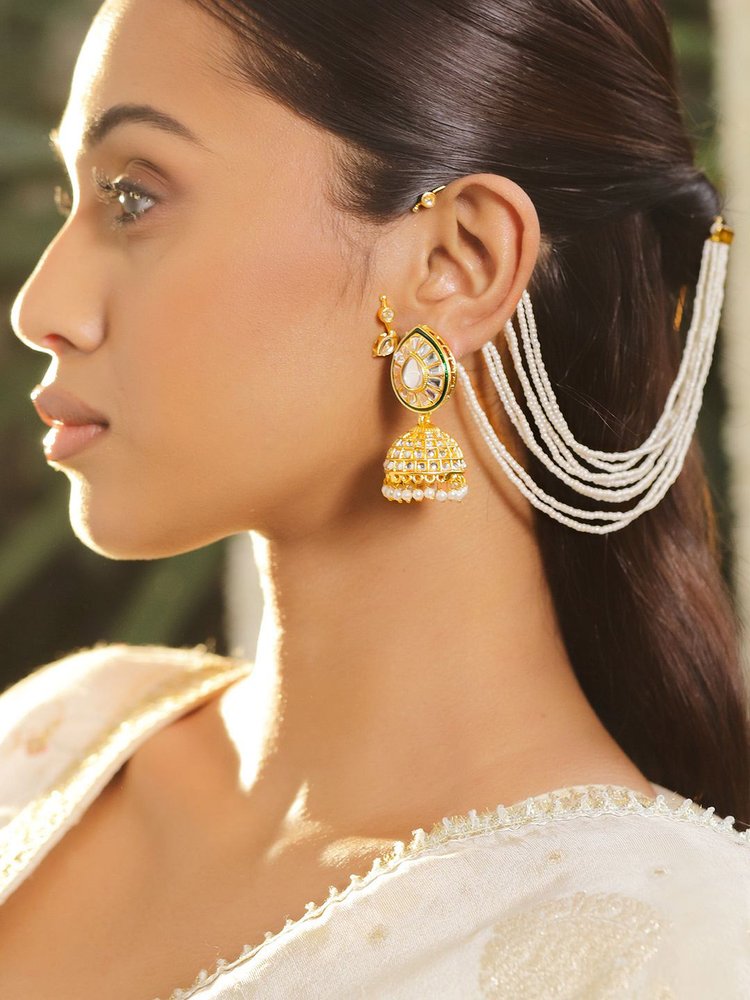
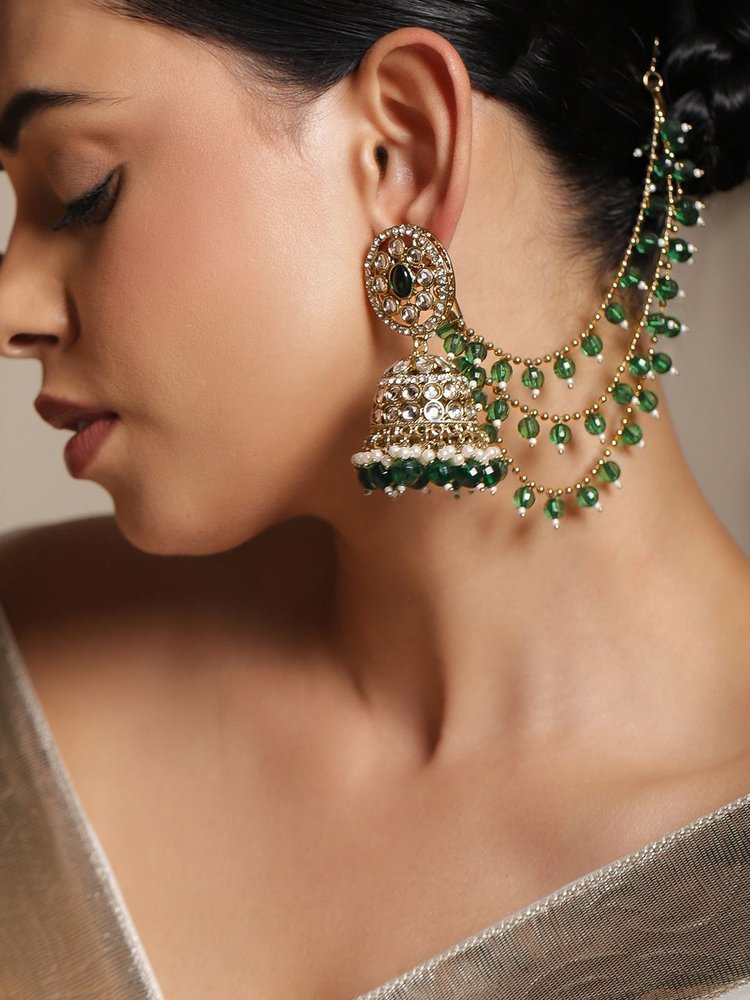
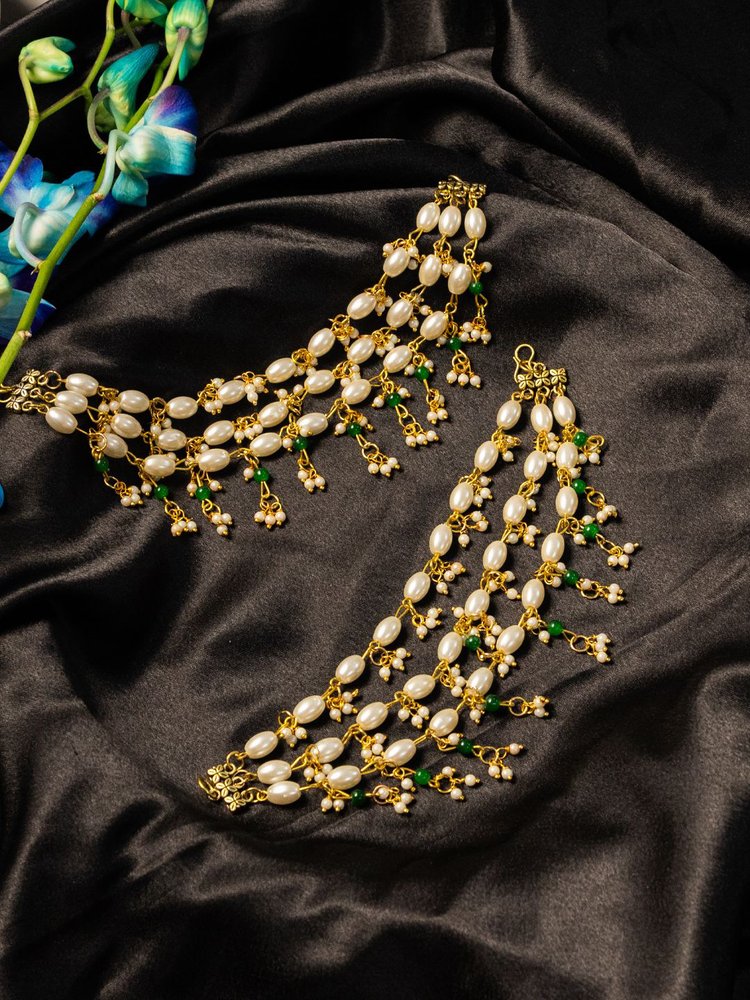
- Ear chain: a jhumka with beaded strands running up to the hair. Bridal looking, but it also lifts some weight off the lobe.
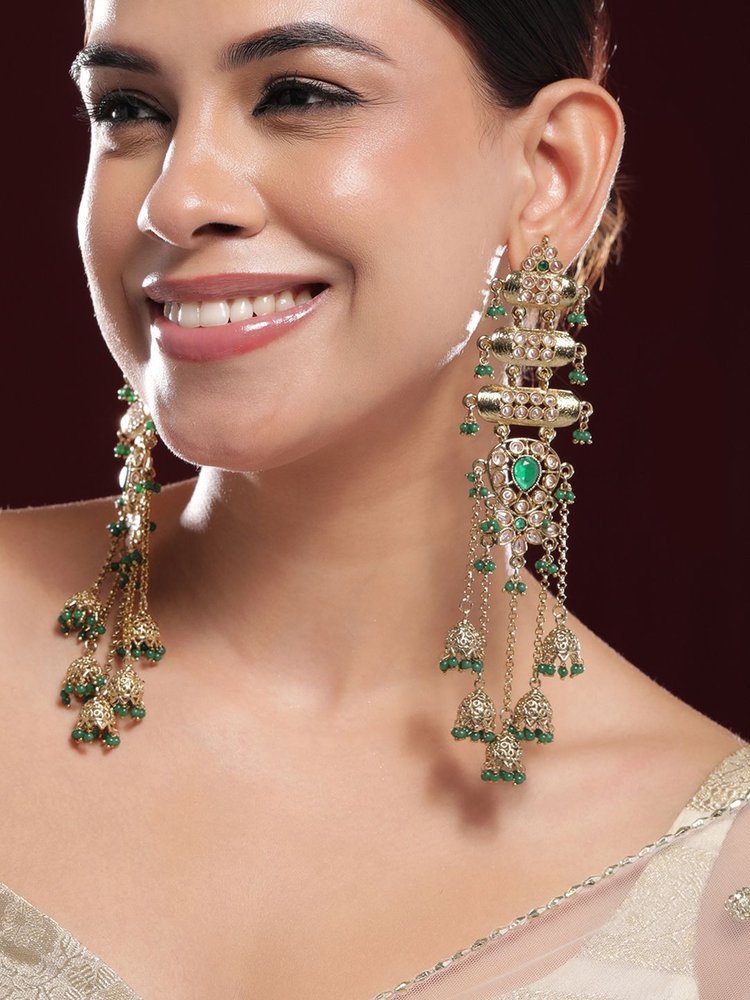
- Shoulder duster: long, layered drops. One pair here measures 15 cm (5.9 in), another 24 cm (9.4 in). These do the work of a necklace.
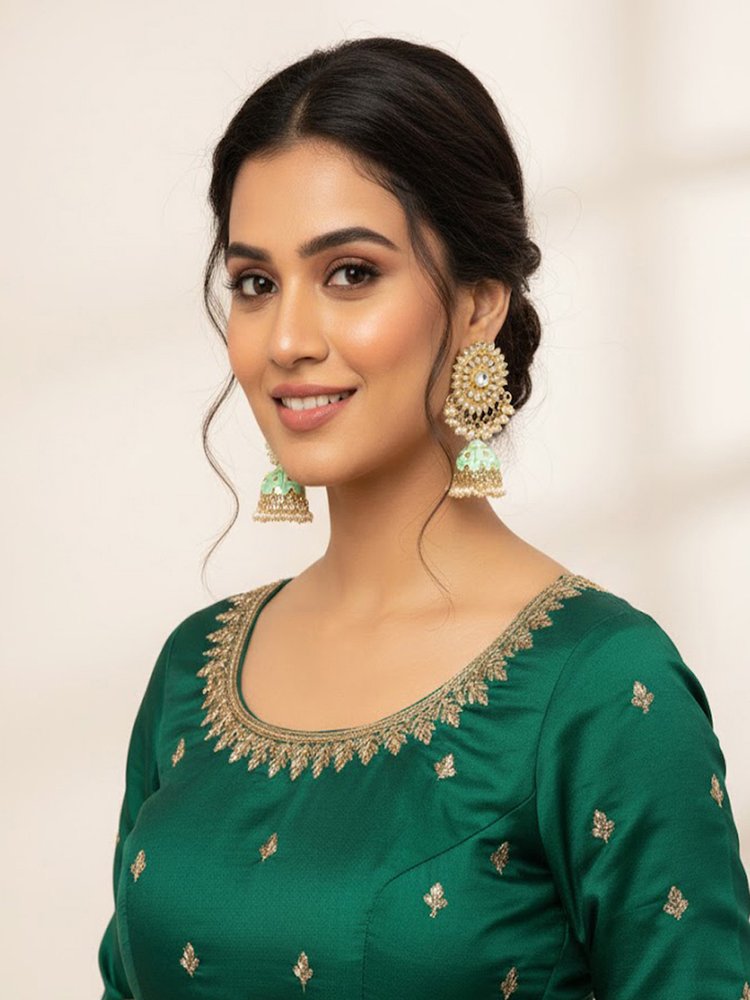
Temple and dome jhumkas
Short enough for a day function or an office Diwali lunch.

Oxidised jhumkas
About 4 to 4.5 cm (1.6 to 1.8 in) long, and easy with western clothes.
When the outfit is plain
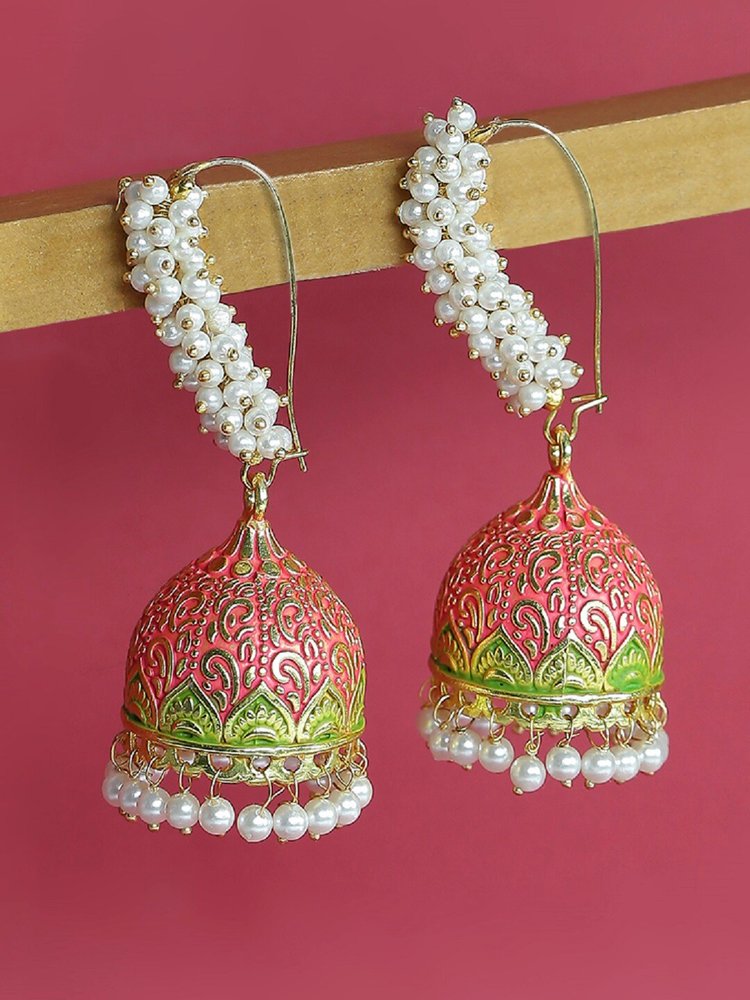
A hook threaded with pearls leads to a bright enamel-style dome and a pearl fringe, 8.5 cm (3.3 in) long in all. Wear it with a solid kurta or a black dress and skip the necklace.
- Alloy base, gold-plated
- Enough colour to carry the look alone
How do you wear heavy jhumkas comfortably?
Share the weight with a sahara, a beaded chain that runs from the earring into your hair, and keep the heavy pair for the part of the night that needs it. Here is what works:
- Check the weight first. Few pieces state it, but one long pair here lists 80 g (2.8 oz) and an ear chain 43 g (1.5 oz). Anything like that needs a plan.
- Use a sahara if it comes with one. Hook or pin it into your hair above the ear. A bun or low braid gives it something to grip, so it stays put through dancing.
- Add your own if it does not. A fine chain pinned from earring to hair will not carry the whole weight, but it stops the earring swinging forward.
- Wear a lighter pair to travel and to dinner. Put the heavy pair on when you arrive, and take it off for the drive home.
- Check the closure. Every jhumka in this guide needs pierced ears, with a post and back, an insert hook or a fish hook listed. If your ears are not pierced, look for the word clip-on in the details.

A jhumka with the chain included
A 5.4 cm (2.1 in) kundan-look dome with pearl strands that run up into the hair, so there is nothing extra to match. It suits a low bun at a sangeet, the music and dance night before a wedding.
- Brass base, gold-toned
- Post and back and fish hook closures
Ear chains and shoulder dusters
For open necks and hair worn up. Choose one of these or a necklace, rarely both.


Which jewellery goes with which neckline?
Let one piece lead, and let the neckline decide which one. A busy neck wants busy ears and nothing else; a bare neck can take a necklace with small earrings.
| Neckline | Wear | Skip |
|---|---|---|
| Deep V or sweetheart | A long or layered necklace that follows the V, with small earrings | A short choker that leaves a gap of bare skin below |
| Round or scoop | A collar necklace, or dome jhumkas alone | A long strand that disappears into the blouse |
| Boat neck | Long earrings or chandbalis, or a long strand | A choker, which sits right on the fabric line |
| High neck or collar | Long, narrow drops, with no necklace | Wide domes, which crowd the collar |
| Off-shoulder or strapless | A choker with small earrings, or a shoulder duster alone | Choker and duster together |
| Heavily embroidered neck | Statement earrings only, since the embroidery acts as the necklace | Any necklace |

A set you can split
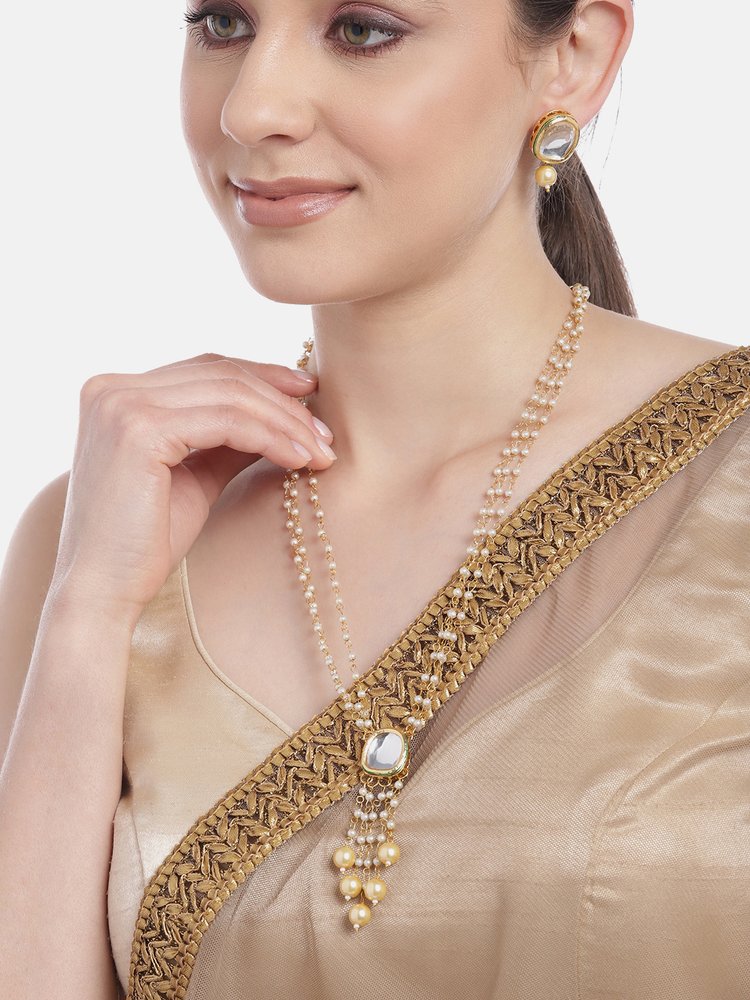
A beaded choker, 46 cm (18 in) on a drawstring so it adjusts to the neck, with 7 cm (2.8 in) earrings, a 14 cm (5.5 in) maang tikka (the forehead piece) and an adjustable ring. Pictured with a strapless neck, it looks full bridal all at once, so a guest might wear just the necklace and earrings.
- Alloy base, gold-plated
- Four pieces to mix with other outfits
What Indian jewellery should a wedding guest wear?
A guest wears one strong piece per function, matched to the metal in the outfit: gold zari (metallic thread) takes gold, silver zari takes silver or oxidised. Go lighter in the daytime and fuller for the evening. Our guide to what to wear as a guest covers the outfits function by function, and the wedding guest edit gathers ideas in one place.
| Function or outfit | Jewellery that works |
|---|---|
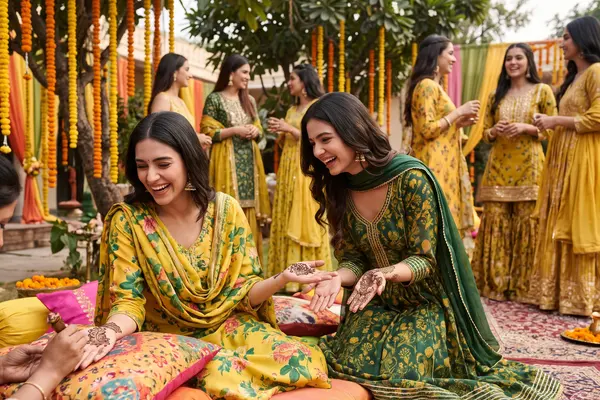
| Mehendi or haldi | Oxidised or meenakari jhumkas. Haldi paste and henna stain, so leave good pieces in the box until you have washed up. |
| Sangeet | Ear chains or dusters that move well, with nothing that snags a dupatta (the long scarf) |
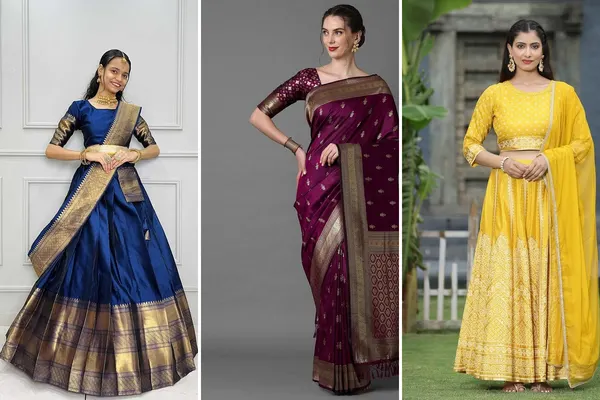
| Wedding ceremony | A kundan-look set with a saree or lehenga, plus a tikka if you enjoy one |
| Reception | A choker with small earrings, or long drops alone with a gown |
| Kurta set | Jhumkas and bangles. A necklace is often too much with an embroidered yoke. |
| Saree or lehenga | A saree blouse leaves room for a necklace. A heavy lehenga choli often does not. |
| Indo-western or a dress | One oxidised or meenakari pair, and let it be the only Indian note |
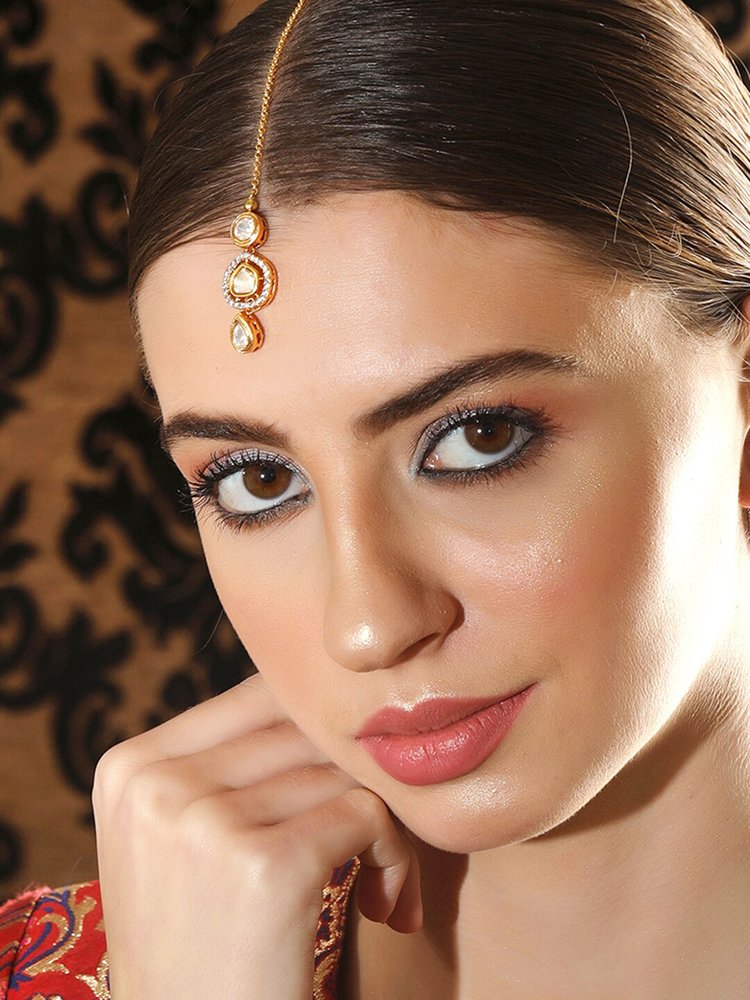
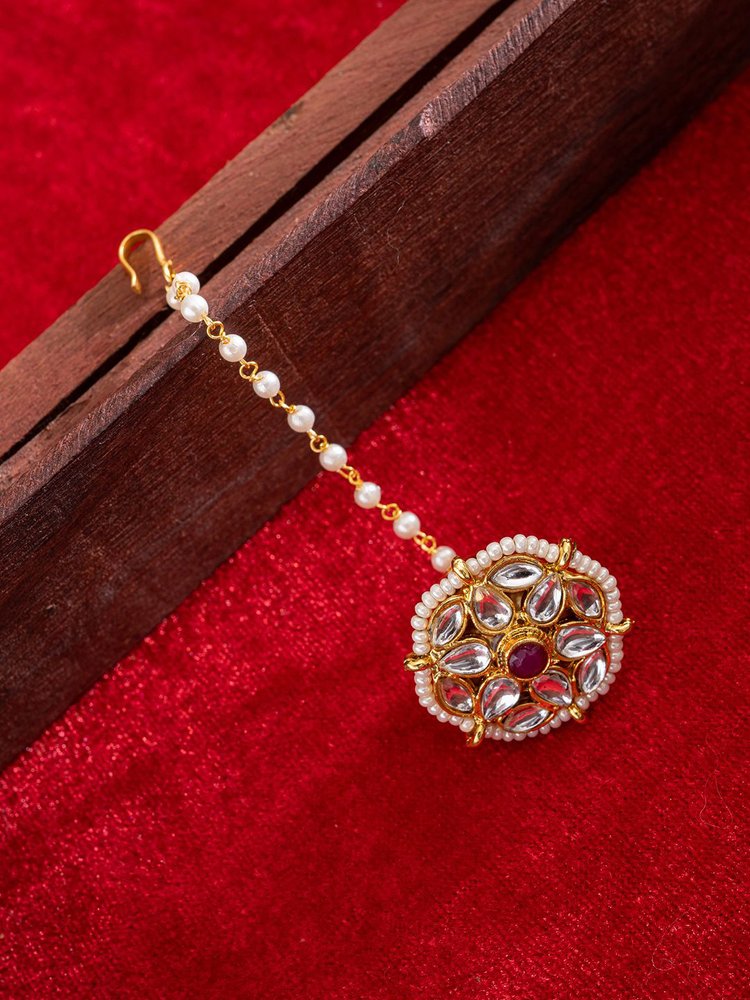
Stacking necklace, tikka, matha patti and long earrings together reads bridal, which is one of the mistakes guests want to avoid. Pieces such as a tikka live with our traditional jewellery, and our bangles and bracelets finish a look with short sleeves.
Tikkas and bangles to finish
Small additions when the necklace stays at home.


How do you care for and store kundan jewellery?
Keep it dry, keep it flat and keep it apart. Foil and lac settings dislike moisture and knocks, and sprays can dull plating. The care lines on the pieces here say much the same.
- Last on, first off. Finish perfume, hairspray and makeup, then put your jewellery on. Take it off before you wash your face.
- Wipe after every wear. Use a soft, dry cloth, with a cotton swab for the small gaps around the stones.
- Never soak. Skip dips, polish and ultrasonic cleaners, because water can get behind the stones.
- Store flat and separately. A flat, fabric-lined box stops strands tangling and stones scratching each other. A set of jhumkas can sit in its own small pouch.
- Fight humidity. In a damp climate, or after a rainy wedding, let pieces air dry and put a silica gel sachet in the box.
- Pack it as carry-on. Keep the flat box in your hand luggage and wrap each piece, so a strand does not end the trip in a knot.
What if earrings have bothered your skin before?
Check the base metal before you buy, because we cannot tell you that any piece will suit your skin. None of the pieces shown here uses the words nickel free or hypoallergenic, and only about 40 of the 24,000 or so jewellery pieces on TiaBow do. Where those words appear, they are the maker's description, which we have not tested.
Nickel is the metal people ask about most. A report in Dermatology Times on 277 earrings bought in San Francisco in 2007 said 85 of them contained nickel, and that no price point or country of origin reliably told you which. That is one old sample, not a verdict on any brand. If you have had a reaction, ask a dermatologist what to avoid and what to look for.
Keep reading
Questions people ask
Is kundan jewellery real gold?
Traditional kundan uses gold foil and a gold base, so it is. Fashion kundan copies the look on brass or alloy with gold plating or a gold tone. Check the base metal in the details: every piece shown in this guide is fashion jewellery.
Kundan vs polki: which is better?
Neither, because they are not the same kind of thing. Polki is a slice of diamond and kundan is a way of setting a stone, so fine polki pieces are often set using kundan. Choose the polki look for a soft glow and a kundan look for brighter, more defined stones.
What is the difference between kundan and jadau?
The two words overlap and are often used for the same family of foil-set stone work. Reference sources treat them together, so do not rely on either word alone. Read what the stones and the base metal are.
Can you wear jhumkas with western clothes?
Yes. Oxidised jhumkas look natural with denim, shirts and simple dresses, and a single bright meenakari pair works with black. Keep everything else minimal so the earrings read as a choice rather than a costume.
Can you get kundan jewellery wet?
It is better not to. Foil and lac settings dislike moisture, and most care lines here say not to soak. If a piece gets damp, wipe it with a soft dry cloth and let it air dry fully before you store it.
Can a wedding guest wear a full kundan set?
Yes, at the ceremony or reception, though a full set with tikka and matha patti can look bridal. Most guests look better wearing the necklace and earrings, or the earrings alone with an embroidered neckline.
About the numbers
- Wikipedia, Kundan (Jadau redirects to this entry), read 3 November 2026: Gold foil between gem and mount; the name said to mean pure gold; court origins in Rajasthan, Mughal patronage, Jaipur as centre, later copies in silver; the six stages; gems on a gold or faux metal base.
- Harper's Bazaar India, on polki and kundan jewellery, 25 November 2024, read 3 November 2026: Polki as a thin, flat slice of polished diamond, often mistakenly called uncut; kundan as craftsmanship rather than material; enamel as the decorative work on these pieces.
- Wikipedia, Meenakari, read 3 November 2026: Coloured powdered glass fused onto metal at about 750 to 850°C; Rajasthan and Gujarat known for the work.
- Dermatology Times, report on nickel in earrings, read 3 November 2026: 277 earrings from 34 sellers in San Francisco, bought October 2007; 85 contained nickel; no price point or country of origin reliably predicted it.
- Kundan guides from several jewellers, read 3 November 2026: Most modern kundan uses a plated brass or alloy base with glass stones; foil and lac settings are sensitive to moisture and knocks; perfume first, store dry and separately, silica gel in the box.
- TiaBow product details, the 27 pieces shown and about 24,000 jewellery pieces, read 3 November 2026: Base metals, plating, stone types, closures, lengths and weights as stated; care lines (soft cloth, flat box, keep sprays away, do not soak); about 40 pieces use nickel free or hypoallergenic wording, none of those shown.