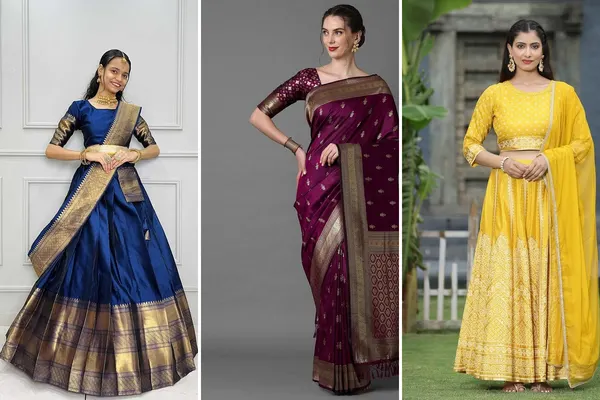
Types of Indian Silk, Zari and Velvet: A Luxe Fabric Guide
India produces five commercial silks: mulberry, tropical tasar, oak tasar, muga and eri. Zari is a metallic thread, not a cloth. Here is how each fabric looks, when to wear it and how to care for it.
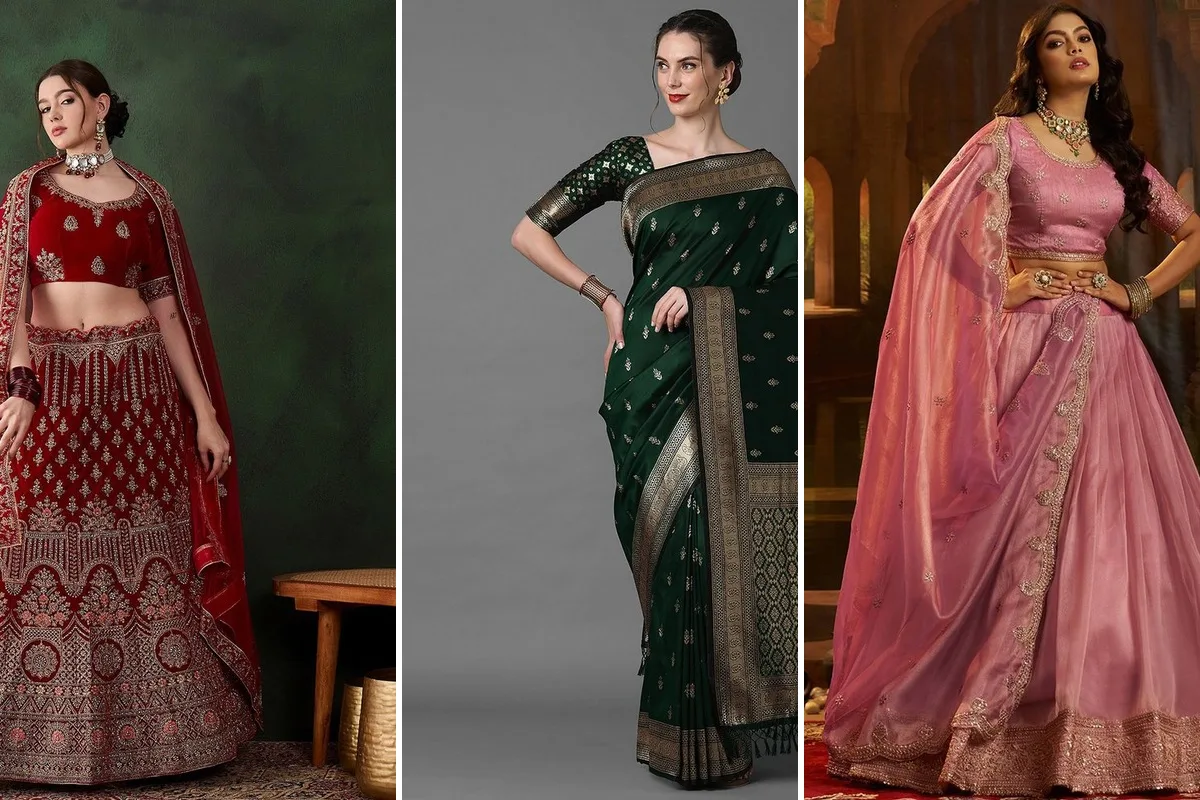
In short
- India produces all five commercial silks: mulberry, tropical tasar, oak tasar, muga and eri, according to the Central Silk Board.
- Zari is a thread, not a fabric: a flattened metal strip wound around a core yarn, made in real, imitation and metallic film versions.
- Banarasi and Kanjivaram are weaving traditions named after places, Varanasi and Kanchipuram, rather than types of silk.
- Velvet, organza and georgette describe how a cloth is made, so each can be silk, synthetic or a blend. The fibre line on the label tells you which.
- Choose velvet or a weighty brocade for cold evenings, and chanderi, organza or georgette when the function is warm or runs long.
- Store silk and zari in breathable cotton or muslin, never in plastic, and keep perfume away from the metal thread.
India produces five commercial silks: mulberry, tropical tasar, oak tasar, muga and eri. Mulberry is the smooth, glossy one that makes up most of the world's silk. Zari is not a cloth at all but a metallic thread. Velvet, chanderi, organza and georgette are cloths that may or may not contain any silk.
That last point saves money and disappointment. A lot of what looks like silk at a party is a blend, and that is often a sensible choice: lighter, easier to care for, and kinder to a dance floor. This guide tells you what each word means, when each fabric suits the function, and how to read a label honestly. To see these fabrics together, browse The Luxe Collection.
How many types of silk does India produce?
Five, and the Central Silk Board notes that India produces all of them. Each comes from a different silkworm, which is why they look and feel so different. Everything apart from mulberry is grouped as vanya, or wild, silk, although eri worms are in fact domesticated.
| Silk | Where it is made | Look and feel | Wear it for |
|---|---|---|---|
| Mulberry | Karnataka, Andhra Pradesh, West Bengal, Tamil Nadu, Jammu and Kashmir | Smooth and glossy; takes dye well | Weddings, receptions, heirloom sarees |
| Tropical tasar (tussar) | Jharkhand, Chhattisgarh, Odisha | Coarser, copper tint, less shine | Day functions, festive work wear |
| Oak tasar | The sub-Himalayan belt, including Manipur and Assam | A finer kind of tasar | Day functions, light drapes |
| Muga | Assam | Natural golden yellow, with a sheen that improves with age | Assamese sarees and mekhela sets |
| Eri | Assam and the north-eastern states | Spun rather than reeled, so soft and matt, close to a wool and cotton mix | Wraps and shawls in cooler months |
You will meet mulberry and tussar most often. Muga and eri are regional specialities, and a piece truly made of them will normally say so with some pride.
Pure silk, silk blend, art silk: what does the label mean?
Pure silk means the fibre is silk; silk blend means silk mixed with something else; art silk has no silk promise at all. Art silk is short for artificial silk, a fibre made to look like silk, usually rayon, sometimes polyester or a mix. None of these is a bad choice, as long as you know which one you have.
Read every line of the fabric details, because one outfit can hold three fabrics. A kurta may be silk while its trousers are viscose and its dupatta, the long scarf, is a blend. In this guide we only call a piece silk when its own label does, and we tell you when it is a blend. In India, the Silk Mark label is the scheme to look for if pure natural silk matters to you. It is run by an organisation set up by the Central Silk Board, and it is advisory rather than a legal standard.
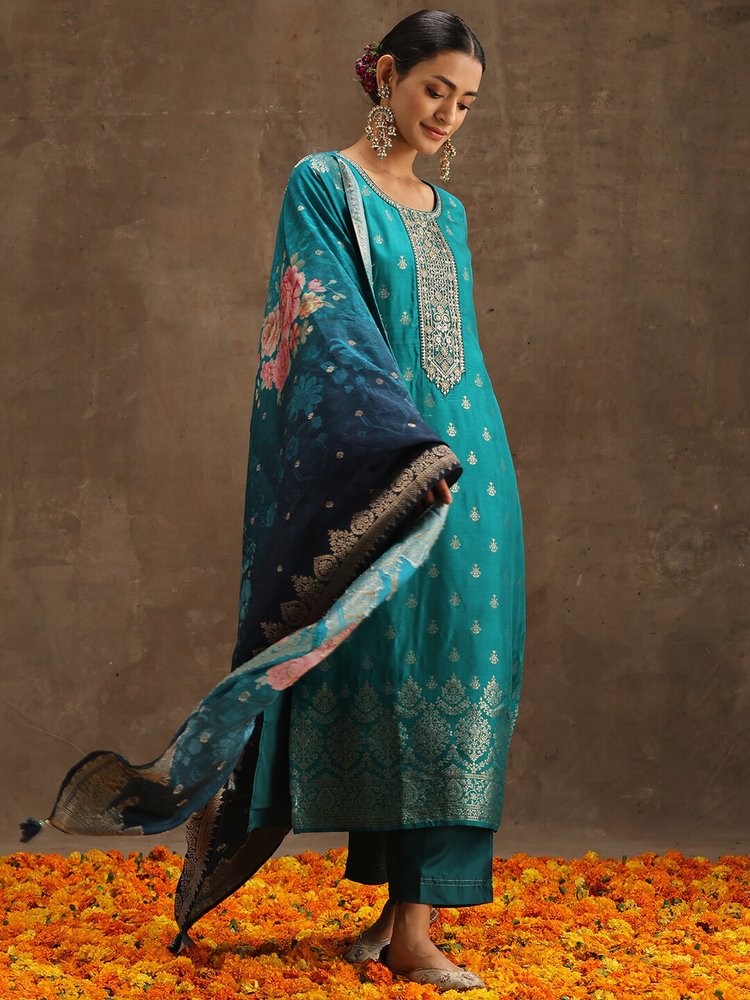
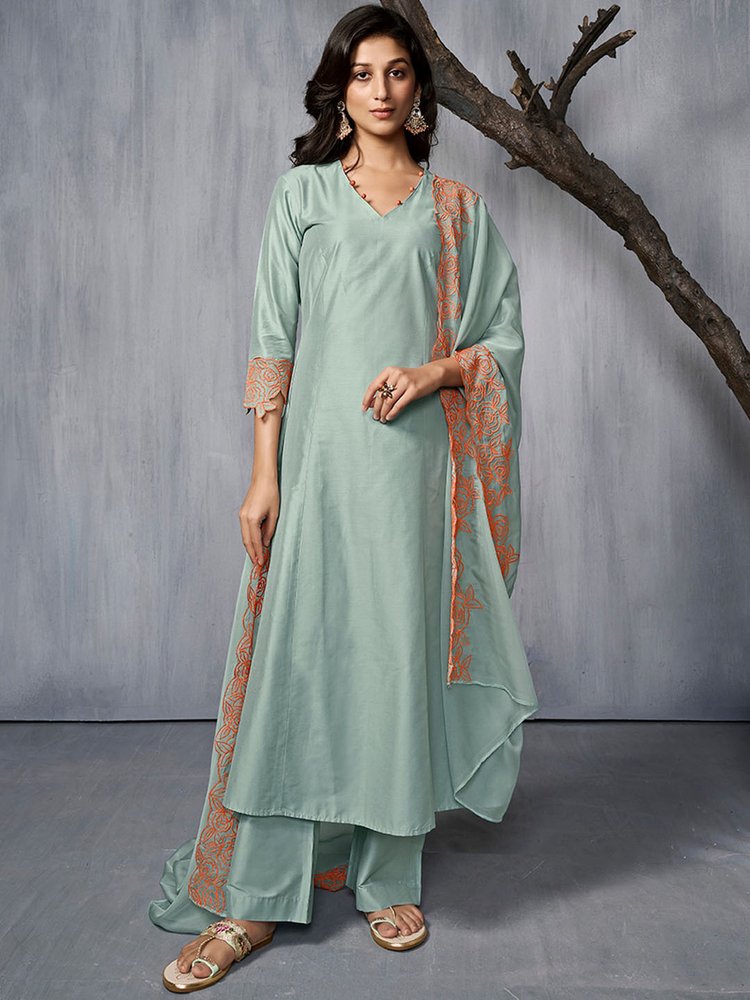
Kurta sets whose label says silk
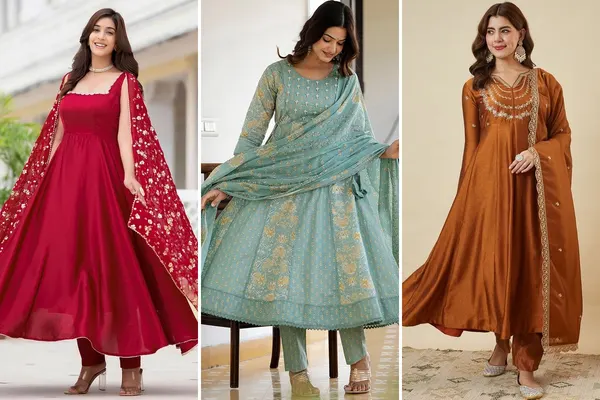
Four are labelled pure silk in the kurta. The pink anarkali is labelled tussar silk, with viscose trousers and a silk blend dupatta.



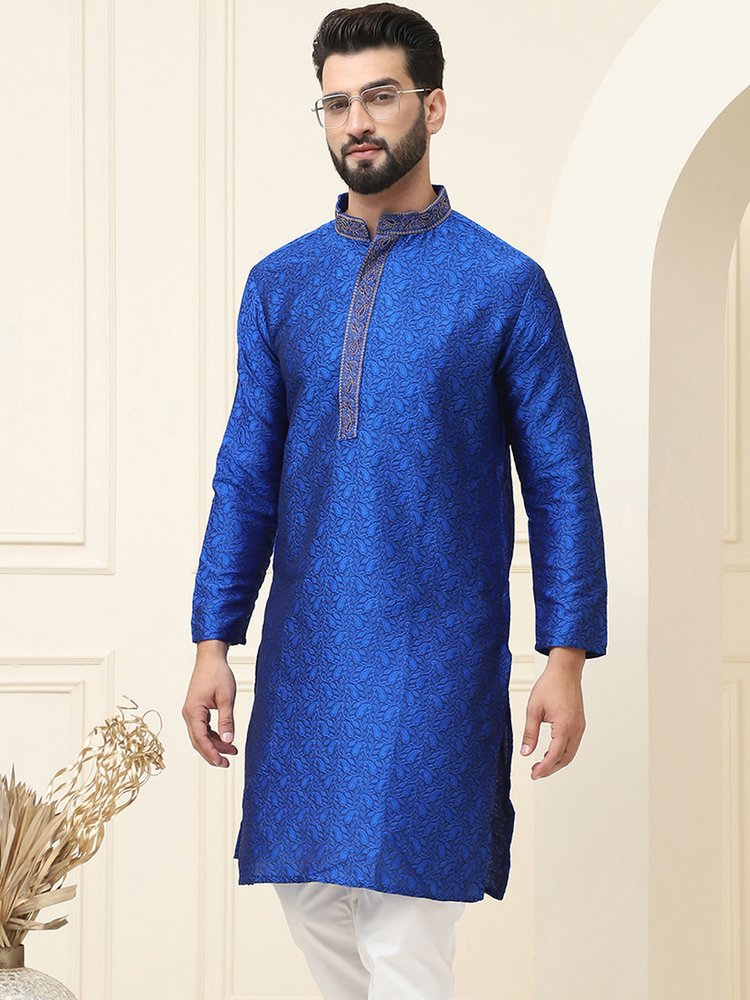
A men's kurta that states its mix
A good example of a clear label: this blue embroidered kurta gives its fibre as 80% silk and 20% cotton, so you know exactly what you are wearing. The cotton is a reason to expect a less slippery hand than all-silk.
- Mandarin collar and straight hem
- Label says machine wash, so check the care tag before the first clean
What is zari, and what is it made of?
Zari is a fine metallic thread woven or stitched into Indian clothes, made by winding a flattened metal strip around a core yarn, usually silk. Woven into cloth, it makes brocade, the raised patterns on a festive saree. Stitched on top, it is zari embroidery, and its heavier relief form is called zardozi. Surat in Gujarat is the largest producer. There are three kinds:
- Real zari: silver or gold alloy drawn into thread, flattened, wound on silk and electroplated with gold. This is the heirloom kind, and silver in it can tarnish over the years.
- Imitation zari: copper wire plated with silver and wound around a yarn. You may also see it called tested zari. It costs less and still looks rich.
- Metallic zari: a strip of metallised polyester film. It is light, strong and resists tarnish, which makes it easy to live with.
Most labels simply say zari and stop there. Unless a piece states real gold or silver, assume imitation or metallic, and judge it on how it looks and feels. Turn the cloth over too: woven zari shows thread floats on the back, while a print sits on the surface only.
Banarasi vs Kanjivaram: what is the difference?
Banarasi comes from Varanasi and is known for all-over brocade; Kanjivaram comes from Kanchipuram and is known for bold contrast borders. Both are often worn at weddings and both are protected geographical names in India, which is why the place matters.
| Point | Banarasi | Kanjivaram |
|---|---|---|
| Home | Varanasi and five nearby districts of Uttar Pradesh | Kanchipuram, Tamil Nadu |
| Base | Fine silk, also organza and georgette versions | Pure mulberry silk |
| Signature | Gold and silver brocade; florals, leaves and jal, a net-like pattern | Wide contrasting border, body and border woven separately and interlocked |
| Feel | Relatively heavy where the brocade is dense, lighter on a georgette base | Firm and structured |
| Protected name | 2009 | 2005 to 2006 |
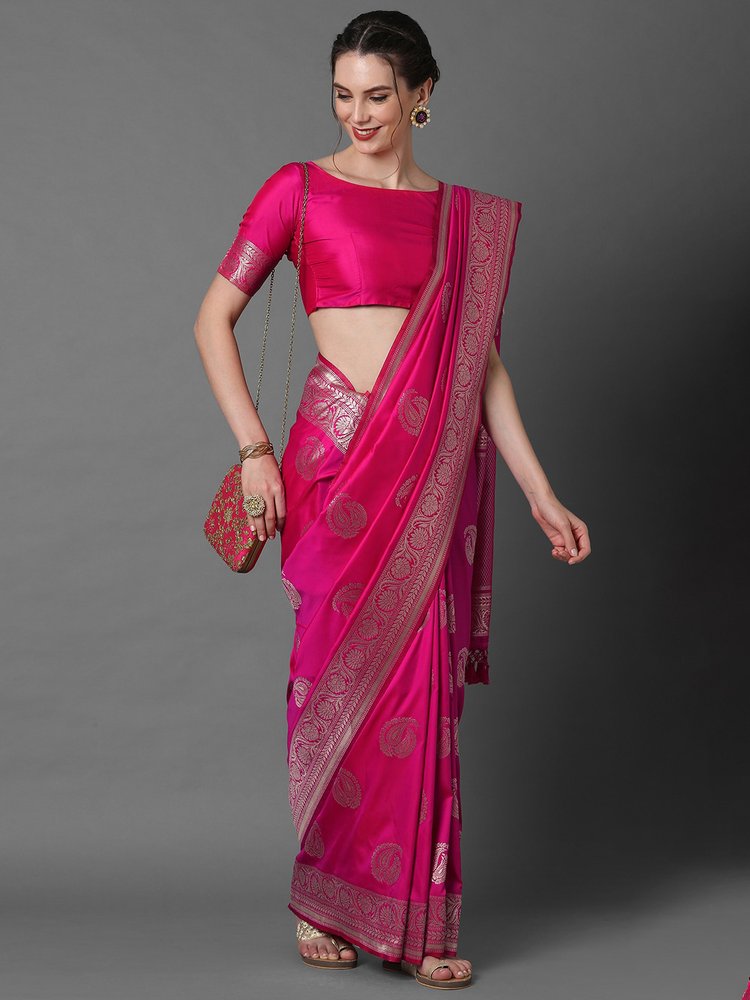
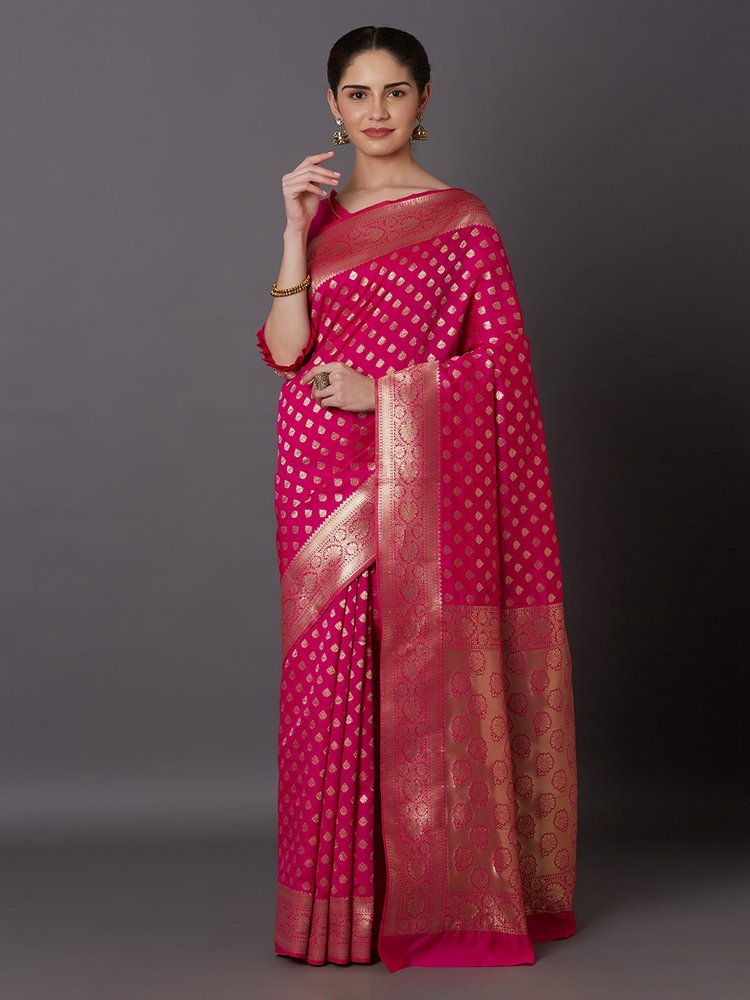
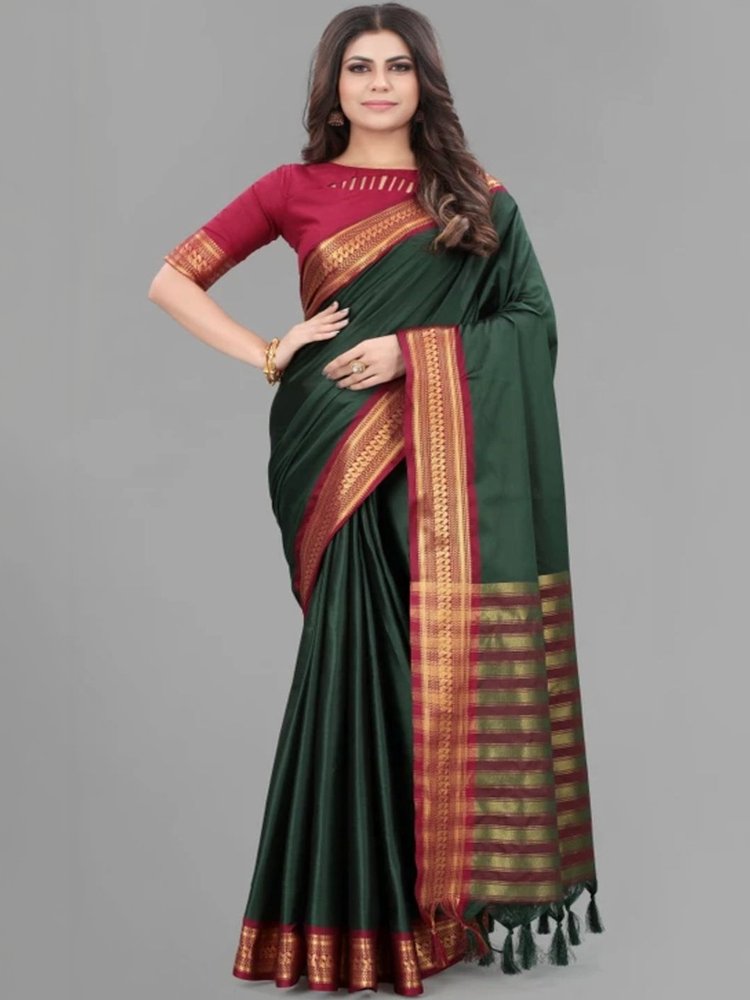
In everyday fashion, both words are also used for the style of a weave on silk blends and art silk. Read them as a description of the look unless the label says pure silk and names the weaving region. The pieces below carry a Banarasi or Kanjivaram look, with the base fabric stated on each one. For help choosing the drape itself, read saree vs lehenga, and find more in sarees.
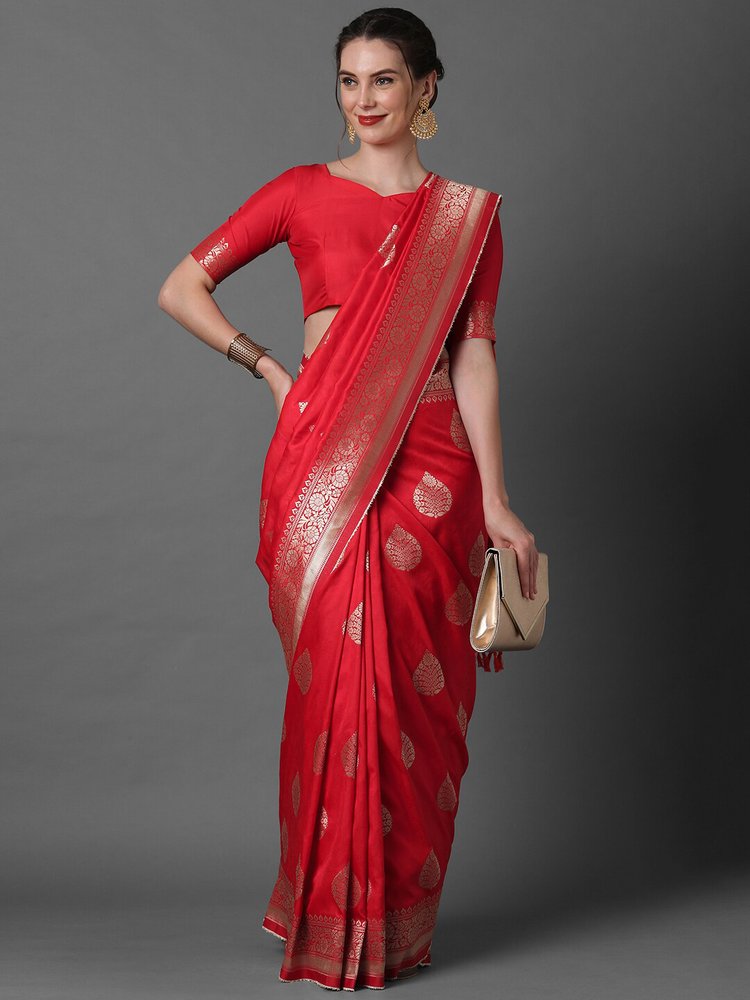
Banarasi and Kanjivaram looks, by base fabric
Silk blend, except the green handloom silk cotton and the black art silk.


Is a velvet lehenga right for your function?
Yes, if it is cold or the room is well chilled; no, if you will be outdoors in heat. Velvet is a woven cloth with a dense, short pile, made on a loom that weaves two layers at once and then cuts them apart. That pile soaks up light, which is why reds, maroons and bottle greens look so deep.
It was once always silk. Today pure silk velvet is rare, and much velvet is rayon, polyester or a blend, with a little spandex in stretch velvet. So a label reading 100% velvet tells you the construction, not the fibre. Velvet carries its own weight, so a lehenga with a net dupatta balances better than one with velvet everywhere. If your function falls in a real winter, our Canadian cold-weather guide goes further, and you can add a velvet saree blouse for warmth without a full outfit change. Men get the same richness from a Nehru jacket.
Velvet for cold-weather functions
A lehenga, two kurta sets, a stretch blouse, a sleeveless jacket and embroidered mojaris, the closed-toe flats.


Chanderi vs organza: which sheer fabric should you choose?
Choose chanderi for soft, easy daywear and organza for crisp evening drama. Both are light and slightly sheer, but they behave very differently on the body.
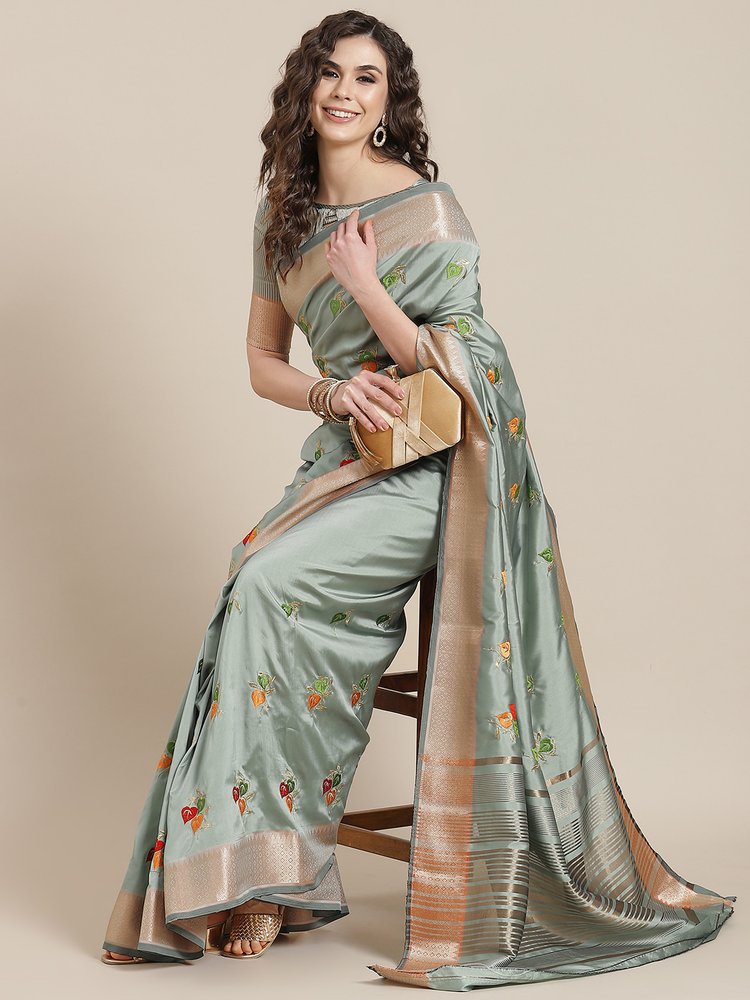
Chanderi takes its name from a town in Madhya Pradesh, with a weaving history going back centuries. It comes in pure silk, cotton and silk cotton, often with zari and small coin or floral motifs. It has a soft shine and sits close, which makes it lovely for a mehendi, the henna party, or a daytime puja. Word of warning: the name does not guarantee the fibre. The floral embroidered saree in the grid below is called a chanderi saree, and its label gives polycotton.
Chanderi, read by label
Chanderi silk, chanderi cotton and polycotton: check which one you are choosing.


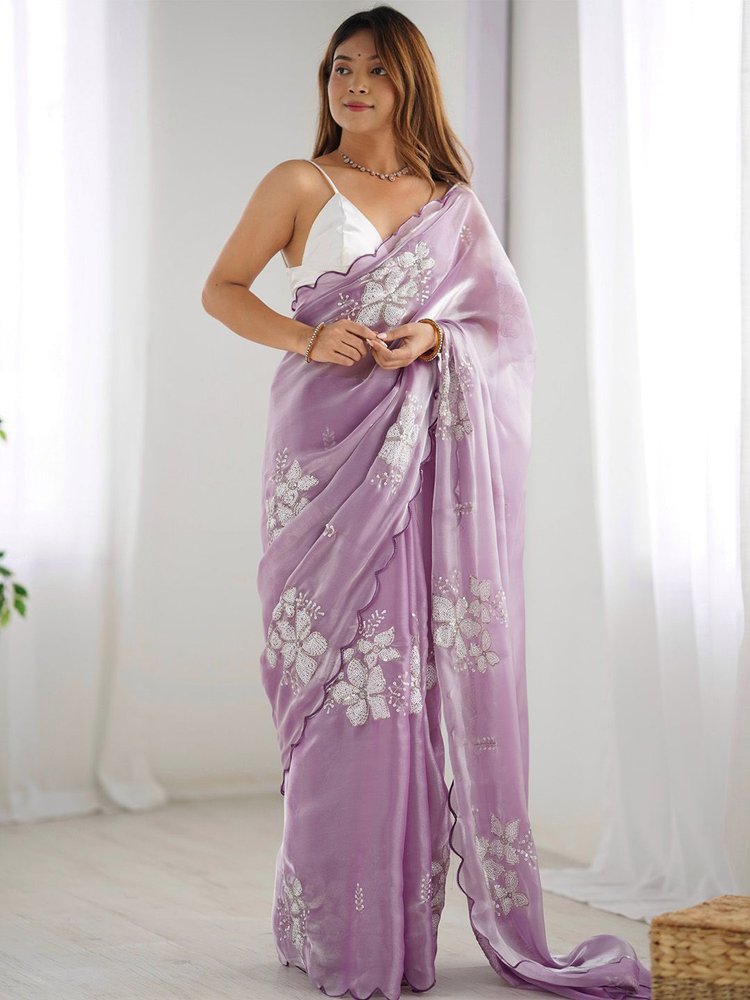
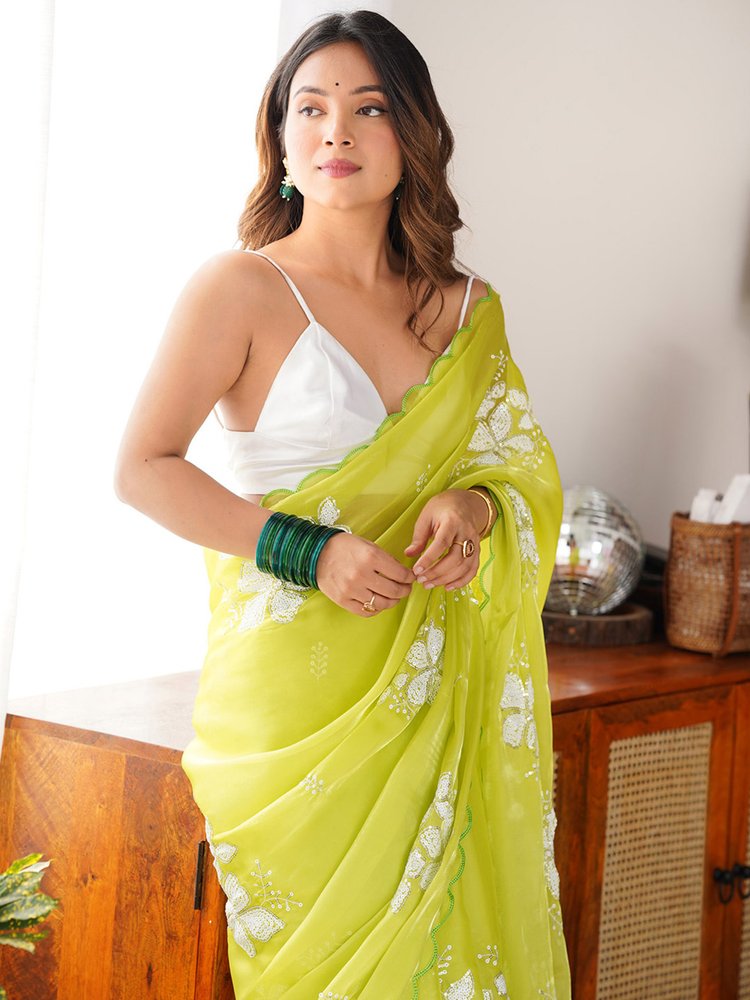
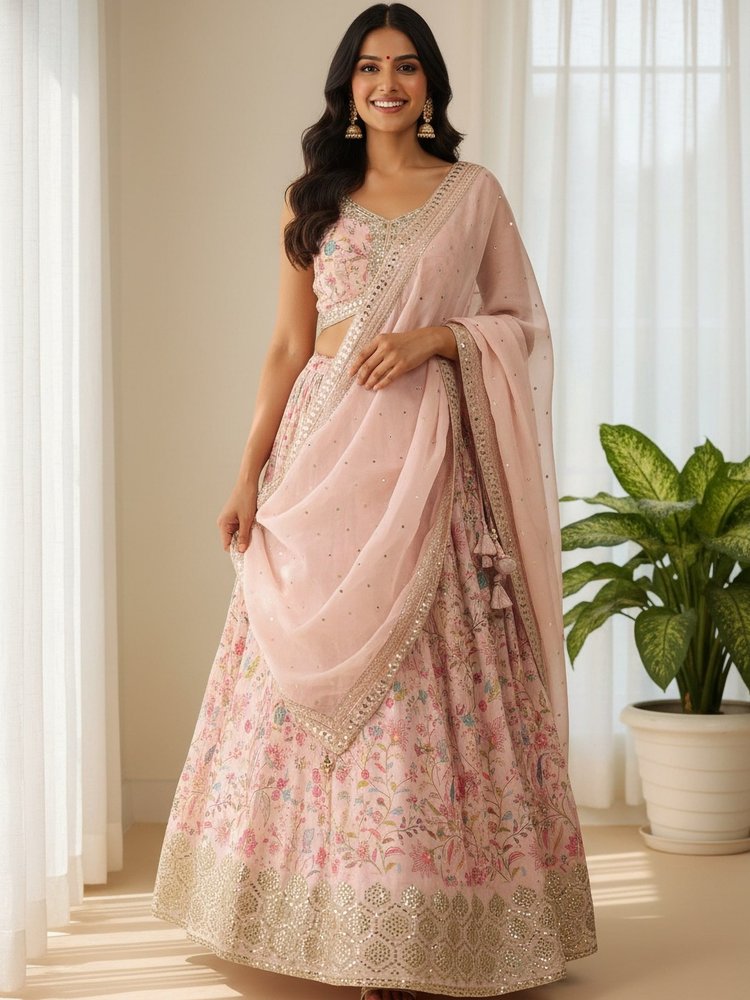
Organza is a thin, sheer plain weave with a crisp hand, so it stands away from the body and holds a shape. It was traditionally silk, and many versions today are polyester or nylon. It catches light beautifully under a sangeet, the music and dance night, but it can feel scratchy on bare skin, so look for a lined skirt or a soft blouse.
Organza sarees and lehengas
Light layers with sequins and embroidery. The rose lehenga pairs organza with an art silk blouse.

What is georgette, and why is it so easy to wear?
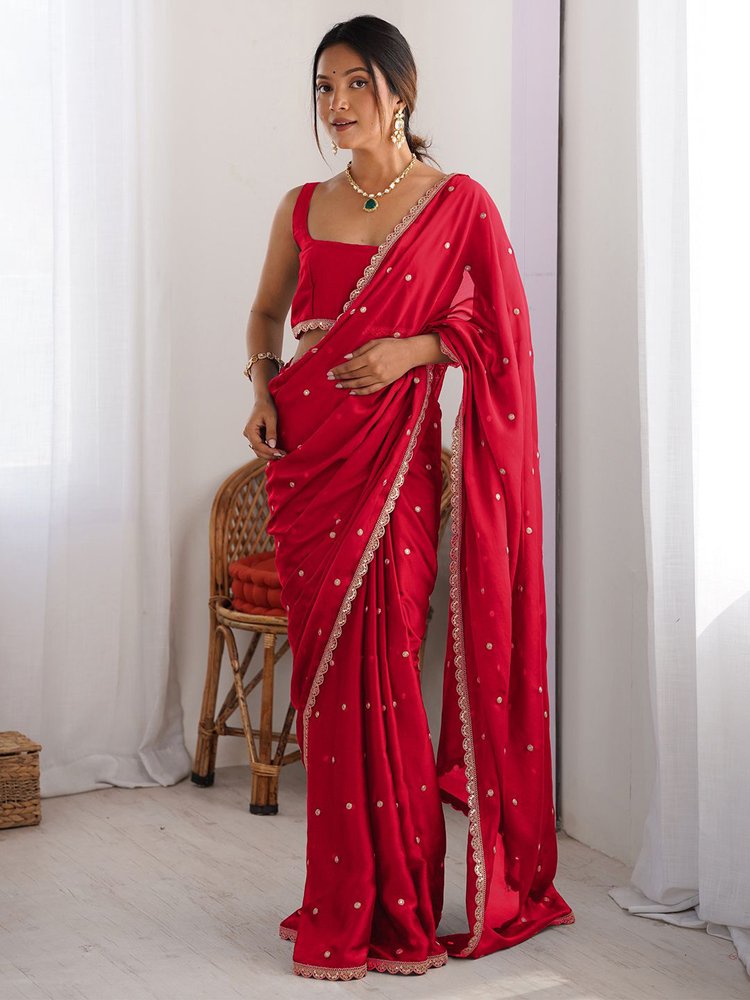
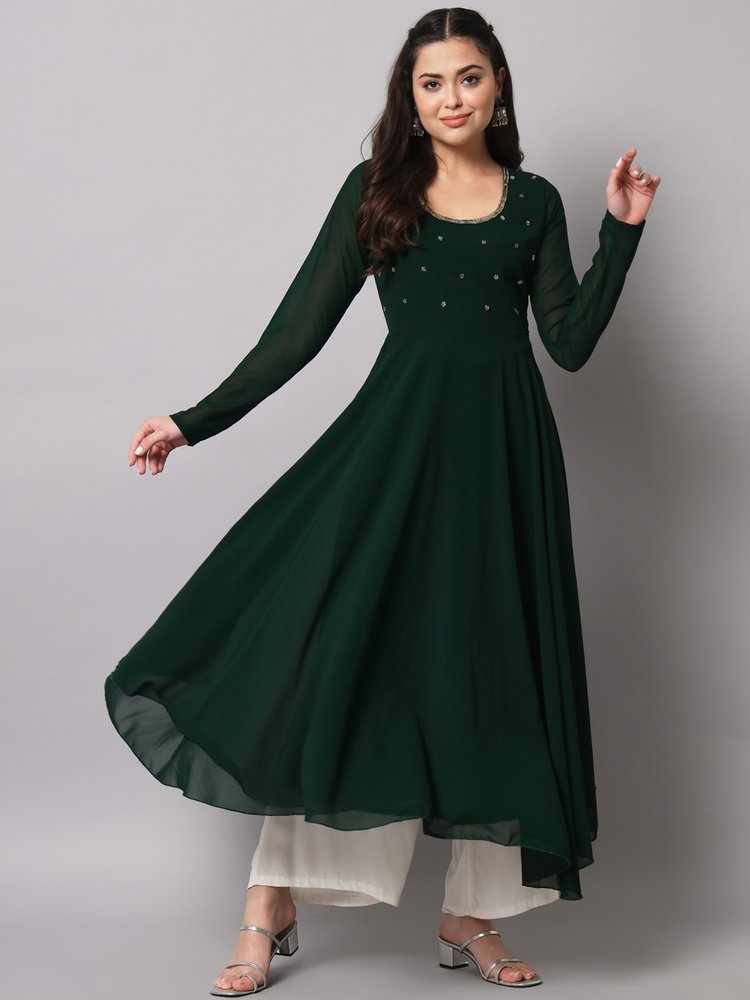
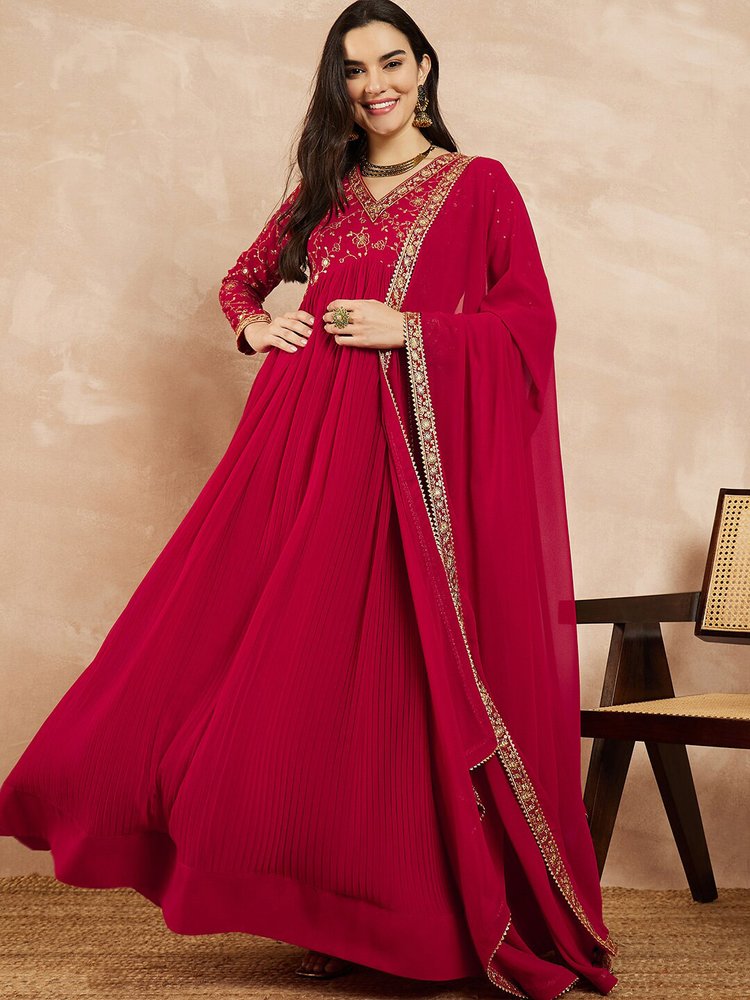
Georgette is a sheer, light crepe with a matt, slightly grainy surface and a fluid drape. It is woven from highly twisted yarns, which gives the crinkle and the spring. First made from silk, it is now commonly synthetic, which is tougher and less fussy. Pure georgette on a label describes the cloth and does not mean silk unless it says so.
That drape is why it is the safe bet for a long evening. Georgette moves well, hides creases and suits a first-time saree wearer. It is not right for a stiff, structured look, and polyester versions run warm, so in Singapore or Dubai heat keep the layers few. Our guide to weddings in Singapore, Malaysia and Dubai has more on that.
Georgette for long evenings
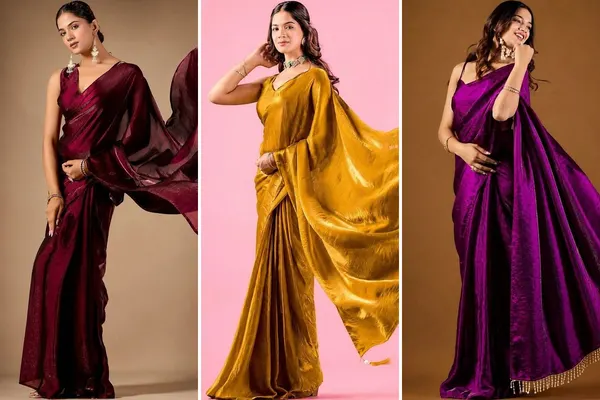
Two sarees, one of them ready to wear, and two anarkalis, the flared long kurtas.

Which fabric suits which season and function?
Match the fabric to the room and the clock, then to your taste. Use this as a quick check, then see what to wear to an Indian wedding as a guest for the function-by-function view.
| Fabric | Feels | Season | Function | Care |
|---|---|---|---|---|
| Silk and zari brocade | Smooth, structured, weighty | Cool to mild, or air conditioned halls | Ceremony, reception | Dry clean; store in muslin |
| Velvet | Soft, warm, deep pile | Winter | Evening reception, cold-weather sangeet | Dry clean; steam, do not press |
| Chanderi | Light, soft shine | Spring and summer | Mehendi, puja, daytime lunch | Follow the label; varies by fibre |
| Organza | Sheer, crisp, holds shape | Warm evenings; layer in winter | Sangeet, cocktail, reception | Dry clean; low heat with a pressing cloth |
| Georgette | Light, matt, fluid | All year; lightest layers in humidity | Sangeet, party, long evenings | Silk: dry clean. Synthetic: as the label says |
How do you care for silk, zari and velvet?
Keep them dry, keep them breathing, and let the label have the last word. Labels on similar pieces differ, from dry clean only to machine wash on some art silk, so check each one.
- Silk: dry clean or follow the label. Air it after wearing before you put it away, so sweat does not stay in the fibre.
- Zari: wrap in cotton or muslin and keep it dry, because moisture is what dulls metal thread. Refold along new lines every few months so the thread does not crack at the creases. Spray perfume before you dress, not on the cloth, and never use metal polish.
- Velvet: hang it on a wide hanger with room around it. Steam from the inside instead of ironing, since pressure can flatten the pile. Pile also makes velvet harder to clean, so leave stains to a dry cleaner.
- Organza: press on low heat with a cloth between iron and fabric. Water can take the crispness out of silk organza.
- Georgette: do not wring it. Dry it flat or on a padded hanger, because the twisted yarn can stretch when wet.
Keep reading
Questions people ask
How many types of silk are there in India?
The Central Silk Board lists five commercial types, all produced in India: mulberry, tropical tasar, oak tasar, muga and eri. They are often counted as four when the two tasars are grouped together. Saree names such as Banarasi and Kanjivaram are weaving traditions rather than extra silk types.
What is zari in a saree?
It is the metallic thread that forms the gold or silver pattern, usually at the border, the pallu or across the body. It can be real zari with silver and gold, imitation zari on copper, or metallic zari from polyester film. If a label says only zari, assume imitation or metallic.
What is the difference between Banarasi and Kanjivaram sarees?
Banarasi comes from Varanasi and is known for detailed all-over brocade, often florals and net patterns. Kanjivaram comes from Kanchipuram and is known for mulberry silk and a wide contrasting border woven separately and interlocked with the body. Neither is better; Banarasi reads more ornate, Kanjivaram more structured.
Is chanderi or organza better for a summer function?
Chanderi, especially a cotton or silk cotton one, is softer and easier for daytime heat. Organza looks more formal and holds its shape, so it suits an evening. Check the fibre on the label, since a polyester version of either will feel warmer.
Can I wear a velvet lehenga to a summer wedding?
Only if the whole function is indoors and well air conditioned, and even then it can feel heavy. For heat, the same rich look works better in georgette or organza with embroidery. Save velvet for winter evenings.
How can I tell whether silk is real?
Start with the fabric line, and look for pure silk rather than silk blend or art silk. In India, the Silk Mark label is a useful signal, and buyers with doubts can have a piece tested at accredited labs. Touch and shine alone are not reliable, because good synthetics imitate both.
About the numbers
- Central Silk Board, Government of India: Silk, Mulberry, Tasar, Muga and Eri pages, read 2026-11-03: The five commercial varieties, that India produces all of them, their silkworms, regions and colours.
- Wikipedia: Zari, read 2026-11-03: How zari is made, the real, imitation and metallic types, and Surat as the largest producer.
- Wikipedia: Banarasi sari and Kanchipuram sari, read 2026-11-03: Places, weaves and motifs; geographical indication dates of 2009 and 2005 to 2006.
- Wikipedia: Chanderi sari, Organza, Georgette (fabric) and Velvet, read 2026-11-03: Fibres and construction of each cloth, including S and Z twist yarns in georgette and the two-layer velvet loom.
- Wikipedia: Art silk, Wild silk and Silk Mark, read 2026-11-03: What art silk is, eri and muga character, and how the Silk Mark scheme works.
- Product labels on TiaBow, read 2026-11-03: Every fibre and care statement about a specific piece, including the 80% silk and 20% cotton kurta, comes from that piece's own label.