What Is a Pre-Draped Saree? How It Works, Blouses and Fit
A pre-draped saree has its pleats and often its pallu already stitched in place, so it fastens at the waist like a skirt and goes on in a few minutes. Here is how it works and who it suits.
In short
- A pre-draped saree is a saree with its pleats, and often its shoulder drape, already stitched, so you fasten it at the waist instead of wrapping it.
- Most people are dressed in a few minutes on the first try, with one safety pin at the shoulder and no practice needed.
- It suits first-time wearers, wedding guests with several outfit changes and anyone facing a long night of dancing, while a family heirloom silk is better left as a regular saree.
- Check the blouse line on the listing before you choose: a blouse piece is uncut fabric for a tailor, and a stitched blouse is ready to wear.
- Buy it by three measurements, your waist, your hips and the distance from waist to floor in the shoes you will wear.
A pre-draped saree is a saree with the pleats, and often the shoulder drape, already stitched in place, so you fasten it at the waist like a skirt and are dressed in a few minutes. Also called a pre-stitched or ready-to-wear saree, it looks like a classic drape and asks for no wrapping skill.
A regular saree is one flat length of cloth, about 6 yards (5.5 metres), that you tuck, pleat and pin by hand. Plenty of us grew up watching our mothers do it without looking, then discovered at our first party abroad that it is a real skill. This version skips that part. Here is what you are actually getting, how to put it on and when it is the wrong choice. To browse as you read, start with sarees.
How is a pre-draped saree built?
It is built in two parts that a regular saree makes by hand: a pleated front and a pallu, the loose end that falls over the shoulder. The construction varies by label, and these are the details that change how it wears:
- The pleats are stitched flat into the waistband, so they sit evenly and stay put all evening.
- The waist closes with hooks, a zip or an adjustable belt. A belt or wrap gives you the most room to adjust.
- The pallu is either fixed in its fall or left free, so you can pin it to your blouse where you like it.
- The underskirt is sometimes sewn in. That is what a "pre-stitched saree with petticoat" means: you step into one piece and need no separate petticoat.
Is pre-draped the same as pre-stitched or ready to wear?
Mostly yes, since labels use all three names for the same idea, so read the description rather than trusting the word. This is what each one usually signals:
| Name on the label | What it usually means | What is left for you |
|---|---|---|
| Ready to wear | The umbrella term for any saree with stitched pleats | Check the listing for how much is done |
| Pre-draped | Pleats and the fall of the pallu are both set | Fasten at the waist, pin at the shoulder |
| Pre-stitched | Stitched to a waistband, sometimes with an underskirt | Fasten, then arrange and pin the pallu |
| Pre-pleated | Only the pleats are stitched | Wrap the rest and place the pallu yourself |
How do you wear a pre-draped saree?
Put it on in this order and you will be done in a few minutes, with no one holding pins for you:
- Put on your blouse, your underskirt if you are using one, and the shoes you plan to wear.
- Step into the saree or wrap it around your waist, with the pleats at the front, a little to the left of your navel.
- Close the hooks, zip or belt at your waist. It should feel snug enough to hold without your help.
- Bring the pallu across your chest and over your left shoulder, then let it fall behind you.
- Slip one small safety pin through the pallu and the blouse strap, on the inside where it will not show.
- Walk across the room, sit down and lift both arms. If anything tugs, shift the waist a little and pin again.
How is it different from a regular saree?
The main difference is that you trade flexibility for ease. On the night, most people will not be able to tell which one you are wearing.
| Pre-draped | Regular saree | |
|---|---|---|
| Getting dressed | A few minutes, alone | Longer, and often with help at first |
| Skill and pins | None, plus one pin | Practice, and several pins |
| Staying in place | Pleats are stitched and hold | Can loosen as the night goes on |
| Fit | Depends on your waist and hem measurements | Adjusts to almost any body |
| Drape styles | One, as it was stitched | Any style you can tie |
| Bathroom breaks | Quick, and nothing to redo | Careful, with pleats to protect |
| Packing | Folds along its stitching | Folds flat, needs a good press |
The classic look with the hard part done
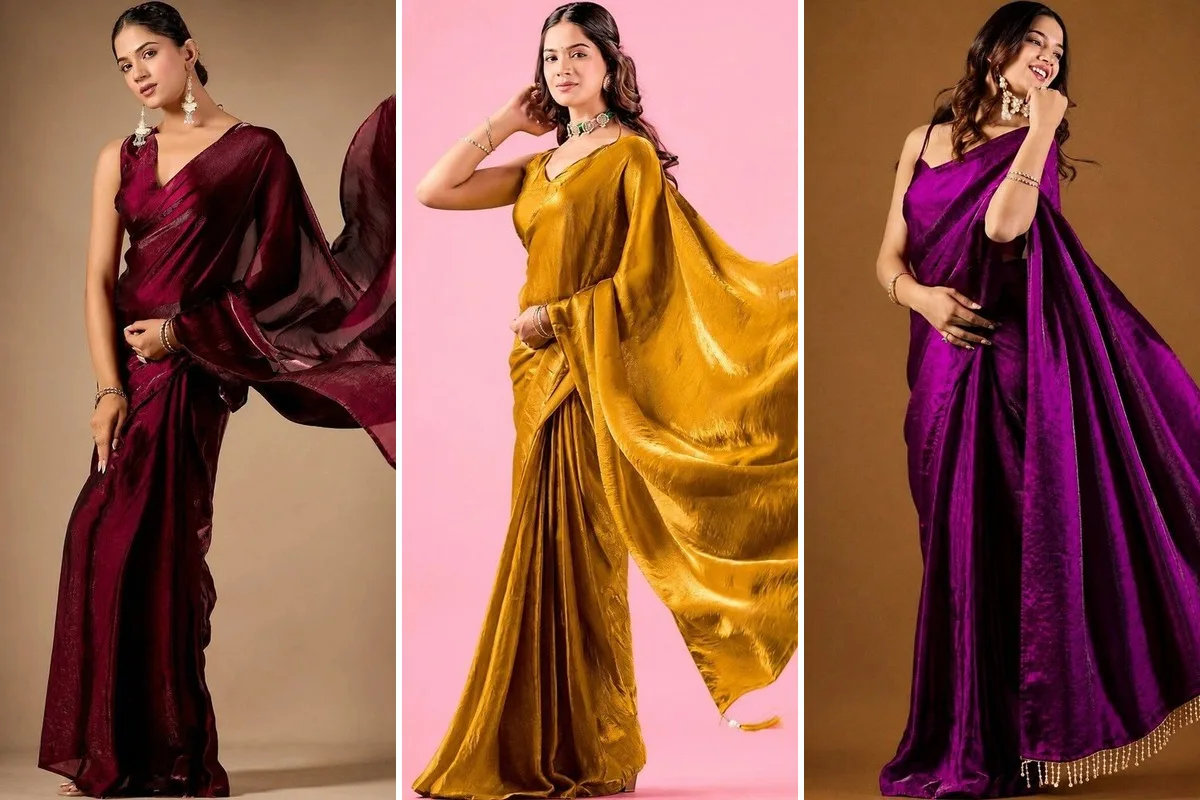
Fluid satin with a long, loose pallu, for an effortless drape in a single colour.


Who is a pre-draped saree for?
It is ideal for first-time wearers and for wedding guests who would rather spend the morning on anything except pleats. Consider one if any of these sound like you:
- You have never worn a saree and nobody at home can drape one for you. This is the kindest saree for beginners.
- You are a guest at a wedding with two or three outfit changes in a day. See our guide on what to wear to an Indian wedding as a guest for which function calls for what.
- You plan to dance. Stitched pleats stay where they were put, which matters at a sangeet.
- You are getting ready in a hotel room, with limited mirror space and no aunt to call on.
It is the wrong choice in a few cases. Skip it for a family silk or a handwoven piece you would never want to cut, since stitching changes the cloth for good. Skip it too if you love a regional drape, such as the Gujarati style with the pallu falling over the front, because a stitched saree only offers the one it was made in. And if you are between sizes or unusually tall, a regular saree forgives more.
What styles of pre-draped saree can you choose from?
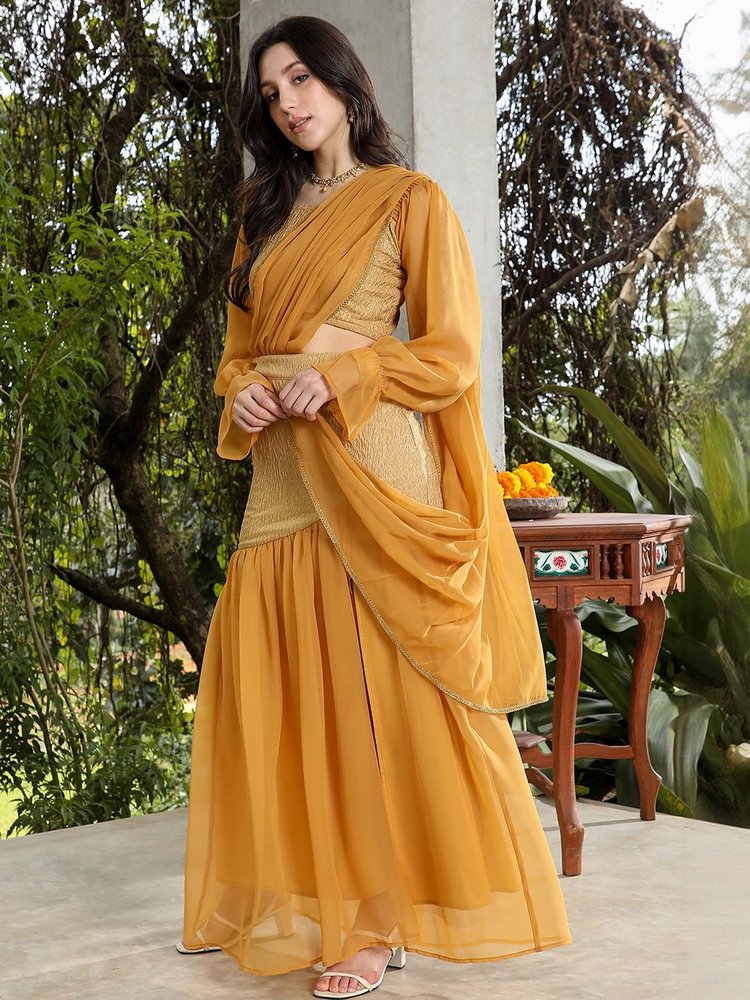
Choose by how much of a statement you want, since the saree can look classic or closer to a gown. The belted and layered styles are the most forgiving for a first try, because the belt does a lot of the work of holding everything in place.
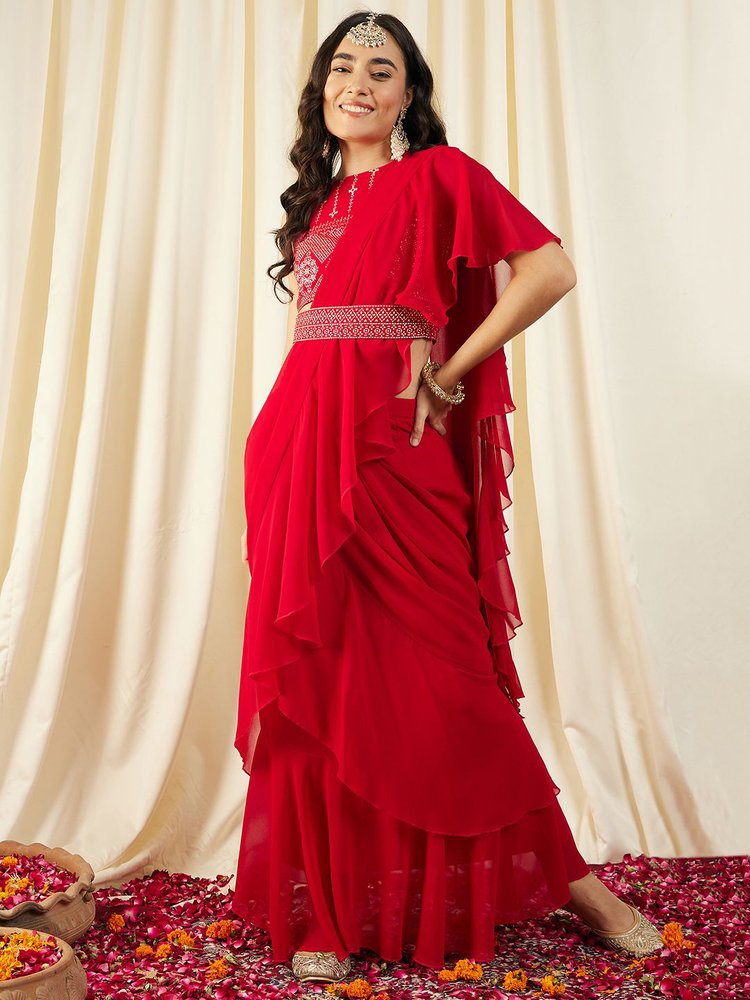
Belted, layered and ruffled
Closer to a gown with a saree's drape. Bright red belongs to the bride at many ceremonies, so save the red one for a party.

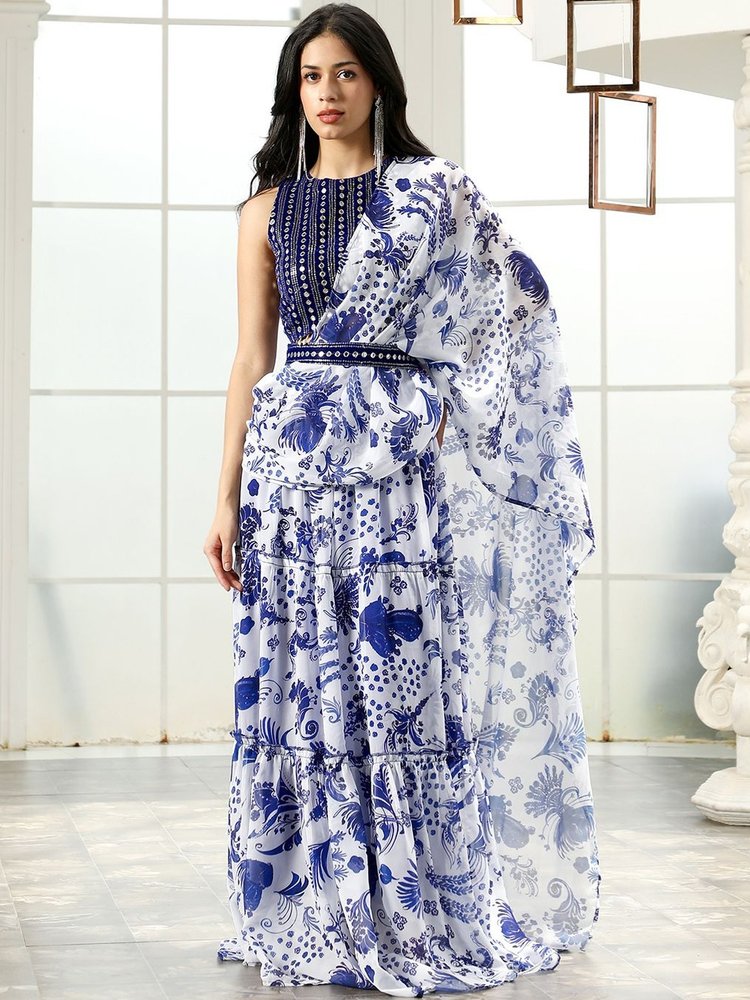
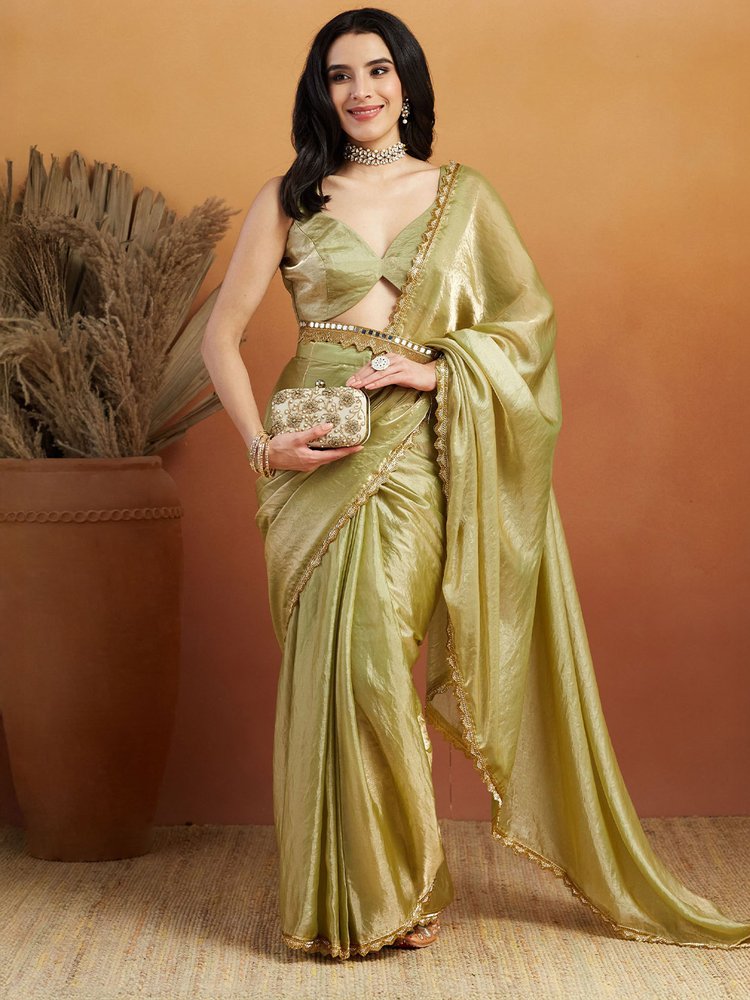
Lighter fabrics and prints make it a daytime piece. Linen and printed satin read as relaxed at a lunch or a mehendi, the henna party, while tissue, a fine fabric woven with a metallic sheen, brings a soft glow without any heavy work.
For daylight and easy occasions
A printed linen blend, a tissue with a gotta patti border (a shiny ribbon trim) and a bold printed satin.



If you are shopping without a tape measure handy
A pink and maroon ombre satin with an adjustable waist. Its listing gives a fit of 24 to 48 inches (61 to 122 cm) at the waist with an adjustable belt, which takes a lot of worry out of a first order. It comes with an unstitched blouse piece, so plan for a blouse.
- Waist and belt both adjust
- The colour fade means no border to line up

If you want nothing left to organise
A magenta pre-draped saree with raised 3D floral embroidery and a plain sleeveless stitched blouse included. There is no tailor to book, which makes it a good answer if the invitation arrived late.
- Stitched blouse included
- The embroidery is the statement, so jewellery can stay simple
What blouse do you wear with a pre-draped saree?
Wear a fitted blouse that ends just above your waist, and check what comes in the box first, because this is where people get caught out. Read the blouse line on every listing, as the wording means three very different things:
- Stitched blouse: ready to wear, in the size you pick.
- Blouse piece, or unstitched blouse: a length of uncut fabric, roughly 0.8 metres on many listings. You will need a tailor, so book one early.
- Nothing mentioned: assume there is no blouse until you have checked the description.
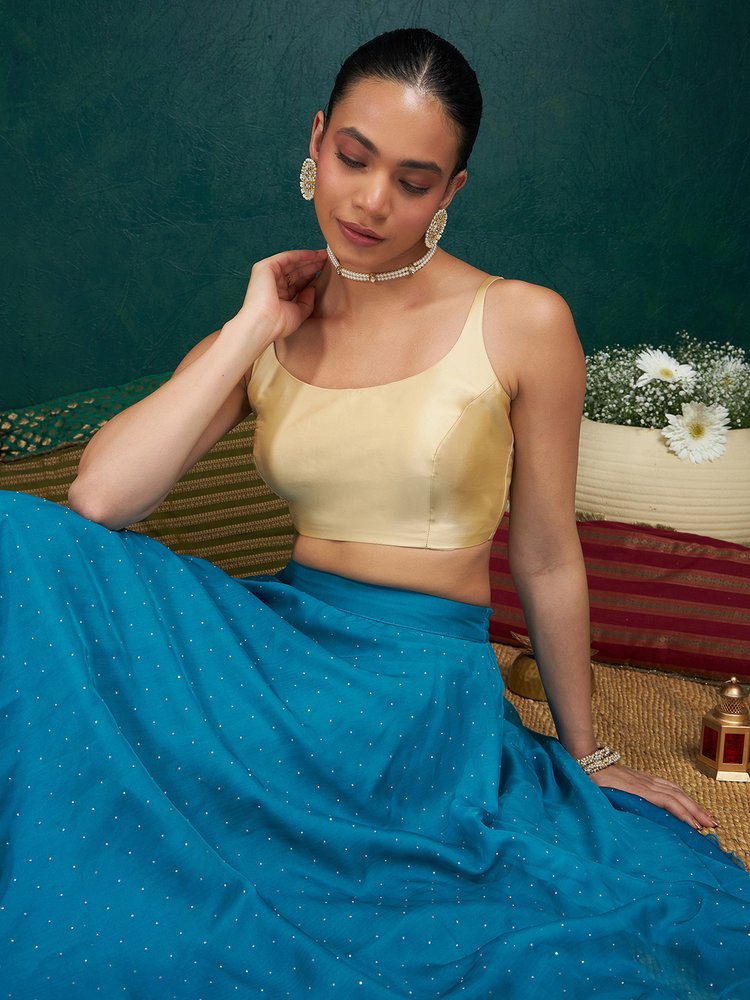
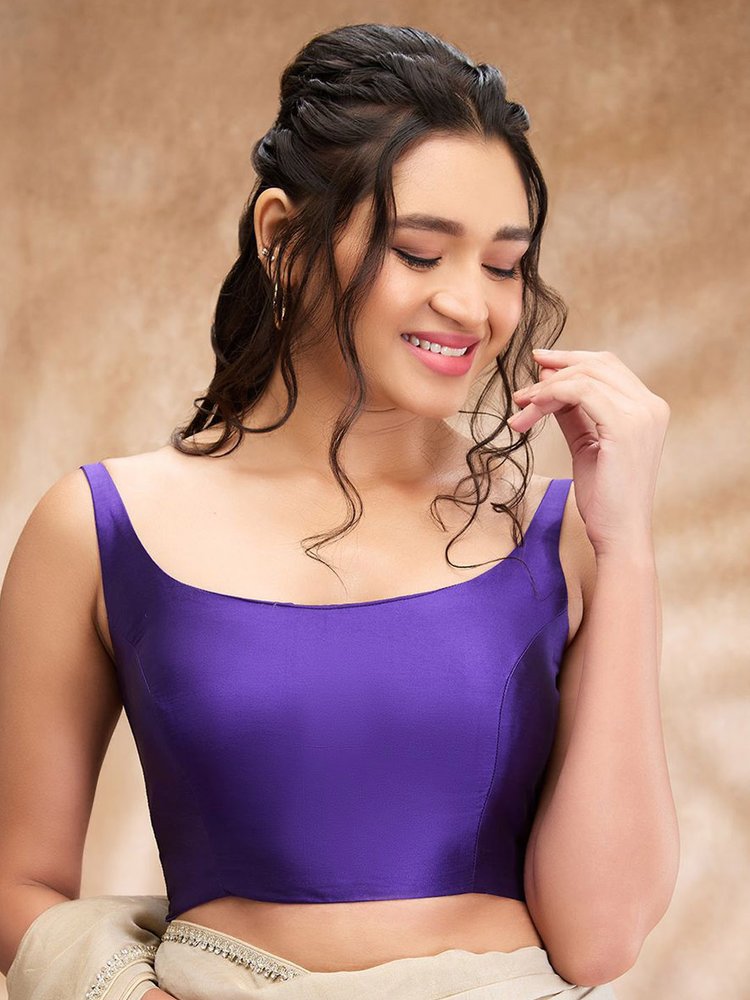
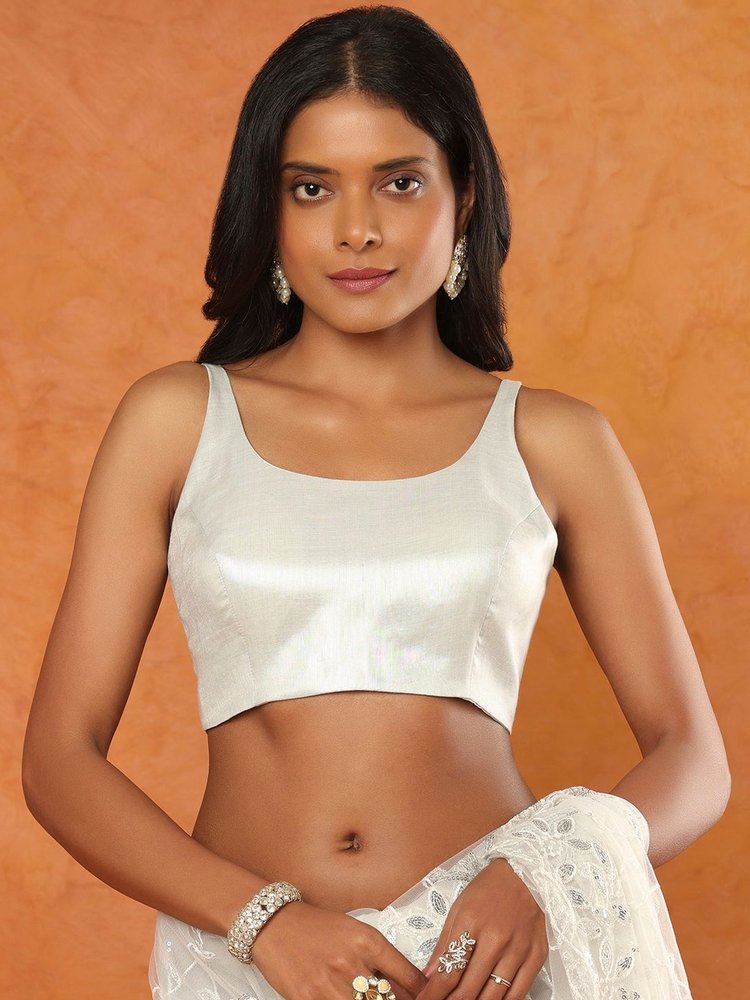
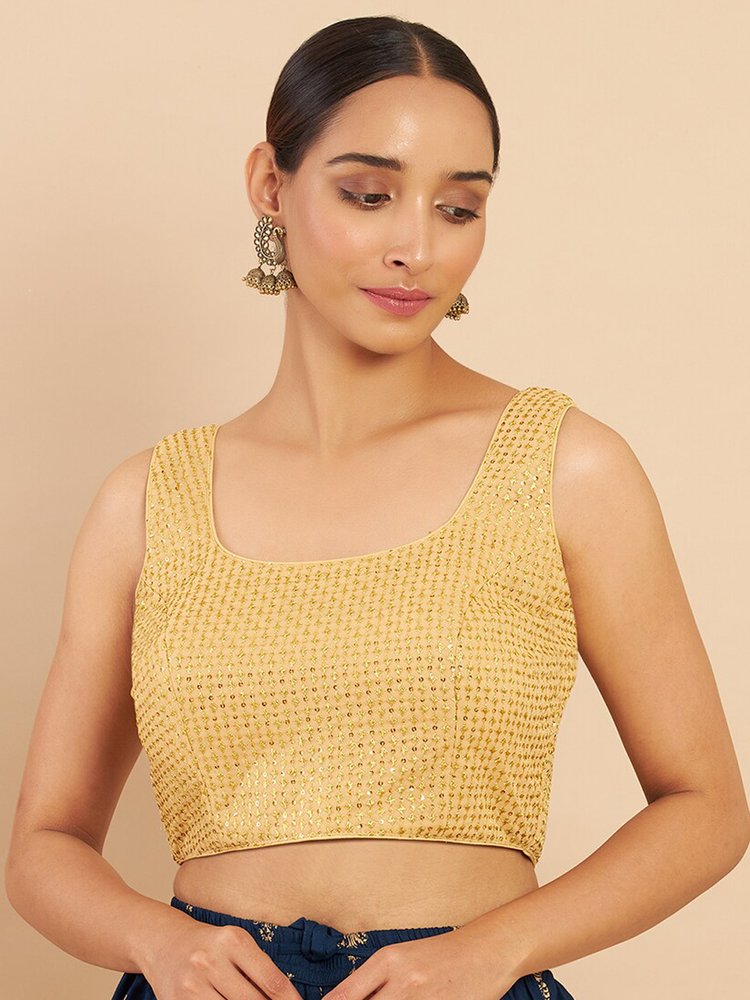
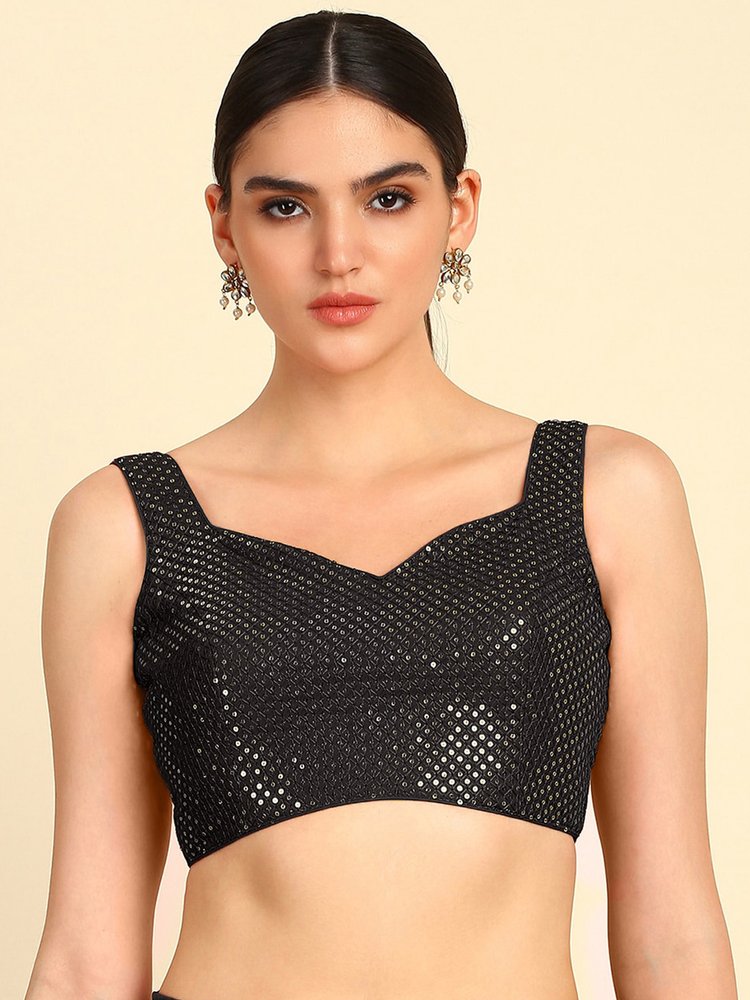
Look closely at the photos as well. Many listings say the blouse on the model may be for the photo only, and that the piece you get is the fabric shown separately. If a tailor is not an option, a ready-made saree blouse in gold, silver, black or the saree's own colour solves it. Stretch cotton is the most forgiving when you are buying from a size chart, and metallics go with almost anything.
Ready-made blouses that do the job
A stretch cotton with sleeves, plain and padded sleeveless styles, and sequins for evening.

What do you wear under a pre-draped saree?
Wear a saree shapewear skirt or a simple petticoat, unless your saree already has an underskirt sewn in. Saree shapewear is a stretchy, fitted underskirt that flares at the hem, usually with a drawstring waist and a side slit so you can still take a full stride. It gives a smooth line, and it does not bunch under light satin the way a full petticoat can.
Match the colour to the saree or your skin tone, especially under sheer georgette, where a pink underskirt will show through a pale drape. Wear a bra with straps that suit the blouse neckline, and choose smooth underwear, since satin shows every seam.
Fitted underskirts in useful colours
A neutral beige goes under almost everything. Check the waist measurement on the size chart.


How do you get the right size from another country?
Buy by your measurements, because a saree stitched to a waistband has real sizes, which a regular saree does not. Take these three, in inches and centimetres, before you look at the size chart:
- Waist: around the spot where the saree will sit, which is usually at or just below your natural waist.
- Hips: around the fullest part, which matters on a fitted style with hooks or a zip.
- Waist to floor: measured in the shoes you plan to wear. A hem that is too long gets stepped on, and too short looks borrowed.
Between sizes, go up, since a waist can be taken in and a hem can be turned up, though a beaded or embroidered edge is more work for a tailor. Blouses are often numbered by bust in inches, and this is a rough conversion:
| Blouse size | Bust | US | UK and AU | EU |
|---|---|---|---|---|
| 32 | 32 in / 81 cm | 2 | 6 | 34 |
| 34 | 34 in / 86 cm | 4 to 6 | 8 to 10 | 36 to 38 |
| 36 | 36 in / 91 cm | 8 | 12 | 40 |
| 38 | 38 in / 97 cm | 10 | 14 | 42 |
| 40 | 40 in / 102 cm | 12 | 16 | 44 |
| 42 | 42 in / 107 cm | 14 | 18 | 46 |
Where can you wear a pre-draped saree?
You can wear one almost anywhere a saree belongs, as long as the fabric fits the event. A ready-to-wear saree is not casual or second best, and nobody at a wedding or party will treat it that way. The wedding guest edit has more ideas, and our guide to Indian wedding functions goes through each event.
| Occasion | Try this | Keep in mind |
|---|---|---|
| Sangeet | Layered or belted, in a bright colour | Test the hem with your dance shoes |
| Wedding ceremony | A classic drape in a rich colour | Do a floor-sitting test, and bring a scarf for a temple or gurdwara |
| Reception | Satin, sequins or a beaded edge | Your most dressed-up blouse goes here |
| Mehendi | Printed or lightweight | Keep sleeves and the pallu clear of wet henna |
| Diwali party | Metallic tissue or jewel-toned satin | A long sleeve if the party spills outside |
| Office or cultural event | Printed linen blend with a modest neckline | Flat shoes and a plain blouse keep it simple |
Colour rules from the wedding still apply, so read what not to wear to an Indian wedding before you choose red, white or black.
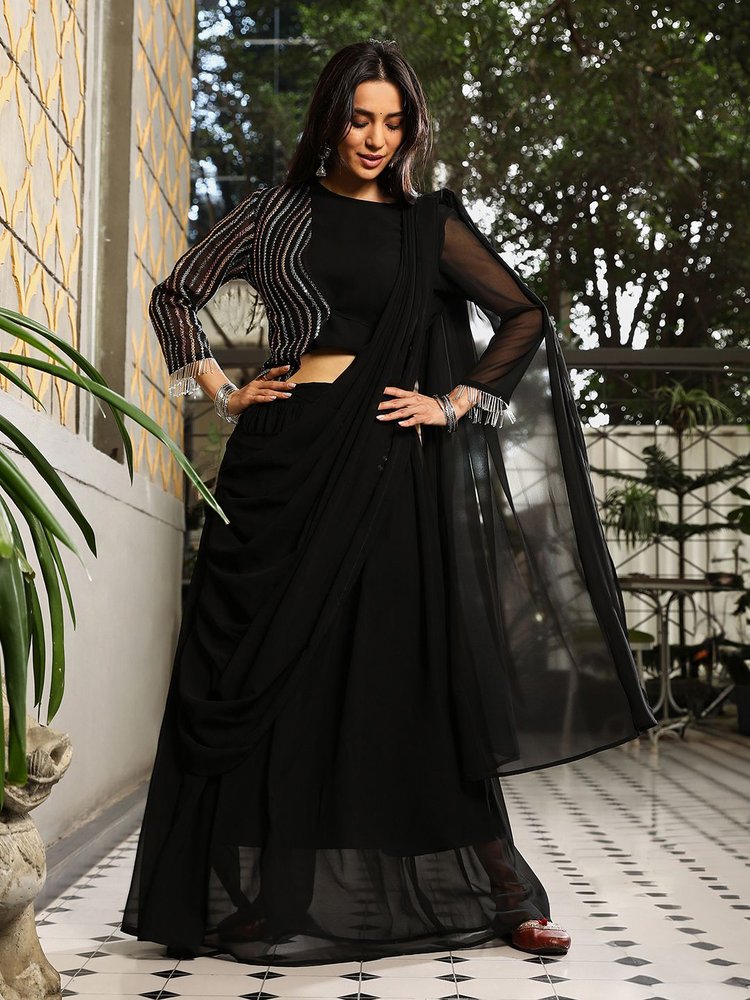
A little more drama for the evening
A black georgette and a deep blue satin with a tasselled pallu.

What shoes and jewellery go with it?
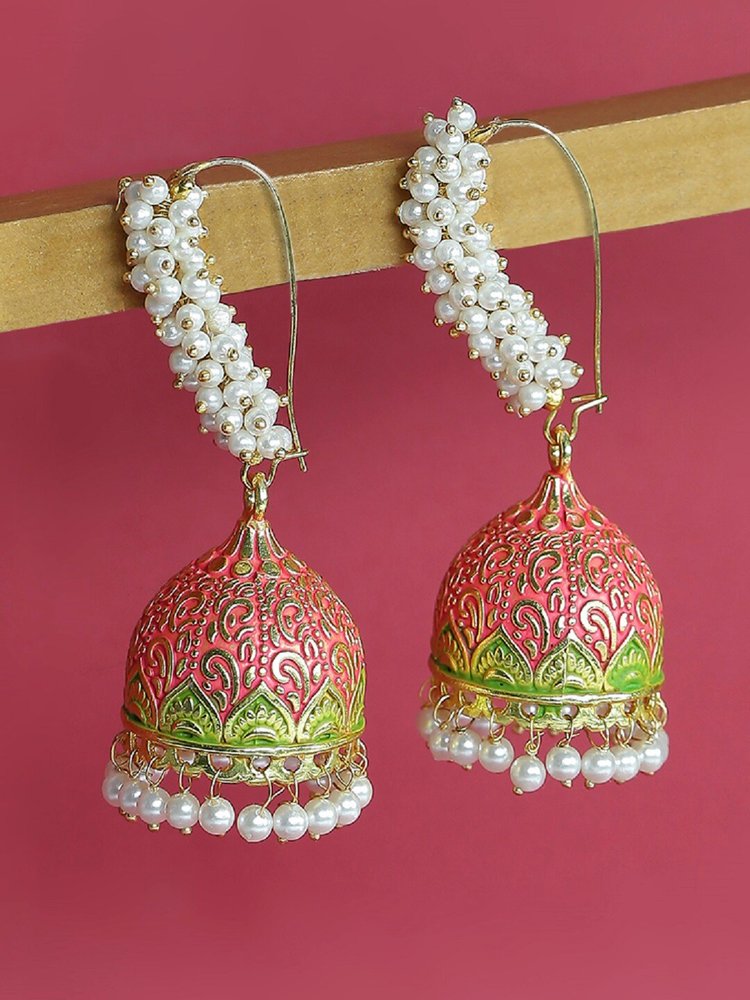
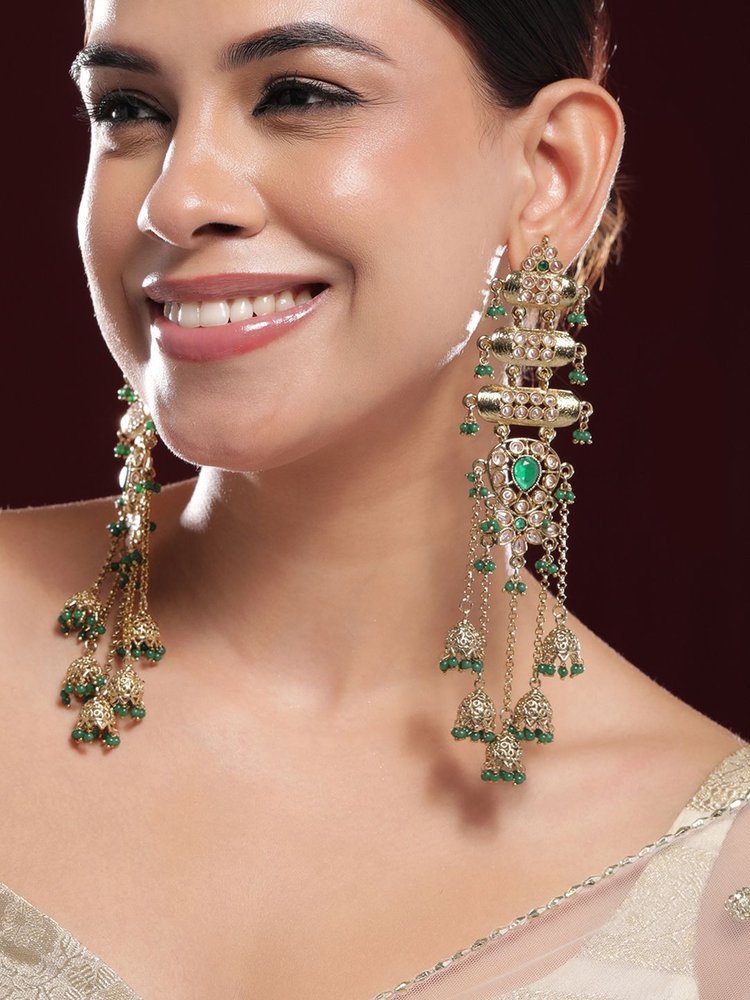
Pick your shoes before you settle the hem, because the length of the saree depends on them. Juttis are flat, closed, often embroidered slippers that slip off quickly at a temple door, while a block heel gives you height without sinking into a lawn.
For jewellery, let the neckline decide. A plain V or sweetheart blouse has room for a necklace, while a heavily worked pallu looks best with bold earrings and a bare neck. Jhumkas, the bell-shaped drops, suit almost any drape.
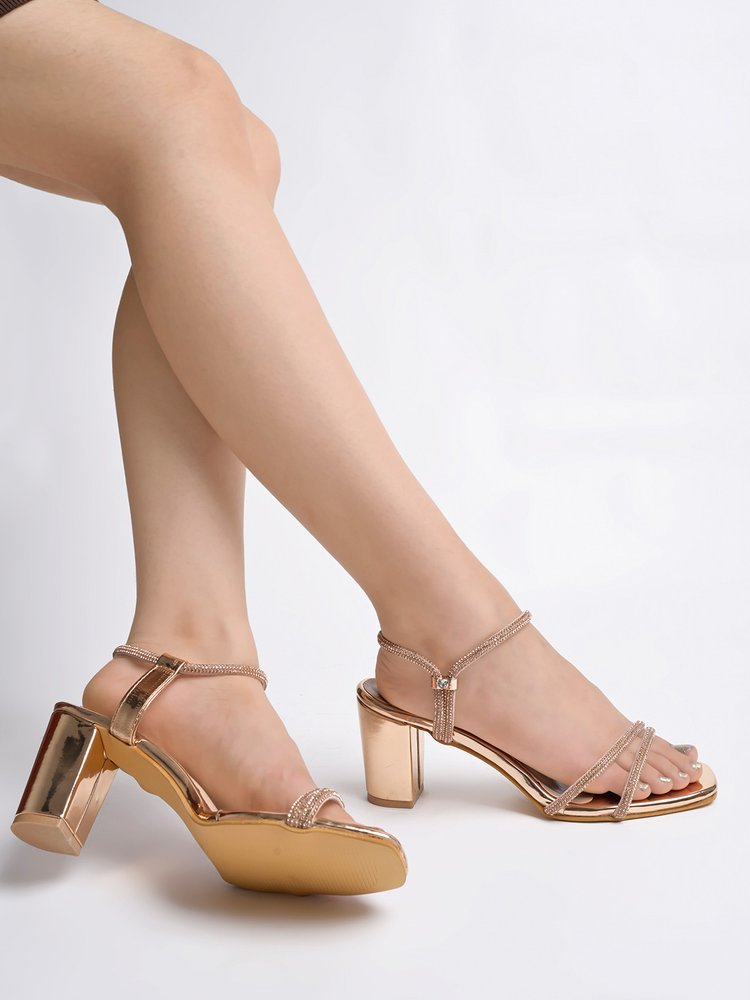
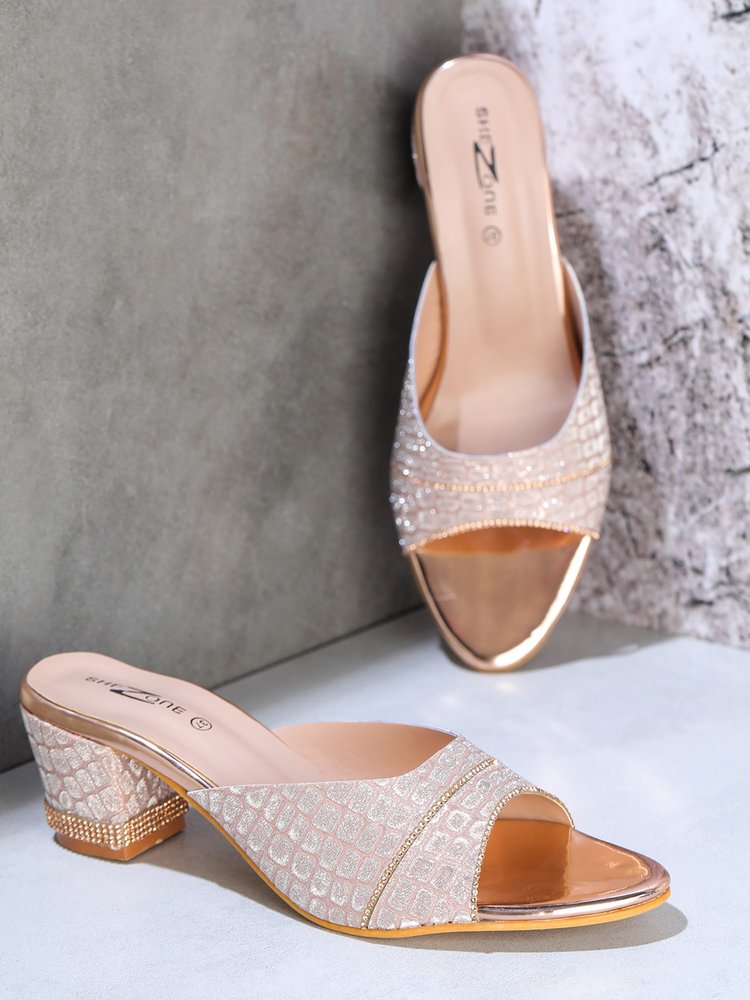
To finish it off
Sparkly and floral juttis, two low heels, and earrings with some movement.


How do you look after a pre-draped saree?
Follow the care line on the listing, because it changes with the fabric: some satins and georgettes are fine to hand wash, while many embellished pieces are dry clean only. A handheld steamer is the best way to refresh one between wears, since a hot iron can flatten the stitched pleats. Hang it by the waistband or fold it along its own stitching, and for a flight, lay it on top in your case with the pallu folded loosely over tissue paper. Keep beaded edges from catching on anything.
Keep reading
Questions people ask
What is the difference between a saree and a pre-draped saree?
A regular saree is one unstitched length of cloth that you wrap and pleat by hand each time you wear it. A pre-draped saree has those pleats already stitched, so you fasten it at the waist and pin the shoulder. It looks much the same but takes far less time and no practice.
Do you need a petticoat with a pre-stitched saree?
Usually you need something underneath, either a petticoat or a fitted saree shapewear skirt, unless the listing says an underskirt is sewn in. The underskirt gives the fabric a smooth line and keeps a sheer saree from showing your legs. Match its colour to the saree or your skin tone.
Is a pre-draped saree good for beginners?
Yes, it is the easiest way to start. You can dress yourself without help, and the pleats will not come undone during the evening. Try it on once with your real shoes and blouse before the event, then you will know exactly what to expect.
Does a pre-draped saree come with a blouse?
It depends on the piece, and many come with an unstitched blouse piece rather than a finished blouse. A stitched blouse is ready to wear, while a blouse piece needs a tailor. Read the blouse line on the listing, because the blouse on the model is not always what you receive.
Can you wear a pre-draped saree to a wedding?
Yes, and many guests do. Choose a rich colour for the ceremony, keep bright red for the bride and check that you can sit comfortably if the rites take place on the floor. For the sangeet and reception, belts, sequins and beaded edges all work well.
Can a regular saree be made into a pre-stitched one?
A good tailor can stitch the pleats of a saree you already own to a waistband. Think about it before you hand over anything precious, because fine fabrics like satin or tissue can keep the needle marks if you ever unpick it. It is a fine way to give a little-worn saree a second life.
Can you adjust the waist on a ready-to-wear saree?
Often yes. Styles with an adjustable belt or wrap give you the most room, and some listings state a waist range. Hooks and zips have less give, though a tailor can take them in, so check your measurements against the size chart first.
About the numbers
- Product listings on this store, read 2026-11-03: Waist ranges, belts, the blouse type each saree comes with, the length of a blouse piece and the care lines are from each piece's own listing.
- Google autocomplete, United States, read 2026-11-02: The questions this guide answers are the ones people type: what a pre-draped saree is, how to wear one, pre-stitched with petticoat, and with a blouse.